• Produktbild: Symbiosis
  • Produktbild: Symbiosis
Band 4 - 12%

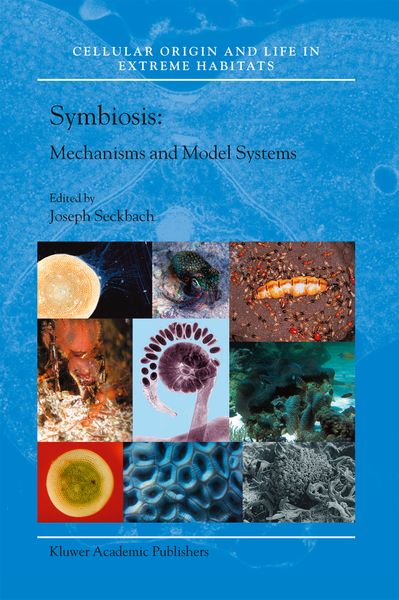
Symbiosis Mechanisms and Model Systems

12% sparen

281,99 € UVP 320,99 €

inkl. gesetzl. MwSt., Versandkostenfrei


Beschreibung

Produktdetails

Einband

Taschenbuch

Erscheinungsdatum

03.10.2013

Abbildungen

XXX, 796 p. 171 illus. in color.

Herausgeber

Joseph Seckbach

Verlag

Springer Netherland

Seitenzahl

796

Maße (L/B/H)

23,5/15,5/4,5 cm

Gewicht

1229 g

Auflage

Softcover reprint of the original 1st edition 2004

Sprache

Englisch

ISBN

978-94-017-3958-0

Beschreibung

Produktdetails

Einband

Taschenbuch

Erscheinungsdatum

03.10.2013

Abbildungen

XXX, 796 p. 171 illus. in color.

Herausgeber

Joseph Seckbach

Verlag

Springer Netherland

Seitenzahl

796

Maße (L/B/H)

23,5/15,5/4,5 cm

Gewicht

1229 g

Auflage

Softcover reprint of the original 1st edition 2004

Sprache

Englisch

ISBN

978-94-017-3958-0

Herstelleradresse


Noch keine Bewertungen vorhanden

Verfassen Sie die erste Bewertung zu diesem Artikel

Helfen Sie anderen Kundinnen und Kunden durch Ihre Meinung.

Kundinnen und Kunden meinen

Bewertungen (0)

  • Produktbild: Symbiosis
  • Produktbild: Symbiosis
  • General Aspects.- Prioritizing Symbiosis to Sustain Biodiversity: Are Symbionts Keystone Species?.- Morphological Aspects of Symbiosis.- Symbioses and their Consequences for Community and Applied Ecology.- Origin & Evolution.- What’s in a Tree?.- The Commonality of Cyanobacterial Endosymbioses Does Not Support the Endosymbiotic Theory for Origin of Eukaryotic Organelles.- Non Symbiotic Origin of Locomotory Organelles.- The Cyanelle (Muroplast) of Cyanophora Paradoxa: A Paradigm for Endosymbiotic Organelle Evolution.- The Syntrophy Hypothesis for the Origin of Eukaryotes.- Thermodynamic Ecology of Hydrogen-Based Syntrophy.- Nutritional Syntrophies and Consortia as Models for the Origin of Mitochondria.- Reversion of Endosymbiosis?.- Symbiosomes.- The Absence of Nitrogen-Fixing Organelles Due to Timing of the Nitrogen Crisis.- Nucleus Symbiosis Hypothesis Formation of Eukaryotic Cell Nuclei by the Symbiosis of Archaea in Bacteria.- Bacteria, Cyanobacteria & Algae.- Phototrophic Consortia: A Tight Cooperation Between Non-Related Eubacteria.- Structure and Phylogeny of Cyanophora Species.- The Microenvironment and Photosynthetic Performance of Prochloron SP. in Symbiosis with Didemnid Ascidians.- Fungi Symbiosis.- Survival Strategies in Arbuscular Mycorrhizal Symbionts.- Three Part Harmony — Ascophyllum and Its Symbionts.- Arbuscular Mycorrhizal Fungi and Their Endobacteria.- Lichens.- Origin and Evolution of Green Lichen Algae.- Lichenization of the Trentepohliales.- Trebouxia: Reflections on a Perplexing and Controversial Lichen Photobiont.- Symbiosis in Plants.- Algae Living on Trees.- Cycad Coralloid Roots Housing Cyanobacteria.- Evolution of Epichloë/Neotyphodium Endophytes and Other Clavicipitalean Biotrophs.- The Effect of Endophytic Fungi on Host PlantMorphogenesis.- Association with Protozoa.- Anaerobic Ciliates and Their Metahanogenic Endosymbionts.- Endosymbiosis of Beta-Proteobacteria in Trypanosomatid Protozoa.- Ectosymbiosis in Ciliated Protozoa.- Living Sands: Symbiosis between Foraminifera and Algae.- Protistan-Prokaryotic Symbioses in Deep-Sea Sulfidic Sediments.- Symbiosis in Insects and Higher Animals.- Sponge/Algal Symbioses: A Diversity of Associations.- The Taxonomy and Evolution of the Zooxanthellae-Coral Symbiosis.- Algal Symbiosis in Flatworms.- Trichomycetes: Fungi in Relationship with Insects and Other Arthropods.- Evolution of Ascomycota-Arthropoda Symbioses.- The Laboulbeniales — An Enigmatic Group of Arthropod-Associated Fungi.- Wolbachia-Induced Cytoplasmic Incompatibility.- How do Wolbachia Symbionts Increase the Proportion of Females in Their Hosts?.- Genome of Buchnera sp. Aps, an Intracellular Symbiotic Bacterium of the Pea Aphid Acyrthosiphon Pisum.- The Functions of Symbiotic Micro-Organisms in Insects.- Ants, Agriculture, and Antibiotics.- Termite Hindgut Symbionts.- Symbiosis in the Termite Gut.- Cultivation of Symbiotic Fungi by Termites of the Subfamily Macrotermitinae.- Cospeciation Between Hosts and Symbionts:.