Gutscheinbedingungen

Gültig bis 13.07.2026 | Gültig für Spielzeug (außer Tonieboxen & ausgewählte Tonies), Filme, Musik, Software, Games, Schreibwaren, Hörbücher und Hörbuch-Downloads (außer Abo & Shelfies), gebrauchte Bücher, nicht preisgebundene Bücher und Kalender | Einlösbar unter osiander.de und in der Osiander App | Click & Collect nur mit Online-Zahlung (Paypal/Kreditkarte) vorab | Einzelne Artikel können ausgeschlossen sein | Nicht kombinierbar mit anderen Gutscheinen oder Preisaktionen | Nur einmal pro Einkauf einlösbar | Gutschein wird auf max. 500€ Bestellwert angerechnet | Keine Barauszahlung | Digitale Hörbücher nur für Android | Nicht gültig für preisgebundene Artikel (aufgrund der Buchpreisbindung sind Gutscheine nicht auf Bücher, eBooks, Presse einlösbar), tolino eReader & Zubehör, Elektronik, Geschenke & Trends, Abonnements & Flatrates, Geschenkkarten, Versandkosten und Services

  • Produktbild: Connectionism in Context
  • Produktbild: Connectionism in Context

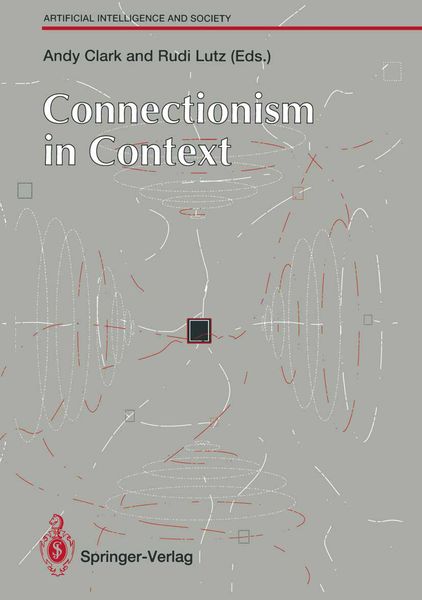
Connectionism in Context

Aus der Reihe Human-centred Systems

49,99 €

inkl. gesetzl. MwSt., Versandkostenfrei


Beschreibung

Produktdetails

Einband

Taschenbuch

Erscheinungsdatum

25.02.1992

Herausgeber

Andy Clark + weitere

Verlag

Springer Berlin

Seitenzahl

181

Maße (L/B/H)

24,2/17/1,1 cm

Gewicht

339 g

Auflage

1st Edition.

Sprache

Englisch

ISBN

978-3-540-19716-4

Beschreibung

Produktdetails

Einband

Taschenbuch

Erscheinungsdatum

25.02.1992

Herausgeber

Verlag

Springer Berlin

Seitenzahl

181

Maße (L/B/H)

24,2/17/1,1 cm

Gewicht

339 g

Auflage

1st Edition.

Sprache

Englisch

ISBN

978-3-540-19716-4

Herstelleradresse

Springer-Verlag KG
Sachsenplatz 4-6
1201 Wien
AT

Email: GPSR Kontakt

Noch keine Bewertungen vorhanden

Verfassen Sie die erste Bewertung zu diesem Artikel

Helfen Sie anderen Kundinnen und Kunden durch Ihre Meinung.

Kundinnen und Kunden meinen

Bewertungen (0)

  • Produktbild: Connectionism in Context
  • Produktbild: Connectionism in Context
  • 1. Introduction.- Architecture and Properties l.- A Copernican Revolution.- Distributed Representations and Context Dependence.- The Nature of Thought.- 2. Action, Connectionism and Enaction: A Developmental Perspective.- Background.- Symbols, Connectionism and Innate Knowledge.- System Scale and the Control of Action.- Development, Emergence and Enaction.- Conclusion.- 3. Connectionism and Why Fodor and Pylyshyn Are Wrong.- The Case Against Connectionism.- Fodor and Pylyshyn’s Four Conditions.- Systems that Satisfy these Conditions.- Fodor and Pylyshyn’s Argument.- What’s Wrong with this Argument.- What’s Wrong with Premise (T3)?.- What’s Wrong with Premise (T2)?.- What’s Wrong with Premise (T1).- What’s Wrong with this Defence?.- The Turing Machine Paradigm.- Minds as Semiotic Systems.- Cognitive Architecture.- On Behalf of Neural Networks.- Dispositions and Predispositions.- The Proper Comparison.- 4. Connectionism, Classical Cognitive Science and Experimental Psychology.- Classicism Versus Connectionism.- The Psychological Data.- Memory.- Inference.- Theory.- Memory.- Inference.- Modelling.- Memory.- Inference.- Conclusions.- 5. Connecting Object to Symbol in Modelling Cognition.- Symbol Systems.- The Symbolic Theory of Mind.- The Symbol Grounding Problem.- Neural Nets.- Transducers and Analogue Transformations.- Robotic Capacities: Discrimination and Identification.- Philosophical Objections to Bottom-Up Grounding of Concrete and Abstract Categories.- Categorical Perception and Category-Learning.- Neural Net and CP.- Analogue Constraints on Symbols.- 6 Active Symbols and Internal Models: Towards a Cognitive Connectionism.- Criticisms of Connectionism.- Connectionism Equals Behaviourism.- Are FFPA Models Behaviourist?.- Connectionism Equals Associationism.- The Active Symbol.- Active Symbols and Control Mechanisms.- Symbol Formation and Properties.- Higher-Level Processes.- First-Order Knowledge Structures.- Second-Order Knowledge Structures.- Toward Structure-Sensitive Operations.- Summary and Concluding Remarks.- The Continuum of Cognitive Models.- Logic, Difficulty and Adaptation.- 7. Thinking Persons and Cognitive Science.- Extending Content.- The Credentials of Cognition.- Consciousness and What It Is Like.- Conceptualized Content and the Structure of Thinking.- Inference and Causal Systernaticity.- Reconstructing the Mind.- 8. A Brief History of Connectionism and Its Psychological Implications.- Connectionist Assumptions in Earlier Psychologies.- Spencer’s Principles of Psychology (1855/1899).- William James’ Principles of Psychology.- Thorndike’s Connectionism.- Pavlov’s Theory of the Cerebral Cortex.- Watsonian and Skinnerian Behaviourism.- Hullian Stimulus—Response Theory.- Comparisons of Old and New Connectionism.- Neural Plausibility.- Thought and the Thinking Self.- Empiricism.- Practical Implications of Connectionism.- Conclusions.- 9. Connectionism and Artificial Intelligence as Cognitive Models.- Artificial Intelligence.- Level of Explanation.- Processing Style.- Representational Structure.- Connectionism.- Classification of Neural Networks.- Level of Explanation.- Processing Style.- Representational Structure.- Classical AI and Connectionism.- Segregation.- Compilation.- Hybridization.- Subsumption.- 10. The Neural Dynamics of Conversational Coherence.- Previous Research.- Conversation Analysis: Sequencing Rules Approach.- Speech Acts.- Computational Models.- A Neurally Inspired Model of Coherence.- Some Experimental Results.- How Associative Is Conversation?.- Final on the Purpose of Conversation.