• Produktbild: Breakdown in Human Adaptation to ‘Stress’ Volume II
  • Produktbild: Breakdown in Human Adaptation to ‘Stress’ Volume II

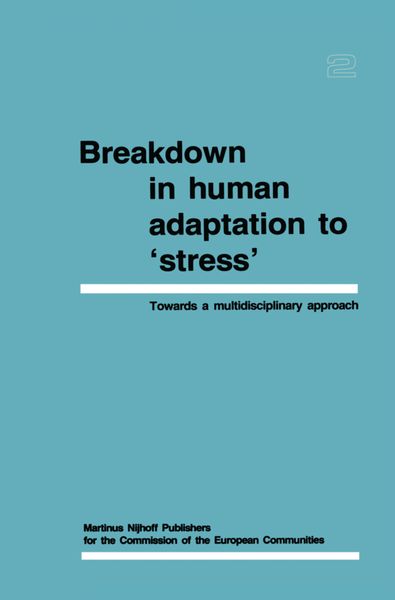
Breakdown in Human Adaptation to ‘Stress’ Volume II Towards a multidisciplinary approach

48,99 €

inkl. gesetzl. MwSt., Versandkostenfrei


Beschreibung

Produktdetails

Einband

Taschenbuch

Erscheinungsdatum

12.10.2011

Herausgeber

J. Cullen

Verlag

Springer Netherland

Seitenzahl

441

Maße (L/B/H)

23,5/15,5/2,6 cm

Gewicht

703 g

Auflage

1984

Sprache

Englisch

ISBN

978-94-010-7975-4

Beschreibung

Produktdetails

Einband

Taschenbuch

Erscheinungsdatum

12.10.2011

Herausgeber

J. Cullen

Verlag

Springer Netherland

Seitenzahl

441

Maße (L/B/H)

23,5/15,5/2,6 cm

Gewicht

703 g

Auflage

1984

Sprache

Englisch

ISBN

978-94-010-7975-4

Herstelleradresse

Springer-Verlag KG
Sachsenplatz 4-6
1201 Wien
AT

Email: GPSR Kontakt

Noch keine Bewertungen vorhanden

Verfassen Sie die erste Bewertung zu diesem Artikel

Helfen Sie anderen Kundinnen und Kunden durch Ihre Meinung.

Kundinnen und Kunden meinen

Bewertungen (0)

  • Produktbild: Breakdown in Human Adaptation to ‘Stress’ Volume II
  • Produktbild: Breakdown in Human Adaptation to ‘Stress’ Volume II
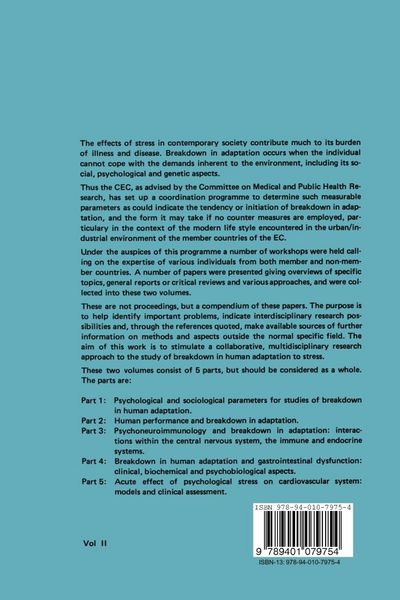
  • 3 — PsychoNeuroImmunoLoGy and Breakdown in Adaptation: Interactions Within The Central Nervous System, The Immune and Endocrine Systems.- Immunology for nonimmunologists: some guidelines for incipient psychoneuroimmunologists.- Neuroendocrine interactions with brain and behaviour: a model for psychoneuroimmunology ?.- Psychoneuroimmunology.- Emotions, immunity and disease: an historical and philosophical perspective.- Immunoglobulins as stress markers ?.- Problems of clinical interdisciplinary research — investigation into bronchial asthma as a paradigm.- Factors involved in the classical conditioning of antibody responses in mice.- The bone marrow, our autonomous morphostatic “brain”.- Immune regulation of the hypothalamic — hypophysial — adrenal axis: a role for thymosins and lymphokines.- Stress and immune response: parameters and markers.- 4 — Breakdown in Human Adaptation and Gastrointestinal Dysfunction: Clinical, Biochemical and Psychobiolo- Gical Aspects.- The brain and the gut.- The role of psychiatric assessment in the management of functional bowel disease.- Application of psychological measures in epidemiological studies of gastrointestinal disease: a critical opinion.- Stress-related nicotine abuse and disorders of the gastrointestinal tract.- Use of quantitative methods for the study of psychological factors in ulcer patients.- Stress, the immune system and GI function.- Clinical recognition of stress related gastrointestinal disorders in adults.- Stress and inflammatory bowel disease (IBD).- Upper GI bleeding lesions related to- or associated with- stress.- 5 — Acute Effect of Psychological Stress on Cardiovascular System: Models and Clinical Assessment.- I. Systems Interplay in Stress Response.- Need for clinical models: physiopathological versus epidemiological study.- Psychosocial stress: endocrine and brain interactions and their relevance for cardiovascular processes.- Hormonal response to acute stress: focus on opioid peptides.- II. Myocardial Infarction Clinical Studies.- Emotional stress and heart disease: clinical recognition and assessment.- Possibilities and limitations of longterm studies on the effect of psychological stress on cardiovascular function.- Interaction between short- and long-term stress in cardiovascular disease.- Clinical clues of neuro-humoral interpretation of the genesis of coronary spasm.- Provocative testing for coronary spasm.- Hemodynamic characterization of different mental stress tests.- Experimental studies.- Thoracic autonomic nerves regulating the canine heart.- Nervous coronary constriction via ? -adrenoreceptors: counteracted by metabolic regulation, by coronary ? -adrenoreceptor stimulation or by flow dependent, endothelium-mediated dilation.- III. Cardiac Arrhythmias Clinical studies.- Clinical clues to psychological and neuro-humoral mechanisms of arrhythmogenesis.- Clinical clues and experimental evidence of the neuro-humoral interpretation of cardiac arrhythmias.- IV. Arterial Hypertension Clinical Studies.- Blood pressure control during mental stress.- Somatic responses to acute stress and the relevance for the study of their mechanisms.- Neurohumoral factors involved in the pathogenesis of hypertension.- Experimental studies.- Results of experimental studies favouring the hypothesis of the influence of stress on the genesis of hypertension.- Animal models for the assesment of stress on arterial blood pressure.- V. Methods.- Validation and quantification of mental stress tests, and their application to acute cardiovascular patients.- Methods and limits for the detection of the response of coronary circulation to acute stress.