
Beschreibung
Produktdetails
Einband
Taschenbuch
Erscheinungsdatum
22.02.2012
Abbildungen
488 p.
Herausgeber
Hans J. EysenckVerlag
Springer NetherlandSeitenzahl
488
Maße (L/B/H)
25,4/17,8/2,8 cm
Gewicht
938 g
Auflage
1. Auflage
Sprache
Englisch
ISBN
978-94-011-6131-2
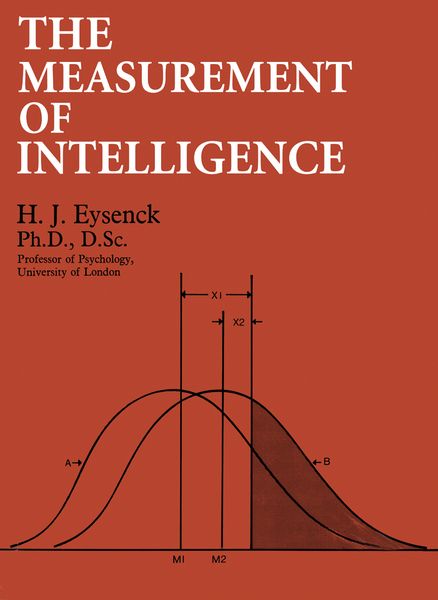
This book deals with one aspect of the modern, proof, and the deductions to which they give rise, and scientific study of intelligence, namely its measurement. the social aspect, which is concerned with the "good" or The term, measurement, has difficulties attached to it "evil" consequences which follow from the scientific which rival those attached to the term, intelligence; discovery or invention. Thus IQ testing would appear to many psychologists have little idea of what the word many people to give rise to desirable and "good" conse means, and what are the requirements which must be quences when it enables us to pick out bright "dis fulfilled in order to enable "measurement" to take advantaged" children for higher educational and place. Krantz, Luce, Suppes and Tversky (1971) have university training who would otherwise not have been tried to provide us with an introduction to the "Founda educated up to the level of their ability. On the other tions of Measurement"; these two volumes outline the hand, IQ testing would appear to many people to give background against which attempts to measure intelli rise to undesirable and "bad" consequences when it gence must be evaluated. * No short excerpt or set of enables trade unions to exclude coloured workers by the readings could suffice to bring home to the "innum imposition of unrealistic and irrelevant intellectual erate" reader the implications of scientific measurement, requirements for membership.
Noch keine Bewertungen vorhanden
Verfassen Sie die erste Bewertung zu diesem Artikel
Helfen Sie anderen Kundinnen und Kunden durch Ihre Meinung.
Kurze Frage zu unserer Seite
Vielen Dank für Ihr Feedback
Wir nutzen Ihr Feedback, um unsere Produktseiten zu verbessern. Bitte haben Sie Verständnis, dass wir Ihnen keine Rückmeldung geben können. Falls Sie Kontakt mit uns aufnehmen möchten, können Sie sich aber gerne an unseren Kund*innenservice wenden.
zum Kundenservice