• Produktbild: Geological maps: An Introduction
  • Produktbild: Geological maps: An Introduction

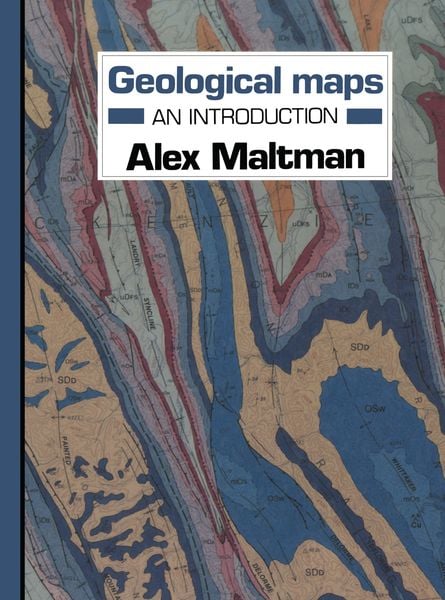
Geological maps: An Introduction

48,99 €

inkl. gesetzl. MwSt., Versandkostenfrei


Beschreibung

Produktdetails

Einband

Taschenbuch

Erscheinungsdatum

18.03.2012

Verlag

Springer Us

Seitenzahl

184

Maße (L/B/H)

27,9/21/1,2 cm

Gewicht

539 g

Auflage

Softcover reprint of the original 1st ed. 1990

Sprache

Englisch

ISBN

978-1-4684-6664-5

Beschreibung

Produktdetails

Einband

Taschenbuch

Erscheinungsdatum

18.03.2012

Verlag

Springer Us

Seitenzahl

184

Maße (L/B/H)

27,9/21/1,2 cm

Gewicht

539 g

Auflage

Softcover reprint of the original 1st ed. 1990

Sprache

Englisch

ISBN

978-1-4684-6664-5

Herstelleradresse

Springer-Verlag GmbH
Tiergartenstr. 17
69121 Heidelberg
DE

Email: ProductSafety@springernature.com

Kundinnen und Kunden meinen

0 Bewertungen

Informationen zu Bewertungen

Zur Abgabe einer Bewertung ist eine Anmeldung im Konto notwendig. Die Authentizität der Bewertungen wird von uns nicht überprüft. Wir behalten uns vor, Bewertungstexte, die unseren Richtlinien widersprechen, entsprechend zu kürzen oder zu löschen.

Die Bewertungen sind nach Format, Anzahl Sterne und Datum sortiert.

Verfassen Sie die erste Bewertung zu diesem Artikel

Helfen Sie anderen Kund*innen durch Ihre Meinung

Kundinnen und Kunden meinen

0 Bewertungen filtern

  • Produktbild: Geological maps: An Introduction
  • Produktbild: Geological maps: An Introduction
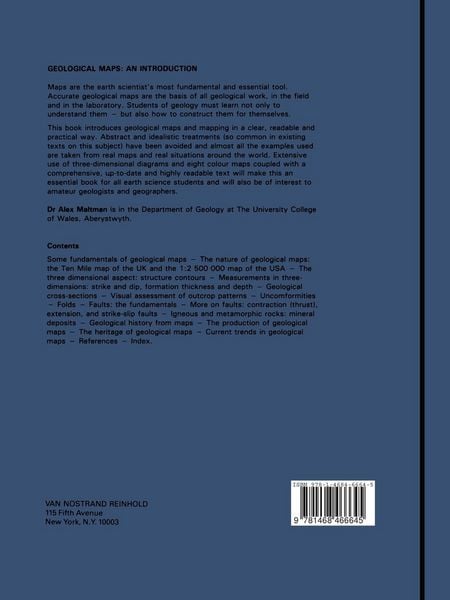
  • 1 Some fundamentals of geological maps.- 1.1 Introduction.- 1.2 The topographic base map.- 1.2.1 Scale.- 1.2.2 Map projection.- 1.2.3 Grid systems and location.- 1.2.4 Relief.- 1.2.5 Key or legend.- 1.3 Geological aspects.- 1.3.1 Key or legend.- 1.3.2 Superficial and bedrock maps.- 1.3.3 The third dimension: geological cross-sections.- 1.3.4 The interpretive nature of maps.- 1.3.5 Aesthetics.- 1.4 Summary chapter.- 1.5 Selected further reading.- 2 The nature of geological maps: the Ten Mile map of the UK and the 1: 2 500 000 map of the USA.- 2.1 Introduction: cartographic matters.- 2.2 Interpretation of the maps: geology and relief.- 2.3 Map patterns and geological structure.- 2.3.1 Dipping formations.- 2.3.2 Unconformities.- 2.3.3 Folded rocks.- 2.3.4 Faulted rocks.- 2.3.5 Igneous rocks and geological histories.- 2.4 Conclusion.- 2.5 Summary of chapter.- 3 The three-dimensional aspect: structure contours.- 3.1 Introduction.- 3.2 The nature of structure contours.- 3.3 Examples of structure contours on maps.- 3.4 Structure contours derived from borehole/well information.- 3.5 Structure contours derived from topography: the theory.- 3.6 Structure contours derived from topography: the practice.- 3.7 Structure contours from topography and boreholes.- 3.8 Straight structure contours.- 3.9 Summary of chapter.- 3.10 Selected further reading.- 4 Measurements in three dimensions: strike and dip, formation thickness and depth.- 4.1 Introduction.- 4.2 Strike and dip.- 4.3 Apparent dip.- 4.4 Formation thickness.- 4.5 Formation depth.- 4.6 The ‘three-point’ method.- 4.7 Summary of chapter.- 4.8 Selected further reading.- 5 Geological cross-sections.- 5.1 Introduction.- 5.2 Line of section.- 5.3 Scale and vertical exaggeration.- 5.4 Manual drawing of cross-sections.- 5.5 Structure and stratigraphic sections.- 5.6 Three-dimensional diagrams.- 5.6.1 Fence diagrams.- 5.6.2 Block diagrams.- 5.7 Summary of chapter.- 5.8 Selected further reading.- 6 Visual assessment of outcrop patterns.- 6.1 Introduction.- 6.2 Horizontal formation.- 6.3 Dipping formations.- 6.3.1 Recognition.- 6.3.2 Assessment of formation dip in valleys.- 6.4 Vertical formations.- 6.5 Assessment of formation thickness.- 6.6 Summary of chapter.- 6.7 Exercises on visual assessment.- 7 Unconformities.- 7.1 Introduction.- 7.2 Terminology.- 7.3 Recognition on maps.- 7.4 Associated features.- 7.5 Use on maps.- 7.6 Palaeogeological maps.- 7.7 Summary of chapter.- 7.8 Selected further reading.- 8 Folds.- 8.1 Introduction.- 8.2 Description from maps.- 8.2.1 The parts of a fold.- 8.2.2 Fold orientation.- 8.2.3 Fold attitude.- 8.2.4 Fold shape.- 8.2.5 Fold style.- 8.2.6 Fold dimensions.- 8.3 Visual assessment on maps.- 8.4 Measurements on maps.- 8.5 Summary of chapter.- 9 Faults: the fundamentals.- 9.1 Introduction.- 9.2 Fault parts, orientation and dimensions.- 9.3 Fault displacement.- 9.4 Classification of faults.- 9.5 Visual assessment on maps.- 9.6 Measurements on maps.- 9.7 Summary of chapter.- 10 More on faults: contraction (thrust), extension, and strike-slip faults.- 10.1 Introduction.- 10.2 Contraction (thrust) faults.- 10.2.1 Characteristics.- 10.2.2 Recognition on maps.- 10.2.3 Three-dimensional arrangement.- 10.2.4 Displacement amount, direction and sequence.- 10.3 Extension faults.- 10.3.1 General.- 10.3.2 Characteristics.- 10.3.3 Extension faults on maps.- 10.4 Strike-slip faults.- 10.4.1 Characteristics.- 10.4.2 Recognition on maps.- 10.5 Summary of chapter.- 10.6 Selected further reading.- 11 Igneous and metamorphic rocks; mineral deposits.- 11.1 Introduction.- 11.2 Igneous rocks.- 11.2.1 Volcaniclastic rocks.- 11.2.2 Magmatic rocks.- 11.3 Metamorphic rocks.- 11.4 Mineral deposits.- 11.5 Summary of chapter.- 11.6 Selected further reading.- 12 Geological history from maps.- 12.1 Introduction.- 12.2 Sedimentary successions.- 12.3 Deformed rocks.- 12.4 Non-sedimentary rocks.- 12.5 Reading a geological map.- 12.6 Writing a map report.- 12.7 Summary of chapter.- 13 The production of geological maps.- 13.1 Introduction.- 13.2 The field survey.- 13.3 Preparation of maps for publication.- 13.3.1 Scale.- 13.3.2 Boundaries.- 13.3.3 Key and other information.- 13.3.4 Ornament.- 13.4.5 Colour.- 13.4 Map reports.- 13.5 Availability of maps.- 13.6 Conclusions.- 14 The heritage of geological maps.- 14.1 Introduction.- 14.2 A short history of geological maps.- 14.3 The contributions of some individuals.- 14.3.1 Jean Etienne Guettard (1715–86).- 14.3.2 William Smith (1769–1839).- 14.3.3 John MacCulloch (1773–1835).- 14.3.4 John Phillips (1800–74).- 14.3.5 John Wesley Powell (1834–1902).- 14.3.6 Sir Edward Bailey (1881–1965).- 15 Current trends in geological maps.- 15.1 Introduction.- 15.2 New technologies in geologicam mps.- 15.2.1 Field surveying.- 15.2.2 Remote sensing.- 15.2.3 Computer methods in map manipulation and production.- 15.2.4 Map storage, indexing and retrieval.- 15.3 New forms in geological maps.- 15.4 Specialised and thematic maps.- 15.5 Summary of chapter.- 15.6 Selected further reading.- References.