Gutscheinbedingungen

Gültig bis 13.07.2026 | Gültig für Spielzeug (außer Tonieboxen & ausgewählte Tonies), Filme, Musik, Software, Games, Schreibwaren, Hörbücher und Hörbuch-Downloads (außer Abo & Shelfies), gebrauchte Bücher, nicht preisgebundene Bücher und Kalender | Einlösbar unter osiander.de und in der Osiander App | Click & Collect nur mit Online-Zahlung (Paypal/Kreditkarte) vorab | Einzelne Artikel können ausgeschlossen sein | Nicht kombinierbar mit anderen Gutscheinen oder Preisaktionen | Nur einmal pro Einkauf einlösbar | Gutschein wird auf max. 500€ Bestellwert angerechnet | Keine Barauszahlung | Digitale Hörbücher nur für Android | Nicht gültig für preisgebundene Artikel (aufgrund der Buchpreisbindung sind Gutscheine nicht auf Bücher, eBooks, Presse einlösbar), tolino eReader & Zubehör, Elektronik, Geschenke & Trends, Abonnements & Flatrates, Geschenkkarten, Versandkosten und Services

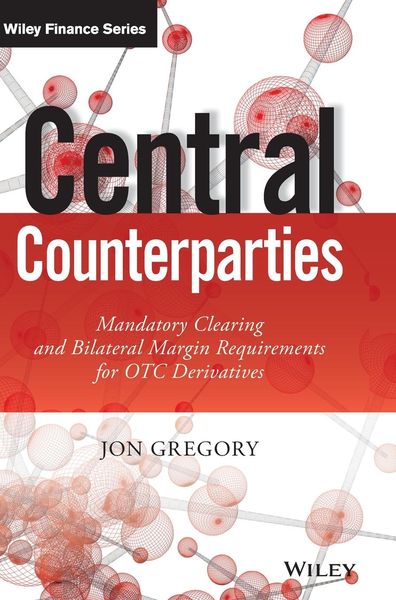
  • Produktbild: Central Counterparties
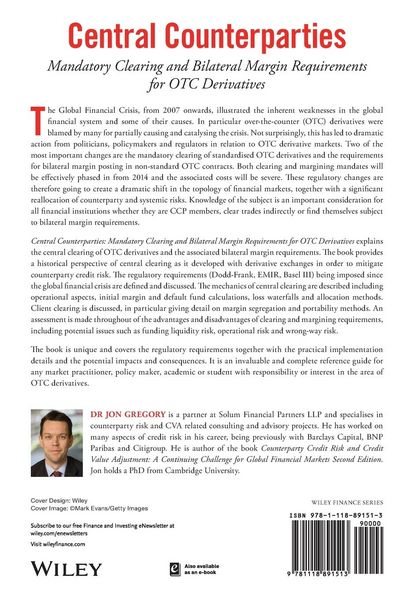
  • Produktbild: Central Counterparties

Central Counterparties Mandatory Central Clearing and Initial Margin Requirements for OTC Derivatives

Aus der Reihe Wiley Finance Series

116,99 €

inkl. gesetzl. MwSt., Versandkostenfrei


Beschreibung

Produktdetails

Einband

Gebundene Ausgabe

Erscheinungsdatum

21.07.2014

Verlag

John Wiley & Sons

Seitenzahl

328

Maße (L/B/H)

17,5/24,4/2,4 cm

Gewicht

690 g

Auflage

1. Auflage

Sprache

Englisch

ISBN

978-1-118-89151-3

Beschreibung

Produktdetails

Einband

Gebundene Ausgabe

Erscheinungsdatum

21.07.2014

Verlag

John Wiley & Sons

Seitenzahl

328

Maße (L/B/H)

17,5/24,4/2,4 cm

Gewicht

690 g

Auflage

1. Auflage

Sprache

Englisch

ISBN

978-1-118-89151-3

Herstelleradresse

Libri GmbH
Europaallee 1
36244 Bad Hersfeld
DE

Email: gpsr@libri.de

Noch keine Bewertungen vorhanden

Verfassen Sie die erste Bewertung zu diesem Artikel

Helfen Sie anderen Kundinnen und Kunden durch Ihre Meinung.

Kundinnen und Kunden meinen

Bewertungen (0)

Die Leseprobe wird geladen.
  • Produktbild: Central Counterparties
  • Produktbild: Central Counterparties
  • Acknowledgements xv

    Part I: Background 1

    1 Introduction 3

    1.1 The crisis 3

    1.2 The move towards central clearing 4

    1.3 What is a CCP? 6

    1.4 Initial margins 7

    1.5 Possible drawbacks 8

    1.6 Clearing in context 9

    2 Exchanges, OTC Derivatives, DPCs and SPVs 11

    2.1 Exchanges 11

    2.1.1 What is an exchange? 11

    2.1.2 The need for clearing 12

    2.1.3 Direct clearing 12

    2.1.4 Clearing rings 13

    2.1.5 Complete clearing 14

    2.2 OTC derivatives 16

    2.2.1 OTC vs. exchange-traded 16

    2.2.2 Market development 18

    2.2.3 OTC derivatives and clearing 19

    2.3 Counterparty risk mitigation in OTC markets 20

    2.3.1 Systemic risk 20

    2.3.2 Special purpose vehicles 21

    2.3.3 Derivatives product companies 22

    2.3.4 Monolines and CDPCs 23

    2.3.5 Lessons for central clearing 24

    2.3.6 Clearing in OTC derivatives markets 25

    2.4 Summary 26

    3 Basic Principles of Central Clearing 27

    3.1 What is clearing? 27

    3.2 Functions of a CCP 27

    3.2.1 Financial markets topology 28

    3.2.2 Novation 28

    3.2.3 Multilateral offset 29

    3.2.4 Margining 30

    3.2.5 Auctions 30

    3.2.6 Loss mutualisation 31

    3.3 Basic questions 31

    3.3.1 What can be cleared? 31

    3.3.2 Who can clear? 33

    3.3.3 How many OTC CCPs will there be? 35

    3.3.4 Utilities or profit-making organisations? 36

    3.3.5 Can CCPs fail? 36

    3.4 The impact of central clearing 36

    3.4.1 General points 36

    3.4.2 Comparing OTC and centrally cleared markets 37

    3.4.3 Advantages of CCPs 37

    3.4.4 Disadvantages of CCPs 38

    3.4.5 Impact of central clearing 38

    4 The Global Financial Crisis and the Clearing of OTC Derivatives 41

    4.1 The global financial crisis 41

    4.1.1 Build-up 41

    4.1.2 Impact of the GFC 41

    4.1.3 CCPs in the GFC 42

    4.1.4 LCH.Clearnet and SwapClear 42

    4.1.5 Lehman and other CCPs 43

    4.1.6 Responses 44

    4.1.7 Objections 45

    4.2 Regulatory changes 46

    4.2.1 Basel III 47

    4.2.2 Dodd-Frank 48

    4.2.3 EMIR 48

    4.2.4 Differences between the US and Europe 49

    4.2.5 Bilateral margin requirements 50

    4.2.6 Exemptions 52

    4.3 Regulation of CCPS 53

    4.3.1 Problems with mandates 53

    4.3.2 Oversight 53

    4.3.3 CCPs and liquidity support 55

    Part II: Counterpa rty Risk, Netting and Margin 57

    5 Netting 59

    5.1 Bilateral netting 59

    5.1.1 Origins of netting 59

    5.1.2 Payment netting and CLS 60

    5.1.3 Close out netting 60

    5.1.4 The ISDA Master Agreement 62

    5.1.5 The impact of netting 62

    5.1.6 Netting impact outside OTC derivatives markets 63

    5.2 Multilateral netting 65

    5.2.1 The classic bilateral problem 65

    5.2.2 Aim of multilateral netting 65

    5.2.3 Trade compression 66

    5.2.4 Trade compression and standardisation 68

    5.2.5 Central clearing 70

    5.2.6 Multilateral netting increasing exposure 71

    6 Margining 75

    6.1 Basics of margin 75

    6.1.1 Rationale 75

    6.1.2 Title transfer and security interest 76

    6.1.3 Simple example 76

    6.1.4 The margin period of risk 77

    6.1.5 Haircuts 78

    6.2 Margin and funding 79

    6.2.1 Funding costs 79

    6.2.2 Reuse and rehypothecation 80

    6.2.3 Segregation 82

    6.2.4 Margin transformation 84

    6.3 Margin in bilateral OTC derivatives markets 84

    6.3.1 The credit support annex (CSA) 84

    6.3.2 Types of CSA 85

    6.3.3 Thresholds and initial margins 86

    6.3.4 Disputes 87

    6.3.5 Standard CSA 88

    6.3.6 Margin practices in bilateral OTC markets 89

    6.4 The risks of margining 92

    6.4.1 Margin impact outside OTC derivatives markets 92

    6.4.2 Operational risk 93

    6.4.3 Liquidity risk 93

    6.4.4 Funding liquidity risk 94

    6.4.5 Segregation risk 94

    6.5 Regulatory margin requirements 94

    6.5.1 Background 94

    6.5.2 General requirements 95

    6.5.3 Threshold 97

    6.5.4 Segregation and rehypothecation 98

    6.5.5 Initial margin methodologies 99

    6.5.6 Non-netting across asset class 101

    6.5.7 Haircuts 101

    6.5.8 Criticisms 102

    7 Counterparty Risk in OTC Derivatives 105

    7.1 Introduction 105

    7.1.1 Background 105

    7.1.2 Origins 106

    7.1.3 Settlement and pre-settlement risk 106

    7.2 Exposure 108

    7.2.1 Definition 108

    7.2.2 Mark-to-market and replacement cost 110

    7.2.3 Non-margined exposure 110

    7.2.4 Margined exposure 111

    7.3 Valuation adjustments 114

    7.3.1 CVA 114

    7.3.2 Impact of margin on CVA 114

    7.3.3 DVA and FVA 115

    7.3.4 Wrong-way risk 117

    7.3.5 The balance between counterparty risk and funding 118

    Appendix 7A: Simple formula for the benefit of a margin agreement 119

    Part III: Structure and Mechanics of Clearing 121

    8 The Basics of CCP Operation 123

    8.1 CCP setup 123

    8.1.1 CCP ownership 123

    8.1.2 Fees 124

    8.1.3 What needs to be cleared? 125

    8.1.4 Important OTC derivative CCPs 125

    8.2 CCP operation 127

    8.2.1 CCP members and non-members 127

    8.2.2 Process of clearing 129

    8.2.3 Compression 130

    8.2.4 Requirements for products to be cleared 131

    8.3 CCP risk management 133

    8.3.1 Overview 133

    8.3.2 Membership requirements 135

    8.3.3 Margining 136

    8.3.4 Margin interest rates 137

    8.4 Default management 139

    8.4.1 Declaring a default 139

    8.4.2 Close out process 140

    8.4.3 Auction 140

    8.4.4 Client positions 141

    8.4.5 Loss allocation 141

    8.4.6 Wrong-way risk 143

    8.5 CCP linkage 143

    8.5.1 Interoperability 143

    8.5.2 Participant and peer-to-peer models 144

    8.5.3 Mutual offset 146

    8.5.4 Cross-margining 146

    9 Margin and Default Fund Methodologies 149

    9.1 Variation margin 149

    9.1.1 Valuation 149

    9.1.2 Frequency of margin calls 150

    9.1.3 Convexity and price alignment interest 150

    9.1.4 Variation margin and liquidity risk 151

    9.2 Initial margin 152

    9.2.1 Close out period 152

    9.2.2 Coverage 154

    9.2.3 Linkage to credit quality 155

    9.2.4 Haircuts and non-cash margins 156

    9.2.5 The SPAN methodology 157

    9.3 VAR and historical simulation 158

    9.3.1 Value-at-risk and expected shortfall 158

    9.3.2 Historical simulation 161

    9.3.3 Look-back periods 161

    9.3.4 Relative and absolute scenarios 161

    9.3.5 Procyclicality 162

    9.4 Initial margins for OTC derivatives 164

    9.4.1 Requirements for initial margin approach 164

    9.4.2 OTC CCP initial margin approaches 165

    9.4.3 Competition 167

    9.4.4 Computation considerations 168

    9.4.5 Standard initial margin model (SIMM) 169

    9.5 Cross-margining 170

    9.5.1 Rationale 170

    9.5.2 Cross-margining within a CCP 171

    9.5.3 Exchange-traded and OTC products 172

    9.5.4 Cross-margining between CCPs 173

    9.5.5 Methodologies for cross-margining 174

    9.6 Default funds 174

    9.6.1 Coverage of initial margin 174

    9.6.2 Role of the default fund 175

    9.6.3 Default fund vs. initial margin 176

    9.6.4 Size of the default fund 177

    9.6.5 Splitting default funds 178

    10 The Loss Waterfall and Loss Allocation Methods 181

    10.1 Potential CCP loss events 181

    10.1.1 Review of the loss waterfall 181

    10.1.2 Clearing member default losses 183

    10.1.3 Non-default related losses 184

    10.2 Analysis of CCP loss structure 184

    10.2.1 Second loss exposure 184

    10.2.2 The prisoner's dilemma 185

    10.2.3 Unlimited default fund contributions 186

    10.2.4 Default fund tranches 186

    10.3 Other loss allocation methods 187

    10.3.1 Variation margin gains haircutting 188

    10.3.2 Partial tear-up and forced allocation 189

    10.3.3 Complete tear-up 191

    10.3.4 Other methods 192

    10.3.5 Impact on client trades 192

    10.3.6 Methods used in practice 193

    10.4 Capital charges for CCP exposures 194

    10.4.1 Qualifying CCPs 194

    10.4.2 Trade and default fund related exposures 195

    10.4.3 Capital requirements for trade exposures 196

    10.4.4 Capital requirements for default fund exposures 197

    10.4.5 Method 1 (interim rules) 198

    10.4.6 Method 2 (interim rules) 199

    10.4.7 Final rules 200

    10.4.8 Example and discussion 200

    10.4.9 Client clearing and bilateral aspects 201

    Appendix 10A: Technical details on the interim and final rules 203

    11 Client Clearing, Segregation and Portability 207

    11.1 Operational aspects 207

    11.1.1 General setup 207

    11.1.2 Principal-to-principal model 208

    11.1.3 Agency model 209

    11.1.4 Margin requirements between client and CCP 209

    11.1.5 Client point of view 210

    11.1.6 Clearing member point of view 212

    11.1.7 Portability 213

    11.2 Segregation, rehypothecation and margin offset 215

    11.2.1 The need for segregation 215

    11.2.2 The difference between variation and initial margins 216

    11.2.3 Net and gross margin 218

    11.2.4 Net margin and portability 218

    11.3 Methods of segregation 220

    11.3.1 Omnibus segregation 221

    11.3.2 Individually segregated accounts 222

    11.3.3 LSOC 223

    11.3.4 Example 226

    11.3.5 The liquidity impact of segregation 227

    11.4 Regulatory requirements 228

    11.4.1 CPSS-IOSCO 228

    11.4.2 Dodd-Frank/CFTC 228

    11.4.3 EMIR 229

    11.4.4 Basel III and capital implications 229

    Part IV: Analysis of the Impa ct and Risks ofCe ntral Clearing 231

    12 Analysis of the Impact of Clearing and Margining 233

    12.1 The clearing landscape 233

    12.1.1 Bilateral vs. central clearing 233

    12.1.2 How much is currently cleared? 236

    12.1.3 What should be cleared? 236

    12.1.4 The number of CCPs 238

    12.1.5 Choosing a CCP 239

    12.2 Benefits and drawbacks of OTC clearing 240

    12.2.1 Advantages 240

    12.2.2 Disadvantages 241

    12.2.3 Homogenisation 242

    12.2.4 Moral hazard and informational asymmetry 243

    12.3 Side effects 243

    12.3.1 Futurisation 243

    12.3.2 Regulatory arbitrage 244

    12.3.3 Netting optimisation 246

    12.3.4 Re-leveraging 246

    12.3.5 Pricing behaviour 247

    12.4 Is there a better idea? 248

    13 The Cost and Impact of Clearing and Margining 251

    13.1 Overview 251

    13.1.1 Strengths and weaknesses of margin 251

    13.1.2 Variation margin 252

    13.1.3 Initial margin 253

    13.2 Examples 254

    13.2.1 American International Group (AIG) 254

    13.2.2 The BP Deepwater Horizon oil spill 254

    13.2.3 Ashanti 255

    13.3 The cost of margining 256

    13.3.1 Margin and funding 256

    13.3.2 How expensive? 257

    13.3.3 Variation margin 259

    13.3.4 Initial margin 261

    13.3.5 Converting counterparty risk to liquidity risk 261

    13.3.6 Manifestation of funding liquidity risks 263

    13.4 Implications 264

    14 Risks Caused by CCPs 265

    14.1 Overview 265

    14.1.1 General risks created by CCPs 265

    14.1.2 Risks for clearing members 266

    14.1.3 Risks for non-clearing members 266

    14.2 Historical CCP failures and near misses 267

    14.2.1 New York Gold Exchange Bank (1869) 267

    14.2.2 Caisse de Liquidation (1974) 267

    14.2.3 COMEX (1980) 268

    14.2.4 Commodity Clearing House (1983) 268

    14.2.5 Hong Kong Futures Exchange and 1987 crash 269

    14.2.6 BM&FBOVESPA (1999) 270

    14.2.7 Lessons from past CCP failures 270

    14.3 Important considerations 271

    14.3.1 Hindsight bias 271

    14.3.2 Race to the bottom? 272

    14.3.3 Distributive effects and the big picture 272

    14.3.4 Mutualisation and CCPs as CDOs 273

    14.3.5 The need for margin 274

    14.3.6 The impact of mandatory clearing 275

    14.3.7 Transparency 275

    14.3.8 Interconnectedness 276

    14.4 Risks faced by CCPS 276

    14.4.1 Default risk 276

    14.4.2 Non-default loss events 277

    14.4.3 Model risk 278

    14.4.4 Liquidity risk 278

    14.4.5 Operational and legal risk 279

    14.4.6 Other risks 279

    14.5 Keeping CCPs safe 280

    14.5.1 Will they be allowed to fail? 280

    14.5.2 Governance 281

    14.5.3 Disclosure 282

    14.5.4 Insurance schemes 282

    15 The Future Impact on Financial Markets 283

    15.1 Regulatory change 283

    15.2 The impact 284

    15.3 Good or bad? 285

    Glossary 287

    References 293

    Index 299