• Produktbild: Optimization of Energy Systems
  • Produktbild: Optimization of Energy Systems

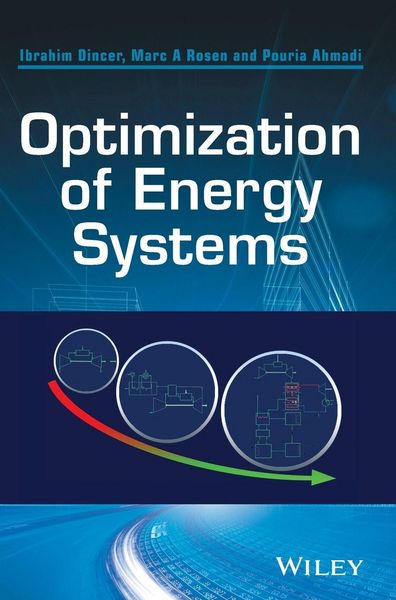
Optimization of Energy Systems

171,99 €

inkl. gesetzl. MwSt., Versandkostenfrei


Beschreibung

Produktdetails

Einband

Gebundene Ausgabe

Erscheinungsdatum

15.05.2017

Verlag

John Wiley & Sons Inc

Seitenzahl

472

Maße (L/B/H)

24,6/16,8/2,8 cm

Gewicht

816 g

Auflage

1. Auflage

Sprache

Englisch

ISBN

978-1-118-89443-9

Beschreibung

Produktdetails

Einband

Gebundene Ausgabe

Erscheinungsdatum

15.05.2017

Verlag

John Wiley & Sons Inc

Seitenzahl

472

Maße (L/B/H)

24,6/16,8/2,8 cm

Gewicht

816 g

Auflage

1. Auflage

Sprache

Englisch

ISBN

978-1-118-89443-9

Noch keine Bewertungen vorhanden

Verfassen Sie die erste Bewertung zu diesem Artikel

Helfen Sie anderen Kundinnen und Kunden durch Ihre Meinung.

Kundinnen und Kunden meinen

Bewertungen (0)

Die Leseprobe wird geladen.
  • Produktbild: Optimization of Energy Systems
  • Produktbild: Optimization of Energy Systems
  • Acknowledgements xiii

    Preface xv

    1 Thermodynamic Fundamentals 1

    1.1 Introduction 1

    1.2 Thermodynamics 1

    1.3 The First Law of Thermodynamics 2

    1.3.1 Thermodynamic System 3

    1.3.2 Process 3

    1.3.3 Cycle 3

    1.3.4 Heat 4

    1.3.5 Work 4

    1.3.6 Thermodynamic Property 4

    1.3.6.1 Specific Internal Energy 4

    1.3.6.2 Specific Enthalpy 5

    1.3.6.3 Specific Entropy 5

    1.3.7 Thermodynamic Tables 5

    1.3.8 Engineering Equation Solver (EES) 6

    1.4 The Second Law of Thermodynamics 12

    1.5 Reversibility and Irreversibility 14

    1.6 Exergy 14

    1.6.1 Exergy Associated with Kinetic and Potential Energy 15

    1.6.2 Physical Exergy 16

    1.6.3 Chemical Exergy 16

    1.6.3.1 Standard Chemical Exergy 16

    1.6.3.2 Chemical Exergy of Gas Mixtures 17

    1.6.3.3 Chemical Exergy of Humid Air 17

    1.6.3.4 Chemical Exergy of Liquid Water and Ice 18

    1.6.3.5 Chemical Exergy for Absorption Chillers 21

    1.6.4 Exergy Balance Equation 23

    1.6.5 Exergy Efficiency 24

    1.6.6 Procedure for Energy and Exergy Analyses 24

    1.7 Concluding Remarks 27

    References 27

    Study Questions/Problems 28

    2 Modeling and Optimization 33

    2.1 Introduction 33

    2.2 Modeling 34

    2.2.1 Air compressors 36

    2.2.2 Gas Turbines 37

    2.2.3 Pumps 38

    2.2.4 Closed Heat Exchanger 39

    2.2.5 Combustion Chamber (CC) 40

    2.2.6 Ejector 41

    2.2.7 Flat Plate Solar Collector 43

    2.2.8 Solar Photovoltaic Thermal (PV/T) System 44

    2.2.9 Solar Photovoltaic Panel 44

    2.3 Optimization 47

    2.3.1 System Boundaries 48

    2.3.2 Objective Functions and System Criteria 48

    2.3.3 Decision Variables 48

    2.3.4 Constraints 48

    2.3.5 Optimization Methods 49

    2.3.5.1 Classical Optimization 49

    2.3.5.2 Numerical Optimization Methods 49

    2.3.5.3 Evolutionary Algorithms 50

    2.4 Multi-objective Optimization 51

    2.4.1 Sample Applications of Multi-objective Optimization 52

    2.4.1.1 Economics 52

    2.4.1.2 Finance 53

    2.4.1.3 Engineering 53

    2.4.2 Illustrative Example: Air Compressor Optimization 53

    2.4.2.1 Thermodynamic and Economic Modeling and Analysis 53

    2.4.2.2 Decision Variables 55

    2.4.2.3 Constraints 56

    2.4.2.4 Multi-objective Optimization 56

    2.4.3 llustrative Example: Steam Turbine 58

    2.4.3.1 Decision Variables 59

    2.4.3.2 Constraints 59

    2.4.3.3 Multi-objective Optimization 60

    2.5 Concluding Remarks 61

    References 63

    Study Questions/Problems 63

    3 Modeling and Optimization of Thermal Components 65

    3.1 Introduction 65

    3.2 Air Compressor 66

    3.3 Steam Turbine 67

    3.4 Pump 68

    3.4.1 Modeling and Simulation of a Pump 69

    3.4.2 Decision variables 69

    3.4.3 Constraints 69

    3.4.4 Multi-objective Optimization of a Pump 70

    3.5 Combustion Chamber 73

    3.5.1 Modeling and Analysis of a Combustion Chamber 73

    3.5.1.1 Total Cost Rate 75

    3.5.2 Decision Variables 75

    3.5.3 Constraints 75

    3.5.4 Multi-objective Optimization 76

    3.6 Flat Plate Solar Collector 78

    3.6.1 Modeling and Analysis of Collector 78

    3.6.2 Decision Variables and Input Data 79

    3.6.3 Constraints 79

    3.6.4 Multi-objective Optimization 81

    3.7 Ejector 81

    3.7.1 Modeling and Analysis of an Ejector 83

    3.7.2 Decision Variables and Constraints 85

    3.7.3 Objective Functions and Optimization 85

    3.8 Concluding Remarks 89

    References 89

    Study Questions/Problems 90

    4 Modeling and Optimization of Heat Exchangers 92

    4.1 Introduction 92

    4.2 Types of Heat Exchangers 93

    4.3 Modeling and Optimization of Shell and Tube Heat Exchangers 96

    4.3.1 Modeling and Simulation 96

    4.3.2 Optimization 99

    4.3.2.1 Definition of Objective Functions 99

    4.3.2.2 Decision Variables 99

    4.3.3 Case Study 100

    4.3.4 Model Verification 100

    4.3.5 Optimization Results 101

    4.3.6 Sensitivity Analysis Results 103

    4.4 Modeling and Optimization of Cross Flow Plate Fin Heat Exchangers 103

    4.4.1 Modeling and Simulation 105

    4.4.2 Optimization 107

    4.4.2.1 Decision Variables 108

    4.4.3 Case Study 108

    4.4.4 Model Verification 108

    4.4.5 Optimization Results 109

    4.4.6 Sensitivity Analysis Results 112

    4.5 Modeling and Optimization of Heat Recovery Steam Generators 118

    4.5.1 Modeling and Simulation 118

    4.5.2 Optimization 121

    4.5.2.1 Decision Variables 121

    4.5.3 Case Study 121

    4.5.4 Modeling Verification 122

    4.5.5 Optimization Results 122

    4.5.6 Sensitivity Analysis Results 128

    4.6 Concluding Remarks 129

    References 130

    Study Questions/Problems 131

    5 Modeling and Optimization of Refrigeration Systems 133

    5.1 Introduction 133

    5.2 Vapor Compression Refrigeration Cycle 134

    5.2.1 Thermodynamic Analysis 135

    5.2.2 Exergy Analysis 138

    5.2.3 Optimization 144

    5.2.3.1 Decision Variables 145

    5.2.3.2 Optimization Results 146

    5.3 Cascade Refrigeration Systems 150

    5.4 Absorption Chiller 159

    5.4.1 Thermodynamic Analysis 161

    5.4.2 Exergy Analysis 162

    5.4.3 Exergoeconomic Analysis 166

    5.4.4 Results and Discussion 166

    5.4.4.1 Optimization 174

    5.4.4.2 Optimization Results 175

    5.5 Concluding Remarks 178

    References 178

    Study Questions/Problems 179

    6 Modeling and Optimization of Heat Pump Systems 183

    6.1 Introduction 183

    6.2 Air/Water Heat Pump System 184

    6.3 System Exergy Analysis 186

    6.4 Energy and Exergy Results 188

    6.5 Optimization 193

    6.6 Concluding Remarks 196

    Reference 198

    Study Questions/Problems 198

    7 Modeling and Optimization of Fuel Cell Systems 199

    7.1 Introduction 199

    7.2 Thermodynamics of Fuel Cells 200

    7.2.1 Gibbs Function 200

    7.2.2 Reversible Cell Potential 201

    7.3 PEM Fuel Cell Modeling 203

    7.3.1 Exergy and Exergoeconomic Analyses 204

    7.3.2 Multi-objective Optimization of a PEM Fuel Cell System 205

    7.4 SOFC Modeling 212

    7.4.1 Mathematical Model 212

    7.4.2 Cost Analysis 215

    7.4.3 Optimization 216

    7.5 Concluding Remarks 219

    References 219

    Study Questions/Problems 219

    8 Modeling and Optimization of Renewable Energy Based Systems 221

    8.1 Introduction 221

    8.2 Ocean Thermal Energy Conversion (OTEC) 222

    8.2.1 Thermodynamic Modeling of OTEC 222

    8.2.1.1 Flat Plate Solar Collector 223

    8.2.1.2 Organic Rankine Cycle (ORC) 224

    8.2.1.3 PEM Electrolyzer 225

    8.2.2 Thermochemical Modeling of a PEM Electrolyzer 226

    8.2.3 Exergy Analysis 227

    8.2.4 Efficiencies 228

    8.2.4.1 Exergy Efficiency 228

    8.2.5 Exergoeconomic Analysis 228

    8.2.5.1 Flat Plate Solar Collector in OTEC Cycle 228

    8.2.5.2 OTEC Cycle 229

    8.2.6 Results and Discussion 229

    8.2.6.1 Modeling Validation and Simulation Code Results 229

    8.2.6.2 Exergy Analysis Results 232

    8.2.7 Multi-objective Optimization 237

    8.2.7.1 Objectives 238

    8.2.7.2 Decision Variables 238

    8.2.8 Optimization Results 238

    8.3 Solar Based Energy System 241

    8.3.1 Thermodynamic Analysis 244

    8.3.2 Exergoeconomic Analysis 246

    8.3.3 Results and Discussion 246

    8.3.3.1 Exergoeconomic Results 248

    8.3.4 Sensitivity Analysis 250

    8.3.5 Optimization 253

    8.3.6 Optimization Results 254

    8.4 Hybrid Wind-Photovoltaic-Battery System 256

    8.4.1 Modeling 256

    8.4.1.1 Photovoltaic (PV) Panel 256

    8.4.1.2 Wind Turbine (WT) 262

    8.4.1.3 Battery 262

    8.4.2 Objective Function, Design Parameters, and Constraints 262

    8.4.3 Real Parameter Genetic Algorithm 263

    8.4.4 Case Study 264

    8.4.5 Results and Discussion 265

    8.5 Concluding Remarks 268

    References 270

    Study Questions/Problems 273

    9 Modeling and Optimization of Power Plants 275

    9.1 Introduction 275

    9.2 Steam Power Plants 276

    9.2.1 Modeling and Analysis 278

    9.2.2 Objective Functions, Design Parameters, and Constraints 281

    9.3 Gas Turbine Power Plants 283

    9.3.1 Thermodynamic Modeling 284

    9.3.1.1 Air Compressor 285

    9.3.1.2 Air Preheater (AP) 286

    9.3.1.3 Combustion Chamber (CC) 286

    9.3.1.4 Gas Turbine 286

    9.3.2 Exergy and Exergoeconomic Analyses 287

    9.3.3 Environmental Impact Assessment 289

    9.3.4 Optimization 290

    9.3.4.1 Definition of Objective Functions 290

    9.3.4.2 Decision Variables 291

    9.3.4.3 Model Validation 291

    9.3.5 Results and Discussion 292

    9.3.6 Sensitivity Analysis 294

    9.3.7 Summary 296

    9.4 Combined Cycle Power Plants 297

    9.4.1 Thermodynamic Modeling 298

    9.4.1.1 Duct Burner 298

    9.4.1.2 Heat Recovery Steam Generator (HRSG) 298

    9.4.1.3 Steam Turbine (ST) 300

    9.4.1.4 Condenser 300

    9.4.1.5 Pump 300

    9.4.2 Exergy Analysis 300

    9.4.3 Optimization 301

    9.4.3.1 Definition of Objectives 301

    9.4.3.2 Decision Variables 302

    9.4.3.3 Constraints 302

    9.4.4 Results and Discussion 303

    9.5 Concluding Remarks 312

    References 313

    Study Questions/Problems 314

    10 Modeling and Optimization of Cogeneration and Trigeneration Systems 317

    10.1 Introduction 317

    10.2 Gas Turbine Based CHP System 321

    10.2.1 Thermodynamic Modeling and Analyses 322

    10.2.1.1 Air Preheater 322

    10.2.1.2 Heat Recovery Steam Generator (HRSG) 323

    10.2.2 Optimization 325

    10.2.2.1 Single Objective Optimization 325

    10.2.2.2 Multi-objective Optimization 331

    10.2.2.3 Optimization Results 333

    10.3 Internal Combustion Engine (ICE) Cogeneration Systems 342

    10.3.1 Selection of Working Fluids 343

    10.3.2 Thermodynamic Modeling and Analysis 344

    10.3.2.1 Internal Combustion Engine 345

    10.3.2.2 Organic Rankine Cycle 346

    10.3.2.3 Ejector Refrigeration Cycle (ERC) 346

    10.3.3 Exergy Analysis 348

    10.3.4 Optimization 348

    10.3.4.1 Decision Variables 350

    10.3.4.2 Multi-objective optimization 350

    10.4 Micro Gas Turbine Trigeneration System 362

    10.4.1 Thermodynamic Modeling 362

    10.4.1.1 Topping Cycle (Brayton Cycle) 362

    10.4.1.2 Bottoming Cycle 362

    10.4.1.3 Absorption Chiller 365

    10.4.1.4 Domestic Water Heater 365

    10.4.2 Exergy Analysis 365

    10.4.3 Optimization 366

    10.4.3.1 Definition of Objectives 366

    10.4.3.2 Decision Variables 367

    10.4.3.3 Evolutionary Algorithm: Genetic Algorithm 368

    10.4.4 Optimization Results 368

    10.4.5 Sensitivity Analysis 372

    10.5 Biomass Based Trigeneration System 381

    10.5.1 Thermodynamic Modeling 382

    10.5.1.1 Gasifier 382

    10.5.1.2 Multi-effect Desalination Unit 383

    10.5.2 Exergy Analysis 386

    10.5.3 Optimization 387

    10.5.3.1 Decision Variables 390

    10.5.4 Optimization Results 390

    10.6 Concluding Remarks 392

    References 393

    Study Questions/Problems 396

    11 Modeling and Optimization of Multigeneration Energy Systems 398

    11.1 Introduction 398

    11.2 Multigeneration System Based On Gas Turbine Prime Mover 401

    11.2.1 Thermodynamic Modeling 403

    11.2.1.1 Brayton Cycle 403

    11.2.1.2 Bottoming Cycle 404

    11.2.1.3 Absorption Chiller 406

    11.2.1.4 Domestic Hot Water Heater 406

    11.2.1.5 Organic Rankine Cycle 406

    11.2.1.6 Heat Recovery Vapor Generator (HRVG) 408

    11.2.2 Exergy Analysis 412

    11.2.2.1 Exergy Efficiency 413

    11.2.3 Economic Analysis 413

    11.2.3.1 Brayton Cycle 413

    11.2.3.2 Steam Cycle 414

    11.2.3.3 ORC Cycle 415

    11.2.3.4 Absorption Chiller 416

    11.2.3.5 PEM Electrolyzer 417

    11.2.3.6 Domestic Hot Water (DHW) Heater 417

    11.2.3.7 Capital recovery factor (CRF) 417

    11.2.4 Multi-objective Optimization 417

    11.2.4.1 Definition of Objectives 417

    11.2.4.2 Decision Variables 418

    11.2.5 Optimization Results 418

    11.3 Biomass Based Multigeneration Energy System 422

    11.3.1 Thermodynamic Analysis 424

    11.3.1.1 Biomass Combustion 424

    11.3.1.2 ORC Cycle 425

    11.3.1.3 Domestic Water Heater 426

    11.3.1.4 Double-effect Absorption Chiller 426

    11.3.1.5 Reverse Osmosis (RO) Desalination Unit 428

    11.3.2 Exergy Analysis of the System 430

    11.3.3 Economic Analysis of the System 431

    11.3.3.1 Biomass Combustor and Evaporator 431

    11.3.3.2 Heating Process Unit 432

    11.3.3.3 Reverse Osmosis (RO) Desalination Unit 432

    11.3.4 Multi-objective Optimization 432

    11.3.4.1 Definition of Objectives 432

    11.3.4.2 Decision Variables 433

    11.3.5 Optimization Results 433

    11.4 Concluding Remarks 443

    References 443

    Study Questions/Problems 444

    Index 447