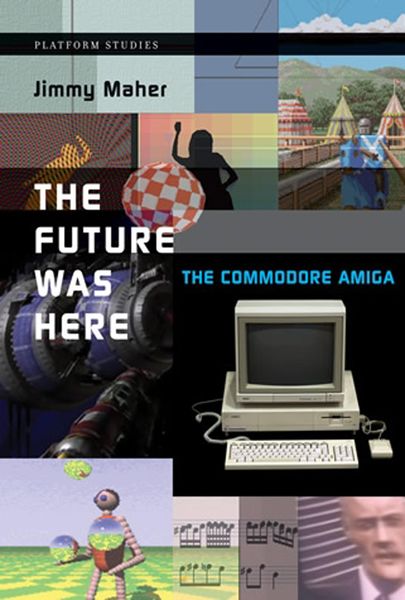
The Future Was Here The Commodore Amiga
-
- Taschenbuch
- eBook ausgewählt
-
Form:Einzelkauf Download
-
Sprache:Englisch
39,99 €
inkl. gesetzl. MwSt.Beschreibung
Produktdetails
Format
ePUB
Kopierschutz
Ja
Family Sharing
Ja
Text-to-Speech
Ja
Erscheinungsdatum
13.04.2012
Verlag
Mit PressSeitenzahl
344 (Printausgabe)
Dateigröße
4461 KB
Sprache
Englisch
EAN
9780262300742
Long ago, in 1985, personal computers came in two general categories: the friendly, childish game machine used for fun (exemplified by Atari and Commodore products); and the boring, beige adult box used for business (exemplified by products from IBM). The game machines became fascinating technical and artistic platforms that were of limited real-world utility. The IBM products were all utility, with little emphasis on aesthetics and no emphasis on fun. Into this bifurcated computing environment came the Commodore Amiga 1000. This personal computer featured a palette of 4,096 colors, unprecedented animation capabilities, four-channel stereo sound, the capacity to run multiple applications simultaneously, a graphical user interface, and powerful processing potential. It was, Jimmy Maher writes in The Future Was Here, the world's first true multimedia personal computer.
Maher argues that the Amiga's capacity to store and display color photographs, manipulate video (giving amateurs access to professional tools), and use recordings of real-world sound were the seeds of the digital media future: digital cameras, Photoshop, MP3 players, and even YouTube, Flickr, and the blogosphere. He examines different facets of the platformfrom Deluxe Paint to AmigaOS to Cinemawarein each chapter, creating a portrait of the platform and the communities of practice that surrounded it. Of course, Maher acknowledges, the Amiga was not perfect: the DOS component of the operating systems was clunky and ill-matched, for example, and crashes often accompanied multitasking attempts. And Commodore went bankrupt in 1994. But for a few years, the Amiga's technical qualities were harnessed by engineers, programmers, artists, and others to push back boundaries and transform the culture of computing.
Noch keine Bewertungen vorhanden
Verfassen Sie die erste Bewertung zu diesem Artikel
Helfen Sie anderen Kundinnen und Kunden durch Ihre Meinung.
Kurze Frage zu unserer Seite
Vielen Dank für Ihr Feedback
Wir nutzen Ihr Feedback, um unsere Produktseiten zu verbessern. Bitte haben Sie Verständnis, dass wir Ihnen keine Rückmeldung geben können. Falls Sie Kontakt mit uns aufnehmen möchten, können Sie sich aber gerne an unseren Kund*innenservice wenden.
zum Kundenservice