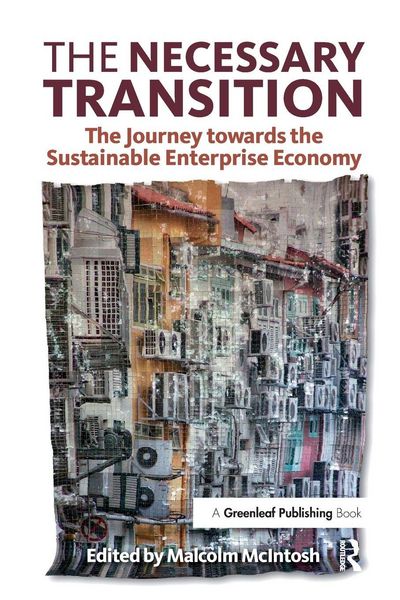
The Necessary Transition The Journey towards the Sustainable Enterprise Economy
-
- Englisch ausgewählt
59,99 €
inkl. gesetzl. MwSt.,
Beschreibung
Produktdetails
Einband
Taschenbuch
Erscheinungsdatum
21.07.2013
Herausgeber
McIntosh MalcolmVerlag
Taylor and FrancisSeitenzahl
270
Maße (L/B/H)
23,3/15,6/1,7 cm
Gewicht
420 g
Sprache
Englisch
ISBN
978-1-906093-89-1
Life on Earth for humanity and our ecosystems is at a point of great change. There is much to be learnt about previous great disruptions. The key words are *adaptation* and *transformation*. Most international companies operate across multiple social and environmental geographies, so they know this intellectual and practical landscape. And for many governments the challenges of social and environmental justice are also paramount - not least because equitable societies are best for business, and best for human well-being.The Necessary Transition addresses the many transitions taking place around the world: from high- to low-carbon economies, from gross inequality to egalitarianism, from massive human rights abuses to socially just societies, and from high corruption to societies with high social cohesion and integrity.The book brings together leading international researchers and practitioners to share their knowledge and expertise, and offers answers to many of the pressing questions that must be addressed in the journey towards a sustainable enterprise economy - an absolutely necessary transition for humanity.Contributors include: Sara Parkin, Founder-Director and Trustee of the UK's Forum for the Future; Bill Champion, Managing Director, Rio Tinto Coal Australia; and Mark Swilling, co-author of "Just Transitions" and Academic Director of the Sustainability Institute, South Africa.The key question is: "Is a transition to a sustainable future possible within the logic of conventional capitalism and 20th-century models of development?" This book provides radical perspectives from varying entry points and is essential reading for academics and practitioners interested in how we plan, speed and scale such necessary transitions.
Noch keine Bewertungen vorhanden
Verfassen Sie die erste Bewertung zu diesem Artikel
Helfen Sie anderen Kundinnen und Kunden durch Ihre Meinung.
Kurze Frage zu unserer Seite
Vielen Dank für Ihr Feedback
Wir nutzen Ihr Feedback, um unsere Produktseiten zu verbessern. Bitte haben Sie Verständnis, dass wir Ihnen keine Rückmeldung geben können. Falls Sie Kontakt mit uns aufnehmen möchten, können Sie sich aber gerne an unseren Kund*innenservice wenden.
zum Kundenservice