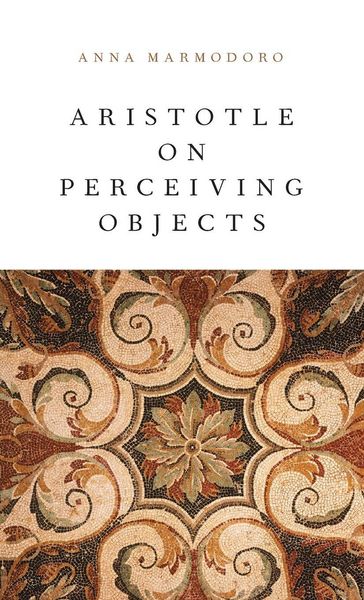
Aristotle on Perceiving Objects
155,99 €
inkl. gesetzl. MwSt.,
Beschreibung
Produktdetails
Einband
Gebundene Ausgabe
Erscheinungsdatum
04.08.2014
Abbildungen
3 illus.
Verlag
Oxford University PressSeitenzahl
302
Maße (L/B/H)
22,2/14,5/2 cm
Gewicht
514 g
Sprache
Englisch
ISBN
978-0-19-932600-6
How can we explain the structure of perceptual experience? What is it that we perceive? How is it that we perceive objects and not disjoint arrays of properties? By which sense or senses do we perceive objects? Are our five senses sufficient for the perception of objects? Aristotle investigated these questions by means of the metaphysical modeling of the unity of the perceptual faculty and the unity of experiential content. His account remains fruitful-but also challenging-even for contemporary philosophy. This book offers a reconstruction of the six metaphysical models Aristotle offered to address these and related questions, focusing on their metaphysical underpinning in his theory of causal powers. By doing so, the book brings out what is especially valuable and even surprising about the topic: the core principles of Aristotle's metaphysics of perception are fundamentally different from those of his metaphysics of substance. Yet, for precisely this reason, his models of perceptual content are unexplored territory. This book breaks new ground in offering an understanding of Aristotle's metaphysics of the content of perceptual experience and of the composition of the perceptual faculty.
Noch keine Bewertungen vorhanden
Verfassen Sie die erste Bewertung zu diesem Artikel
Helfen Sie anderen Kundinnen und Kunden durch Ihre Meinung.
Kurze Frage zu unserer Seite
Vielen Dank für Ihr Feedback
Wir nutzen Ihr Feedback, um unsere Produktseiten zu verbessern. Bitte haben Sie Verständnis, dass wir Ihnen keine Rückmeldung geben können. Falls Sie Kontakt mit uns aufnehmen möchten, können Sie sich aber gerne an unseren Kund*innenservice wenden.
zum Kundenservice