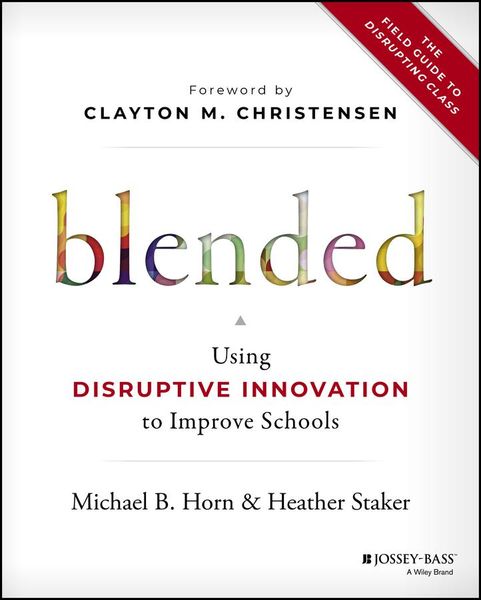
Blended Using Disruptive Innovation to Improve Schools
31,99 €
inkl. gesetzl. MwSt.,
Beschreibung
Produktdetails
Einband
Gebundene Ausgabe
Erscheinungsdatum
01.11.2014
Verlag
John Wiley & SonsSeitenzahl
336
Maße (L/B/H)
23,6/18,3/3 cm
Gewicht
658 g
Auflage
1. Auflage
Sprache
Englisch
ISBN
978-1-118-95515-4
Blended is the practical field guide for implementing blended learning techniques in K-12 classrooms. A follow-up to the bestseller Disrupting Class by Clayton M. Christensen, Michael Horn, and Curtis Johnson, this hands-on guide expands upon the blended learning ideas presented in that book to provide practical implementation guidance for educators seeking to incorporate online learning with traditional classroom time. Readers will find a step-by-step framework upon which to build a more student-centered system, along with essential advice that provides the expertise necessary to build the next generation of K-12 learning environments. Leaders, teachers, and other stakeholders will gain valuable insight into the process of using online learning to the greatest benefit of students, while avoiding missteps and potential pitfalls.
If online learning has not already rocked your local school, it will soon. Blended learning is one of the hottest trends in education right now, and educators are clamoring for "how-to" guidance. Blended answers the call by providing detailed information about the strategy, design, and implementation of a successful blended learning program.
* Discover a useful framework for implementing blended learning
* Unlock the benefits and mitigate the risks of online learning
* Find answers to the most commonly asked questions surrounding blended learning
* Create a more student-centered system that functions as a positive force across grade levels
Educators who loved the ideas presented in Disrupting Class now have a field guide to making it work in a real-world school, with expert advice for making the transition smoother for students, parents, and teachers alike. For educational leaders seeking more student-centered schools, Blended provides the definitive roadmap.
Noch keine Bewertungen vorhanden
Verfassen Sie die erste Bewertung zu diesem Artikel
Helfen Sie anderen Kundinnen und Kunden durch Ihre Meinung.
Kurze Frage zu unserer Seite
Vielen Dank für Ihr Feedback
Wir nutzen Ihr Feedback, um unsere Produktseiten zu verbessern. Bitte haben Sie Verständnis, dass wir Ihnen keine Rückmeldung geben können. Falls Sie Kontakt mit uns aufnehmen möchten, können Sie sich aber gerne an unseren Kund*innenservice wenden.
zum Kundenservice