• Produktbild: Principles of String Theory
  • Produktbild: Principles of String Theory

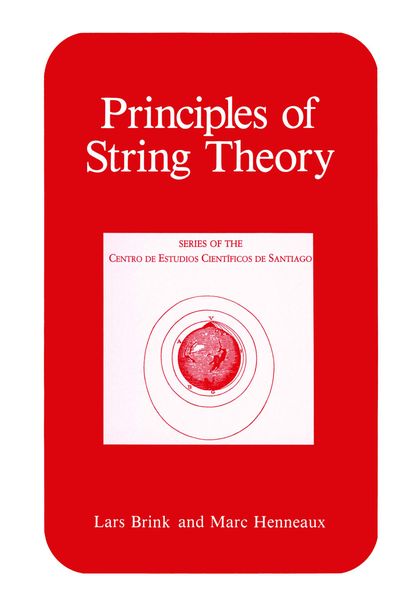
Principles of String Theory

49,99 €

inkl. gesetzl. MwSt., Versandkostenfrei


Beschreibung

Produktdetails

Einband

Taschenbuch

Erscheinungsdatum

17.09.2011

Verlag

Springer Us

Seitenzahl

312

Maße (L/B/H)

22,9/15,2/1,8 cm

Gewicht

460 g

Auflage

1988

Sprache

Englisch

ISBN

978-1-4612-8240-2

Beschreibung

Produktdetails

Einband

Taschenbuch

Erscheinungsdatum

17.09.2011

Verlag

Springer Us

Seitenzahl

312

Maße (L/B/H)

22,9/15,2/1,8 cm

Gewicht

460 g

Auflage

1988

Sprache

Englisch

ISBN

978-1-4612-8240-2

Herstelleradresse

Springer-Verlag GmbH
Tiergartenstr. 17
69121 Heidelberg
DE

Email: ProductSafety@springernature.com

Kundinnen und Kunden meinen

0 Bewertungen

Informationen zu Bewertungen

Zur Abgabe einer Bewertung ist eine Anmeldung im Konto notwendig. Die Authentizität der Bewertungen wird von uns nicht überprüft. Wir behalten uns vor, Bewertungstexte, die unseren Richtlinien widersprechen, entsprechend zu kürzen oder zu löschen.

Die Bewertungen sind nach Format, Anzahl Sterne und Datum sortiert.

Verfassen Sie die erste Bewertung zu diesem Artikel

Helfen Sie anderen Kund*innen durch Ihre Meinung

Kundinnen und Kunden meinen

0 Bewertungen filtern

  • Produktbild: Principles of String Theory
  • Produktbild: Principles of String Theory
  • I. Lectures on Superstrings.- 1. Introduction.- 2. Bosonic Strings.- 3. Spinning Strings.- 4. Superstrings.- 5. The Heterotic String.- 6. The Operator Formalism.- 7. Field Theory for Free Superstrings.- 8. Interaction Field Theory for Type IIB Superstrings.- 9. Other String Interactions and the Possible Occurrence of Anomalies.- 10. Outlook.- Appendix. Some Notations and Conventions.- References.- II. Lectures on String Theory, with Emphasis on Hamiltonian and BRST Methods.- 11. Introduction.- General References.- 12. The Nambu-Goto String: Classical Analysis.- 12.1. Action Principle.- 12.1.1. Nambu-Goto Action.- 12.1.2. Quadratic Form of the Action.- 12.1.3. ?-Model Interpretation of the Action.- 12.1.4. Gauge Invariances.- 12.1.5. Global Symmetries.- 12.1.6. Conformai Symmetry.- 12.1.7. Boundary Conditions.- 12.2. Hamiltonian Formalism.- 12.2.1. Constraints.- 12.2.2. Meaning of the Constraints—Simplification of the Formalism.- 12.2.3. Hamiltonian Form of the Boundary Conditions (Open Case).- 12.2.4. Hamiltonian Expression for the Poincaré Charges.- 12.3. A Closer Look at the Constraint Algebra.- 12.3.1. Explicit Computation.- 12.3.2. Virasoro Conditions.- 12.4. Fourier Modes.- 12.4.1. Open String.- 12.4.2. Closed String.- 12.5. Light-Cone Gauge.- 12.5.1. Conformai Gauges.- 12.5.2. Light-Cone Gauge.- 12.5.3. General Solution of the String Classical Equations.- 12.5.4. Independent Degrees of Freedom—Dirac Brackets.- 12.5.5. Light-Cone Gauge Action—Light-Cone Gauge Hamiltonian.- 12.5.6. Poincaré Generators.- 12.5.7. Peculiarities of the Closed String.- 13. Quantization of the Nambu-Goto String.- 13.1. General Considerations—Virasoro Algebra.- 13.1.1. Introduction.- 13.1.2. Fock Representation—Virasoro Operators.- 13.1.3. Virasoro Algebra.- 13.1.4. Virasoro Constraints versus the Wheeler-De Witt Equation.- 13.1.5. Virasoro Algebra and Kac-Moody Algebras.- 13.1.6. Virasoro Algebra in Curved Backgrounds.- 13.2. Becchi-Rouet-Stora-Tyutin (BRST) Quantization of the String.- 13.2.1. BRST Quantization—A Rapid Survey.- 13.2.2. Classical Expression of the BRST Charge.- 13.2.3. Ghost Fock Space.- 13.2.4. Nilpotency of the Quantum BRST Operator.- 13.2.5. Critical Dimension in Curved Backgrounds.- 13.2.6. Physical Subspace.- 13.2.7. Remarks on the Doubling.- 13.2.8. Miscellanea.- 13.3. Light-Cone Gauge Quantization.- 13.3.1. Poincaré Invariance of the Quantum Theory.- 13.3.2. Description of the Spectrum.- 13.3.3. Closed String—Poincaré Invariance.- 13.3.4. Spectrum (Closed String).- 13.4. Covariant Quantization.- 13.4.1. Elimination of Ghosts as the Central Issue in the Covariant Approach.- 13.4.2. Vertex Operators.- 13.4.3. DDF States.- 13.4.4. No-Ghost Theorem for d = 26, ?0=1.- 13.4.5. Quantum Gauge Invariance.- 14. The Fermionic String: Classical Analysis.- 14.1. Local Supersymmetry in Two Dimensions.- 14.2. Superconformai Algebra.- 14.2.1. Square Root of the Bosonic Constraints and Fermionic Constraints.- 14.2.2. Boundary Conditions.- 14.2.3. Supergauge Transformations—Light-Cone Gauge Conditions.- 14.2.4. Poincaré Generators.- 14.3. Fourier Modes (Open String).- 14.3.1. Fourier Expansion of the Fields.- 14.3.2. Super-Virasoro Generators..- 14.3.3. Poincaré Generators.- 14.3.4. Remarks on the Closed String.- 14.3.5. Super-Virasoro Algebra.- 15. The Fermionic String: Quantum Analysis.- 15.1. Becchi-Rouet-Stora-Tyutin (BRST) Quantization of the Neveu-Schwarz Model.- 15.1.1. Ghost Fock Space.- 15.1.2. BRST Operator.- 15.1.3. Critical Dimension.- 15.1.4. Structure of the Physical Subspace.- 15.2. Becchi-Rouet-Stora-Tyutin (BRST) Quantization of the Ramond Model.- 15.2.1. Ghost Fock Space.- 15.2.2. BRST Operator.- 15.2.3. Critical Dimension.- 15.2.4. Structure of the Physical Subspace.- 15.2.5. Remarks on the Closed String.- 15.3. Light-Cone Gauge Quantization of the Neveu-Schwarz Model.- 15.3.1. Poincaré Invariance.- 15.3.2. Neveu-Schwarz Spectrum.- 15.3.3. The Closed Neveu-Schwarz Spectrum.- 15.4. Light-Cone Gauge Quantization of the Ramond Model.- 15.4.1. Poincaré Invariance.- 15.4.2. Ramond Spectrum.- 15.4.3. Closed String.- 15.5. Supersymmetry in Ten Dimensions.- 15.5.1. Open String.- 15.5.2. Closed String.- 16. The Superstring.- 16.1. Covariant Action.- 16.1.1. SUSY(N)/SO(d — 1,1) as Target Space.- 16.1.2. Invariant Actions.- 16.1.3. Local Supersymmetry.- 16.1.4. Equations of Motion and Boundary Conditions.- 16.1.5. Structure of Gauge Symmetries.- 16.1.6. Super-Poincaré Charges.- 16.1.7. Hamiltonian Formalism.- 16.1.8. Light-Cone Gauge.- 16.2. Quantum Theory.- 16.3. The Superparticle.- 16.3.1. Action-Gauge Symmetries.- 16.3.2. Super-Poincaré Charges.- 16.3.3. Hamiltonian Formalism.- 16.3.4. Meaning of the Constraints.- 16.3.5. Siegel’s Model.- 16.3.6. Light-Cone Gauge.- 17. The Heterotic String.- Appendix A. BRST-Based Demonstration of the No-Ghost Theorem for the Bosonic String.- Appendix B. ? Matrices in Ten Dimensions.- B.1. Symmetry Properties.- B.2. Fierz Rearrangements.- Appendix C. Light-Cone Gauge Decomposition of Ten-Dimensional Spinors.- References.