• Produktbild: Global Aquatic and Atmospheric Environment
  • Produktbild: Global Aquatic and Atmospheric Environment

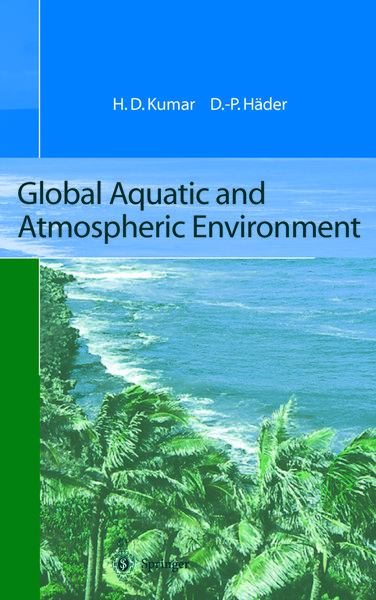
Global Aquatic and Atmospheric Environment

49,99 €

inkl. gesetzl. MwSt., Versandkostenfrei


Beschreibung

Produktdetails

Einband

Taschenbuch

Erscheinungsdatum

13.04.2014

Verlag

Springer Berlin

Seitenzahl

393

Maße (L/B/H)

23,5/15,5/2,3 cm

Gewicht

616 g

Auflage

1999

Sprache

Englisch

ISBN

978-3-642-64243-2

Beschreibung

Produktdetails

Einband

Taschenbuch

Erscheinungsdatum

13.04.2014

Verlag

Springer Berlin

Seitenzahl

393

Maße (L/B/H)

23,5/15,5/2,3 cm

Gewicht

616 g

Auflage

1999

Sprache

Englisch

ISBN

978-3-642-64243-2

Herstelleradresse

Springer-Verlag KG
Sachsenplatz 4-6
1201 Wien
AT

Email: GPSR Kontakt

Noch keine Bewertungen vorhanden

Verfassen Sie die erste Bewertung zu diesem Artikel

Helfen Sie anderen Kundinnen und Kunden durch Ihre Meinung.

Kundinnen und Kunden meinen

Bewertungen (0)

  • Produktbild: Global Aquatic and Atmospheric Environment
  • Produktbild: Global Aquatic and Atmospheric Environment
  • 1 Aquatic Ecosystems.- 1.1 Introduction.- 1.2 River Ecosystems.- 1.2.1 Uses of River Water.- 1.2.2 The River as a Biological Environment.- 1.2.3 Stream Organisms.- 1.2.4 Gravel-Bed River Mouths.- 1.2.5 The Flood Pulse Concept.- 1.2.6 The Riverine Productivity Model (RPM).- 1.3 Freshwater Resources and Water Quality.- 1.3.1 Major Rivers of East Asia.- 1.4 World Water Use.- 1.4.1 Impacts of Mismanagement and Pollution.- 1.5 Nature of the Chemical Environment.- 1.5.1 Input of Organic Matter from Terrestrial Ecosystems.- 1.5.2 Aquatic Humus.- 1.6 Quantitative Pollutants.- 1.6.1 Pesticides.- 1.6.2 Mercury.- 1.6.3 Thermal Pollution.- 1.6.4 Metals.- 1.7 Global Change and Freshwater Ecosystems.- 1.8 Hydrological Cycle and Climate.- 1.8.1 Atmospheric Circulation.- 1.9 Groundwater.- 1.9.1 Isotope Hydrology and Water Resources.- 1.9.2 Biodiversity.- 1.9.3 Pollution.- 1.10 Population Increase and Water Management.- 1.11 Water and the Environment.- 1.12 Freshwater Augmentation Technologies.- 1.13 Water and Development.- 1.14 Health and the Water Cycle.- 1.15 Toxicity Testing in the Aquatic Environment.- 1.15.1 Assessing Toxicity.- 1.16 Biological Toxicity Testing Versus Environmental Monitoring of Impacts.- 1.16.1 Toxicity Test Species.- 1.17 Diseases Associated with Water and Poverty.- 1.18 Restoration of Water Quality in Some Rivers.- 1.18.1 Diffuse sources.- 1.19 Rural Water Treatment for Developing Countries.- 1.19.1 Roughing Filters.- References.- 2 Lakes and Wetlands.- 2.1 Introduction.- 2.2 Trophic State.- 2.3 Interactions Between Physical and Chemical Processes.- 2.4 UV-B Effects.- 2.5 Seiching.- 2.5.1 Importance of Seiches.- 2.5.2 Circulation Patterns.- 2.6 Regional Lake Quality Patterns.- 2.6.1 Ecoregions.- 2.7 Inland Lakes.- 2.7.1 Nutrients.- 2.8 Trophic Status and Hypolimnetic Oxygen Concentration.- 2.9 Acidification.- 2.9.1 Acidification in Streams.- 2.9.2 Restoration of Acidified Waters.- 2.10 Large Lakes.- 2.10.1 Distinction Between Large and Small Lakes.- 2.11 Biogeochemistry.- 2.11.1 Biological Interactions.- 2.11.2 Land-Water Interactions.- 2.11.3 Physical Processes.- 2.11.4 Biogeochemistry and Nutrient Relations.- 2.12 Food Webs.- 2.13 Modeling of Lake Ecosystems.- 2.14 Lake Morphometry.- 2.15 Eutrophication.- 2.15.1 Eutrophication: Hysteresis and Remediation.- 2.15.2 Physical Modifications.- 2.15.3 Reversibility of Anthropogenic Eutrophication.- 2.16 Eutrophication Control.- 2.16.1 In-Lake Control Measures.- 2.16.2 Technology of Lake Restoration.- 2.17 Use of Ecological Indicators for Lake Assessment.- 2.17.1 Exergy, Structural Exergy and Buffer Capacity.- 2.17.2 Practical Assessment of Ecosystem Health.- 2.18 Role of Industry in Lake Management.- 2.19 Wetlands.- 2.19.1 Importance.- 2.19.2 Classes.- 2.19.3 Functions.- 2.19.4 Subsistence Production and Commercial Production.- References.- 3 Marine Environment.- 3.1 Introduction.- 3.2 The Intertidal Zone.- 3.3 Hydrothermal Vents.- 3.4 Marine and Coastal Pollution: Regional Sustainability.- 3.5 Living Resources.- 3.6 Marine Biodiversity.- 3.6.1 Biodiversity in Coral Reefs.- 3.7 Oceanic Productivity and Water Color.- 3.8 Life in Oceans: Past and Present.- 3.9 Phytoplankton.- 3.10 Clouds and Sea Surface Temperature.- 3.11 Marine Plankton and Clouds.- 3.12 Ocean and Climate.- 3.13 El Niño and Related Phenomena.- 3.14 Marine Eutrophication.- 3.15 Marine Litter.- 3.15.1 Coastal Dwellers.- 3.16 Disruption of Marine Ecosystems.- 3.16.1 Hazards of Harmful Substances Carried by Ships.- 3.16.2 Sea Surface Microlayer.- 3.17 Oil Spills.- 3.17.1 Behavior of Oil in the Environment.- 3.17.2 Spill Response Techniques.- 3.17.3 In Situ Burning of Oil Spills.- 3.17.4 Persistence of Oil in Subtidal Sediments.- 3.17.5 Containment of Oil in Flowing Water.- 3.17.6 Oil Sinking.- 3.17.7 Bioremediation of Oil Spills.- 3.17.8 Remote Sensing.- 3.18 Use of Indicators to Judge the Condition of Marine Ecosystems.- 3.19 Scales of Effects.- 3.20 Scenarios.- 3.20.1 Human Impacts.- 3.21 Shallow Water Habitats.- 3.21.1 Estuarine.- 3.21.2 Non-Estuarine.- 3.22 Recycling in the Deep Ocean.- 3.23 Deep Water Habitats.- 3.24 Indicators of Exposure and Effect.- 3.25 Biomarkers.- 3.26 Physiology.- 3.27 Ecology.- 3.28 Marine Pollution in India.- 3.29 The Indian Ocean Law and the Environment.- 3.29.1 Exclusive Rights.- 3.30 Ship Pollution.- 3.31 Waste from Land.- 3.31.1 Wanton Destruction.- 3.32 Animals in Peril.- 3.33 Desalination of Seawater.- References.- 4 Ozone Changes.- 4.1 The Ozone Shield.- 4.2 Ozone Formation.- 4.3 Miracle Substances.- 4.4 Catalytic Ozone Depletion.- 4.5 The Family of Organic Reactions.- 4.5.1 Organochlorine Compounds in Polar Regions.- 4.6 Methyl Bromide.- 4.7 The Polar Stratosphere.- 4.8 Polar Clouds and Sulfate Aerosols.- 4.9 Ozone in the Lower Stratosphere.- 4.10 CFC Substitutes.- 4.11 Causes of Ozone Depletion.- 4.11.1 The HOx Family of Reactions.- 4.11.2 The NOx Family of Reactions.- 4.11.3 The Halogen Family of Reactions.- 4.12 Ozone Layer Thickness.- 4.13 Total Column Ozone.- 4.14 Vertical Distribution of Ozone.- 4.15 Mount Pinatubo.- 4.16 Ozone Holes.- 4.16.1 The Antarctic Ozone Hole.- 4.16.2 Sulfate Aerosols and Ozone Depletion.- 4.16.3 Stratospheric Ozone Depletion by CIONO2 Photolysis.- 4.17 Ozone Depletion at Mid-Latitudes.- 4.18 The Ozone Depletion Controversy.- 4.18.1 Stratosphere-Troposphere Exchange Process.- 4.18.2 Stratospheric Temperature Trends Assessment (STTA).- 4.19 Ozone Trends.- 4.20 Unresolved Issues.- 4.21 Ozone Changes and Climate.- 4.22 Tropospheric Ozone.- 4.22.1 The Meteorological Environment of the Tropospheric Ozone Maximum over the Tropical South Atlantic.- 4.22.2 Climatic Impact of Ozone Change and Aerosols.- 4.22.3 Tropospheric Aerosols.- 4.22.4 Mineral Dust.- 4.22.5 Indirect Effects of Aerosols.- 4.22.6 Stratospheric Aerosols.- 4.23 Impacts of Ozone and Carbon Dioxide on Crop Yields.- 4.24 The Montreal Protocol.- 4.24.1 Effects of the Protocol.- 4.25 Recent Ozone Developments.- References.- 5 Solar Ultraviolet Radiation.- 5.1 Introduction.- 5.2 Ozone depletion and solar UV.- 5.2.1 UV Variability.- 5.2.2 North-South Differences.- 5.3 Tropospheric Transmission in the Ultraviolet.- 5.4 Measurement of UV.- 5.4 Measurement of UV.- 5.5 Biological Hazards of Ultraviolet Exposure.- 5.6 UV Damage to Biological Molecules.- 5.7 Health Effects.- 5.7.1 Molecular Targets of UV.- 5.7.2 UV, Sunburn and Skin Cancer.- 5.7.3 UV Effects on the Immune System.- 5.7.4 UV Effects on the Eye.- 5.7.5 Positive Effects of UV Radiation.- 5.8 UV-B Effects on Plants and Terrestrial Ecosystems.- 5.8.1 Effects of UV-B and Ozone on Terrestrial Vegetation.- 5.9 Effects on Aquatic Ecosystems.- 5.9.1 Effects on Cyanobacteria.- 5.9.2 Effects on Amphibians.- 5.10 Polymer Degradation.- 5.11 Effect of UV-B on Air Quality.- References.