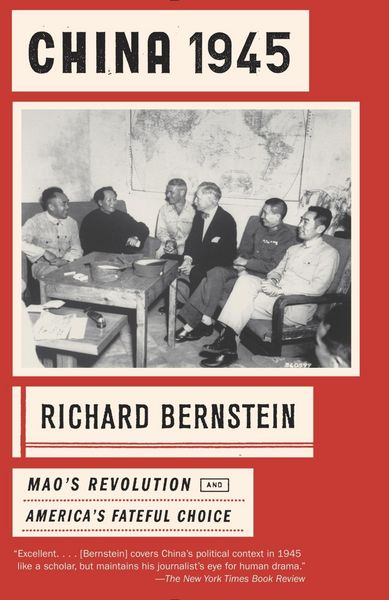
China 1945 Mao's Revolution and America's Fateful Choice
-
- Taschenbuch
- eBook ausgewählt
-
Form:Einzelkauf Download
-
Sprache:Englisch
6,99 €
7,99 €
*
Beschreibung
Produktdetails
Format
ePUB
Kopierschutz
Ja
Family Sharing
Ja
Text-to-Speech
Ja
Erscheinungsdatum
04.11.2014
Verlag
Knopf Doubleday Publishing GroupSeitenzahl
464 (Printausgabe)
Dateigröße
15681 KB
Sprache
Englisch
EAN
9780385353519
As 1945 opened, America was on surprisingly congenial terms with China's Communist rebels-their soldiers treated their American counterparts as heroes, rescuing airmen shot down over enemy territory. Chinese leaders talked of a future in which American money and technology would help lift China out of poverty. Mao Zedong himself held friendly meetings with U.S. emissaries, vowing to them his intention of establishing an American-style democracy in China.
By year's end, however, cordiality had been replaced by chilly hostility and distrust. Chinese Communist soldiers were setting ambushes for American marines in north China; Communist newspapers were portraying the United States as an implacable imperialist enemy; civil war in China was erupting. The pattern was set for a quarter century of almost total Sino-American mistrust, with the devastating wars in Korea and Vietnam among the consequences.
Richard Bernstein here tells the incredible story of that year's sea change, brilliantly analyzing its many components, from ferocious infighting among U.S. diplomats, military leaders, and opinion makers to the complex relations between Mao and his patron, Stalin.
On the American side, we meet experienced "China hands" John Paton Davies and John Stewart Service, whose efforts at negotiation made them prey to accusations of Communist sympathy; FDR's special ambassador Patrick J. Hurley, a decorated general and self-proclaimed cowboy; and Time journalist, Henry Luce, whose editorials helped turn the tide of American public opinion. On the Chinese side, Bernstein reveals the ascendant Mao and his intractable counterpart, Nationalist leader Chiang Kai-shek; and the indispensable Zhou Enlai.
A tour de force of narrative history, China 1945 examines the first episode in which American power and good intentions came face-to-face with a powerful Asian revolutionary movement, and challenges familiar assumptions about the origins of modern Sino-American relations.
Noch keine Bewertungen vorhanden
Verfassen Sie die erste Bewertung zu diesem Artikel
Helfen Sie anderen Kundinnen und Kunden durch Ihre Meinung.
Kurze Frage zu unserer Seite
Vielen Dank für Ihr Feedback
Wir nutzen Ihr Feedback, um unsere Produktseiten zu verbessern. Bitte haben Sie Verständnis, dass wir Ihnen keine Rückmeldung geben können. Falls Sie Kontakt mit uns aufnehmen möchten, können Sie sich aber gerne an unseren Kund*innenservice wenden.
zum Kundenservice