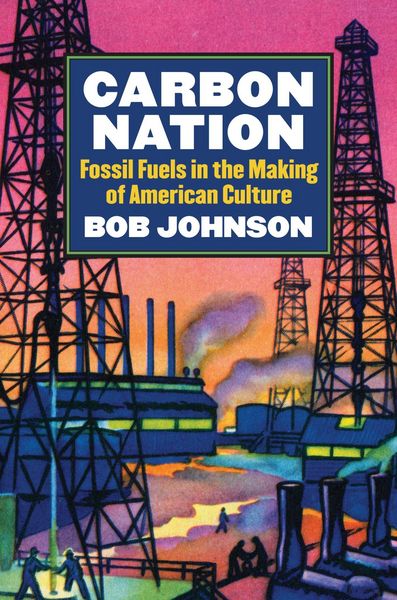
Carbon Nation Fossil Fuels in the Making of American Culture
-
- Hardcover ausgewählt
- Taschenbuch
- eBook
-
Sprache:Englisch
48,99 €
inkl. gesetzl. MwSt.,
Beschreibung
Produktdetails
Einband
Gebundene Ausgabe
Erscheinungsdatum
01.12.2014
Abbildungen
25 illustrations
Verlag
University Press Of KansasSeitenzahl
264
Maße (L/B/H)
22,9/15,2/1,9 cm
Gewicht
511 g
Sprache
Englisch
ISBN
978-0-7006-2004-3
Fossil fuels power our cars, our food supply, our climate-controlled homes, our work, and our play. That much we know. What we understand less, and what this book makes clear, is how fossil fuels also condition Americans' sensory lives, erotic experiences, and aesthetics; how they structure what we assume to be normal and healthy; and how they prop up a distinctly modern bargain with nature that allows populations and economies to grow wildly beyond the previously understood limits of the organic economy. Carbon Nation ranges across film and literary studies, journalism, politics, art history, and ecology, to chart the course by which prehistoric carbon calories influenced--in both conscious and unconscious ways--the modern American economy and body. This includes our ways of being, sensing, and knowing as different classes, races, sexes, and conditions learned to embrace, absorb, and navigate the material manifestations, cultural potentialities, and myriad costs of fossil fuels.
Combining historical ecology with cultural criticism, this book reveals the profound depths of our dependencies on carbon and the long repressed cultural history of our evasion and neglect of those dependencies. The ecological roots of modern America are introduced in the first half of the book with the revolution in material growth generated by the move from limited organic soil resources to subsoil energies. In the works of Eugene O'Neill, Upton Sinclair, Sherwood Anderson, and Stephen Crane, the author exposes how coal as a cultural object is used to suppress our dependencies, buried beneath modernist narratives of progress, consumption, and unbridled growth. In films like Charlie Chaplin's Modern Times and George Stevens's Giant we discover cinematic expressions of our deep-seated anxieties about living in a dizzying new world wrought by fossil fuels.
Any discussion of fossil fuels must go beyond energy policy and technology. As Bob Johnson reminds us, in provocative and powerful ways, what we take to be natural in the modern world is, in fact, historical, and our history and our culture have risen from this relatively recent embrace of the coal mine, the stoke hole, and the oil derrick.
Noch keine Bewertungen vorhanden
Verfassen Sie die erste Bewertung zu diesem Artikel
Helfen Sie anderen Kundinnen und Kunden durch Ihre Meinung.
Kurze Frage zu unserer Seite
Vielen Dank für Ihr Feedback
Wir nutzen Ihr Feedback, um unsere Produktseiten zu verbessern. Bitte haben Sie Verständnis, dass wir Ihnen keine Rückmeldung geben können. Falls Sie Kontakt mit uns aufnehmen möchten, können Sie sich aber gerne an unseren Kund*innenservice wenden.
zum Kundenservice