• Produktbild: How the Brain Learns Mathematics
  • Produktbild: How the Brain Learns Mathematics

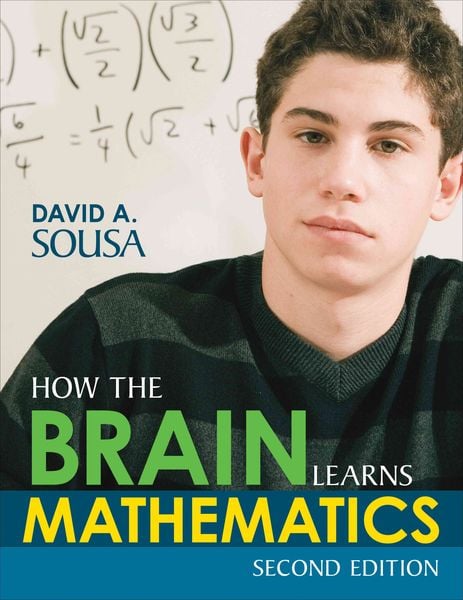
How the Brain Learns Mathematics

51,99 €

inkl. gesetzl. MwSt., Versandkostenfrei


Beschreibung

Produktdetails

Einband

Taschenbuch

Erscheinungsdatum

01.12.2014

Verlag

Sage Publications

Seitenzahl

258

Maße (L/B/H)

28/21,6/1,5 cm

Gewicht

658 g

Auflage

2. Auflage

Sprache

Englisch

ISBN

978-1-4833-6846-7

Beschreibung

Produktdetails

Einband

Taschenbuch

Erscheinungsdatum

01.12.2014

Verlag

Sage Publications

Seitenzahl

258

Maße (L/B/H)

28/21,6/1,5 cm

Gewicht

658 g

Auflage

2. Auflage

Sprache

Englisch

ISBN

978-1-4833-6846-7

Herstelleradresse

Libri GmbH
Europaallee 1
36244 Bad Hersfeld
DE

Email: gpsr@libri.de

Kundinnen und Kunden meinen

0 Bewertungen

Informationen zu Bewertungen

Zur Abgabe einer Bewertung ist eine Anmeldung im Konto notwendig. Die Authentizität der Bewertungen wird von uns nicht überprüft. Wir behalten uns vor, Bewertungstexte, die unseren Richtlinien widersprechen, entsprechend zu kürzen oder zu löschen.

Die Bewertungen sind nach Format, Anzahl Sterne und Datum sortiert.

Verfassen Sie die erste Bewertung zu diesem Artikel

Helfen Sie anderen Kund*innen durch Ihre Meinung

Kundinnen und Kunden meinen

0 Bewertungen filtern

  • Produktbild: How the Brain Learns Mathematics
  • Produktbild: How the Brain Learns Mathematics
  • About the Author
    Introduction
    Everyone Can Do Mathematics
    Why is Learning Mathematics So Hard?
    Response From Mathematics Educators
    About This Book
    Questions This Book Will Answer
    Chapter Contents
    Other Helpful Tools
    Assessing Your Current Knowledge of How We Learn Mathematics
    What¿s Coming?
    1. Developing Number Sense
    Babies Can Count
    What Is Number Sense?
    Animals Also Have Number Sense
    Why Do We Have Number Sense?
    Piaget and Number Sense
    Learning to Count
    Subitizing
    Counting
    How Language Affects Counting
    The Mental Number Line
    Expanded Notions of Number Sense
    Can We Teach Number Sense?
    Quantities to Words to Symbols
    Gardner's Logical/Mathematical Intelligence
    What's Coming?
    Reflections on Chapter 1
    2. Learning to Calculate
    Development of Conceptual Structures
    Structures in Four-Year-Olds
    Structures in Six-Year-Olds
    Structures in Eight-Year-Olds
    Structures in Ten-Year-Olds
    Dealing With Multiplication
    Why Are Multiplication Tables Difficult to Learn?
    Multiplication and Memory
    Is the Way We Teach the Multiplication Tables Intuitive?
    The Impact of Language on Learning Multiplication
    Do the Multiplication Tables Help or Hinder?
    What's Coming?
    Reflections on Chapter 2
    3. Reviewing the Elements of Learning
    Learning and Remembering
    Memory Systems
    Rehearsal Enhances Memory
    The Importance of Meaning
    How Will the Learning Be Stored?
    When Should New Learning Be Presented in a Lesson?
    Does Practice Make Perfect?
    Include Writing Activities
    Gender Differences in Mathematics
    Consider Learning Styles
    Consider Teaching Styles
    How Do You Think About Mathematics?
    What's Coming?
    Reflections on Chapter 3
    4. Teaching Mathematics to the Preschool and Kindergarten Brain
    Should Preschoolers Learn Mathematics at All?
    Assessing Students' Number Sense
    Preschoolers' Social and Emotional Behavior
    What Mathematics Should Preschoolers Learn?
    Preschool and Kindergarten Instructional Suggestions
    General Guidelines
    Suggestions for Teaching Subitizing
    Learning to Count
    An Easier Counting System
    Teacher Talk Improves Number Knowledge
    Questioning
    Developing Sorting and Classifying Skills
    What's Coming?
    Reflections on Chapter 4
    5. Teaching Mathematics to the Preadolescent Brain
    What Is the Preadolescent Brain?
    How Nature Influences the Growing Brain
    Environment Influences on the Young Brain
    Teaching for Meaning
    Using Cognitive Closure to Remember Meaning
    What Content Should We Be Teaching?
    Teaching Process Skills
    Does the Lesson Enhance Number Sense?
    Does the Lesson Deal With Estimation?
    From Memorization to Understanding
    Multiplication With Understanding
    Does the Lesson Develop Mathematical Reasoning?
    Using Practice Effectively With Young Students
    Graphic Organizers
    Don't Forget the Technology
    What's Coming?
    Reflections on Chapter 5
    6. Teaching Mathematics to the Adolescent Brain
    What Is the Adolescent Brain?
    Overworking the Frontal Lobes
    The Search for Novelty
    Learning Styles and Mathematics Curriculum
    Qualitative Versus Quantitative Learning Styles
    Developing Mathematical Reasoning
    Instructional Choices in Mathematics
    Graphic Organizers
    Interpreting Word Problems
    Making Mathematics Meaningful to Teenagers
    What's Coming?
    Reflections on Chapter 6
    7. Recognizing and Addressing Mathematics Difficulties
    Detecting Mathematics Difficulties
    Determining the Nature of the Problem
    Diagnostic Tools
    Environmental Factors
    Student Attitudes About Mathematics
    Fear of Mathematics (Math Anxiety)
    Neurological and Other Factors
    Dyscalculia
    Addressing Mathematics Difficulties
    Research Findings
    The Concrete-Pictorial-Abstract Approach
    Using Process Mnemonics
    Numeracy Intervention Process
    Students With Nonverbal Learning Disability
    Students With Both Mathematics and Reading Difficulties
    Other Considerations
    What's Coming?
    Reflections on Chapter 7
    8. Putting It All Together: Planning Lessons in PreK-12 Mathematics
    What Is Mathematics?
    Questions to Ask When Planning Lessons
    Is the Lesson Memory-Compatible?
    Does the Lesson Include Cognitive Closure?
    Will the Primacy-Recency Effect Be Taken Into Account?
    What About Practice?
    What Writing Will Be Involved?
    Are Multiple Intelligences Being Addressed?
    Does the Lesson Provide for Differentiation?
    Simplified Instructional Model
    Conclusion
    Reflections on Chapter 8
    Glossary
    References
    Resources
    Index