• Produktbild: Nutrition and Food Science
  • Produktbild: Nutrition and Food Science
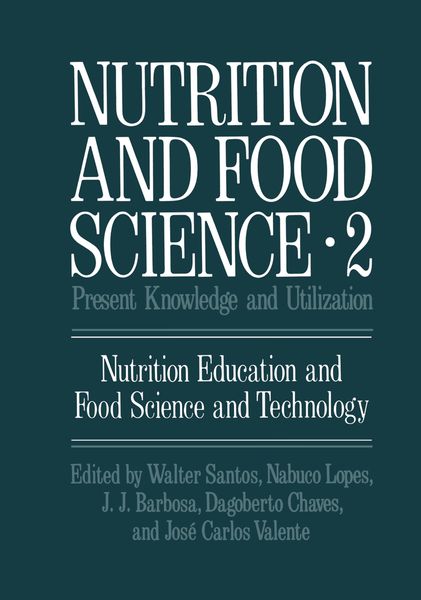
Band 2

Nutrition and Food Science Present Knowledge and Utilization

97,99 €

inkl. gesetzl. MwSt., Versandkostenfrei


Beschreibung

Produktdetails

Einband

Taschenbuch

Erscheinungsdatum

01.09.2013

Herausgeber

W. J. Santos

Verlag

Springer Us

Seitenzahl

950

Maße (L/B/H)

25,4/17,8/5,2 cm

Gewicht

1786 g

Auflage

Softcover reprint of the original 1st ed. 1980

Sprache

Englisch

ISBN

978-1-4757-0231-6

Beschreibung

Produktdetails

Einband

Taschenbuch

Erscheinungsdatum

01.09.2013

Herausgeber

W. J. Santos

Verlag

Springer Us

Seitenzahl

950

Maße (L/B/H)

25,4/17,8/5,2 cm

Gewicht

1786 g

Auflage

Softcover reprint of the original 1st ed. 1980

Sprache

Englisch

ISBN

978-1-4757-0231-6

Herstelleradresse

Springer-Verlag GmbH
Tiergartenstr. 17
69121 Heidelberg
DE

Email: GPSR Kontakt

Noch keine Bewertungen vorhanden

Verfassen Sie die erste Bewertung zu diesem Artikel

Helfen Sie anderen Kundinnen und Kunden durch Ihre Meinung.

Kundinnen und Kunden meinen

Bewertungen (0)

  • Produktbild: Nutrition and Food Science
  • Produktbild: Nutrition and Food Science
  • Animal and Vegetable Resources for Human Feeding.- Nutrition Priorities in the International Agricultural Research Network — Introductory Remarks.- How Nutrition Priorities can be Integrated into Crop Improvement Programs.- Progress in Nutritional Improvement of Maize and Triticale.- Improvement of Nutritional Quality of Sorghum and Pearl Millet.- The Need for Food Utilization and Processing Studies to Supplement Nutritional Evaluation.- Modern Practices in Animal Feeding — Relationship to Human Nutrition — Introductory Remarks.- Modern Practices in Pig Feeding and Husbandry: Relationship to Human Nutrition.- Perspectives of Milk/Beep Production Systems in the Tropics: Relationships to Human Nutrition.- Modern Practices in Cattle Feeding for Meat Production — Relationship to Human Nutrition.- Modern Practice in Cattle Feeding for Milk Production — Relationship to Human Nutrition.- Unexpected Nutritional Benefit from a Dairy Project.- Utilization of Waste for Food Production Using Animals: Application to Human Nutrition.- Report and Recommendations of the Workshop on Modern Practices of Animal Feeding: Relationship to Animal Nutrition.- Feed Formulation and Feed Technology.- Fish Feeding Technology.- Protein and Energy Requirements.- Vitamin, Fat and Mineral Requirements.- Vitamin Requirements of Finfish.- Status of Fish Food Formulation and Fish Nutrition — Research in Brazil.- Food Science and Technology.- Potential Utilization of Unconventional Food Sources and New Food Products — Introductory Remarks.- The Nutritional Value of Winged Bean (Psophocarpus tetragonolobus L. DC), with Special Reference to Five Varieties (Cultivars) Grown in Sri Lanka.- Prospects and Problems of Cultivation of Lupins in South America.- Vegetable Protein.- Studies Done in Ecuador on the Potential Utilization of Non-Conventional Sources of Foods.- B.P.C. — A Fish Protein Concentrate for Human Consumption.- Utilization of Non-Conventional Foods in Brazil.- The Experience in Mexico on the Utilization of Non-Conventional Protein Sources.- Agricultural Production of Soybeans: Relation between Varieties and Nutritive Values.- Types of Soy Protein Products.- Conversion of Raw Soybeans into High-Quality Protein Products.- Studies on Nutritive Values of Mixed Protein (50% Soy and 50% Fish) and Soy Protein Isolate in Japanese Adults.- The Technology of Iron Fortification.- The Technology of Vitamin A.- Biological and Chemical Products Applied in Agriculture: Their Influence on Food Quality.- Environmental Contaminants.- Contaminants and Additives in Animal Feeding: Relationship to Human Nutrition.- Contamination of the Argentinian Family Basket By Chlorinated Defensives Residues — Biological Repercussion.- Protection of the Consumer from Aflatoxins in Food.- Nutritional Losses in Storage and Processing of Legumes.- Role of Post-Harvest Conservation of Foods in Achieving Nutritional Goals.- Significance of Nutritional Losses in the Processing of Grains.- Research in Food Nutrition.- Report and Recommendations of the Workshop on Priorities in Nutrition Research — Panel Discussion.- Approaches to Setting Priorities.- Priorities for Nutrition Research.- Priority for Applied Nutrition Research in Developing Countries.- Priorities in Nutrition Research: Remarks from the Standpoint of the Italian Experience.- Priorities for Nutrition Research in a Developing Country — Turkey.- Nutrition Research Priorities for North Africa.- New Zealand National Diet Survey: Prelude to a National Nutrition Policy.- Critical Considerations for National Nutrition Surveys in Africa.- The Need for Periodical Revision of the National Nutritional Status.- Assessment and Monitoring of Nutritional Health.- New Approaches to the Assessment of Nutritional Status — Selection and Utilization of Nutrition Indicators — The Jamaican Experience.- Report and Recommendations of the Workshop on “New Approaches to the Assessment of Nutritional Status. Selection and Utilization of Nutrition Indicators”.- The Food and Nutrition Situation and the Perspectives for Food Demand in Morocco.- Contribution of Anthropology to Nutrition: Introductory Remarks.- An Anthropological Perspective on Nutrition Program Evaluation.- Anthropological Perspectives in Nutrition and Health Programmes.- Evaluation in a Caribbean Context: Sociocultural Factors Affecting a Community Health Aide Program.- Evaluation in a Middle Eastern Context: A Case Study.- Evaluation in an African Context: Special Emphasis on the Woman Producer and Reproducer — Some Theoretical Considerations.- The Experience of Greece.- Differences in Energy Expenditure in Selected Work under Control and AD Libitum.- A Study of the Energy Expenditure, Dietary Intake and Pattern of Daily Activities Among Various Occupational Groups. IV: Weightlifters.- Water and Electrolyte Balance in Exercise.- Predicting Nutritive Value of Food Protein by in Vitro Method.- Protein Quality of Food Measured with Tetrahymena Thermophila and Rat.- Enzymatic Hydrolysis of Food Proteins for Amino Acid Analysis.- Protein Quality Measurements on a Bacterial Single — Cell Protein (SCP) Grown on Methanol.- Methionine-Sulphoxide Content of Fish Protein Concentrate (FPC) and Available Methionine Determined Microbiologically with Streptococcus Zymogenes.- Defining Dietary Fiber in Food Technology.- Fractionation and Chemical Characterization of Dietary Fibre Components.- Evaluation of Methods Suggested for Assay of Dietary Fibre.- Nutrition Education.- Food and Nutrition Education within National Educational Systems.- What can be Expected from Nutritional Education Directed toward the Population of the Third World.- Evaluation of Nutrition Education Programs.- Reactor’s Comments on Nutrition Education.- Changing Nutrition and Health Behavior Through Mass Media: The Philippine Experience.- Nutrition Education in the Early Childhood Grade Levels in Israel.- Case Study on Nutrition Education in the United Kingdom.- Nutrition Education in the Netherlands.- Community Nutrition Education.- The Marketing Approach to Nutrition Education in Developing Countries.- Nutrition Training of Health Workers in Developing Countries.- Nutritional Education for Medical and Other Health Science Professionals in East Europe.- Nutrition Education for Medical and Other Health Science Professions in Asia.- The Tanzania Experience.- Nutrition and Primary Health Care Services II: Training.- Report on the Workshop on Nutrition Education for Medical and Other Health Sciences.- The Nutritionist-Dietitian in Latin-America.- Communications Competencies of the Nutritionist-Dietitian.- The Role of the Nutritionist in Expanding Community Nutrition Education Programs.- Qualification of the Nutritionist-Dietitian in Order to Participate in Community Based Health Programmes.- Adaptation of the Training of Dietitians to their Roles.- Dietetics Around the World — 1977 Survey of the Work and Training of Dietitians.- Thoughts on the Ethics of Dietetic Profession.