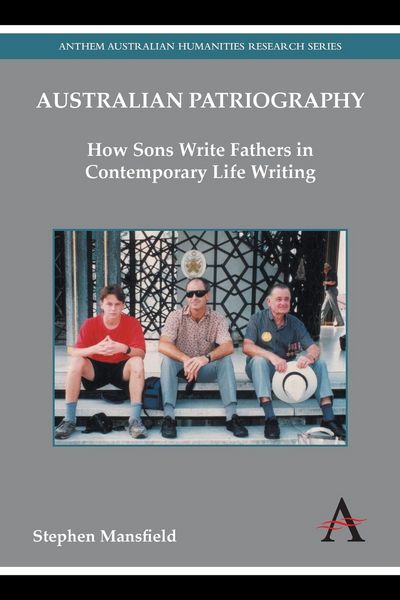
• Produktbild: Australian Patriography
  • Produktbild: Australian Patriography

Australian Patriography How Sons Write Fathers in Contemporary Life Writing

59,99 €

inkl. gesetzl. MwSt., Versandkostenfrei


Beschreibung

Produktdetails

Einband

Taschenbuch

Erscheinungsdatum

01.11.2014

Verlag

Ingram Publishers Services

Seitenzahl

222

Maße (L/B/H)

22,9/15,2/1,3 cm

Gewicht

454 g

Sprache

Englisch

ISBN

978-1-78308-338-1

Beschreibung

Produktdetails

Einband

Taschenbuch

Erscheinungsdatum

01.11.2014

Verlag

Ingram Publishers Services

Seitenzahl

222

Maße (L/B/H)

22,9/15,2/1,3 cm

Gewicht

454 g

Sprache

Englisch

ISBN

978-1-78308-338-1

Herstelleradresse

Libri GmbH
Europaallee 1
36244 Bad Hersfeld
DE

Email: gpsr@libri.de

Kundinnen und Kunden meinen

0 Bewertungen

Informationen zu Bewertungen

Zur Abgabe einer Bewertung ist eine Anmeldung im Konto notwendig. Die Authentizität der Bewertungen wird von uns nicht überprüft. Wir behalten uns vor, Bewertungstexte, die unseren Richtlinien widersprechen, entsprechend zu kürzen oder zu löschen.

Die Bewertungen sind nach Format, Anzahl Sterne und Datum sortiert.

Verfassen Sie die erste Bewertung zu diesem Artikel

Helfen Sie anderen Kund*innen durch Ihre Meinung

Kundinnen und Kunden meinen

0 Bewertungen filtern

  • Produktbild: Australian Patriography
  • Produktbild: Australian Patriography
  • Acknowledgements; List of Illustrations; Introduction Writing Patrimony: The Son’s Book of the Father as a Sub-genre; PART I: CHALLENGING AUTHORITY: Chapter One: ‘The Paradigm Case’: Contesting the Father in Edmund Gosse’s ‘Father and Son: A Study of Two Temperaments’; Chapter Two: ‘An Indubitable Australian’: Renouncing the Father in Hal Porter’s ‘The Watcher on the Cast-Iron Balcony’; PART II: MEMORIALISING SELF-DENIAL: Chapter Three: ‘Words to Keep Fully Amongst Us’: Honouring the Father in Raimond Gaita’s ‘Romulus, My Father’; Chapter Four: ‘I Really Was the Son of Such a Man’: Replacing the Father in Richard Freadman’s ‘Shadow of Doubt: My Father and Myself’; PART III: PERFORMING MASCULINITY: Chapter Five: A Speaking Subject/A Watching Object: Addressing the Father in Peter Rose’s ‘Rose Boys’; Chapter Six: Choosing Patrimony: Performing for the Father in John Hughes’s ‘The Idea of Home’; Chapter Seven: ‘Neither to Vindicate nor to Vilify’: Becoming the Father in Robert Gray’s ‘The Land I Came Through Last’; Conclusion: The Turn to the Father in Autobiography; Bibliography; Index