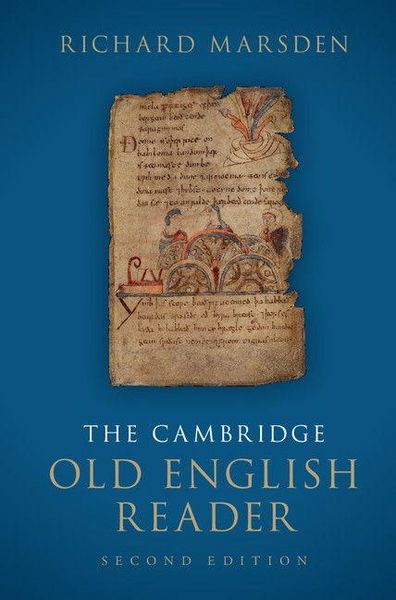
The Cambridge Old English Reader
-
- Hardcover ausgewählt
- Taschenbuch
- eBook
-
Sprache:Englisch
178,99 €
inkl. gesetzl. MwSt.,
Beschreibung
Produktdetails
Einband
Gebundene Ausgabe
Erscheinungsdatum
24.08.2018
Abbildungen
1 b/w illus., Zeichnungen, nicht spezifiziert
Verlag
Cambridge AcademicSeitenzahl
614
Maße (L/B/H)
24/16,1/3,7 cm
Gewicht
1077 g
Auflage
2., überarbeitete Auflage
Sprache
Englisch
ISBN
978-1-107-05530-8
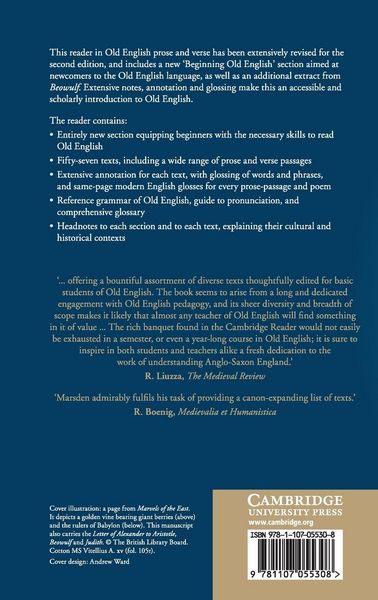
This reader remains the only major new reader of Old English prose and verse in the past forty years. The second edition is extensively revised throughout, with the addition of a new 'Beginning Old English' section for newcomers to the Old English language, along with a new extract from Beowulf. The fifty-seven individual texts include established favourites such as The Battle of Maldon and Wulfstan's Sermon of the Wolf, as well as others not otherwise readily available, such as an extract from Apollonius of Tyre. Modern English glosses for every prose-passage and poem are provided on the same page as the text, along with extensive notes. A succinct reference grammar is appended, along with guides to pronunciation and to grammatical terminology. A comprehensive glossary lists and analyses all the Old English words that occur in the book. Headnotes to each of the six text sections, and to every individual text, establish their literary and historical contexts, and illustrate the rich cultural variety of Anglo-Saxon England. This second edition is an accessible and scholarly introduction to Old English.
Noch keine Bewertungen vorhanden
Verfassen Sie die erste Bewertung zu diesem Artikel
Helfen Sie anderen Kundinnen und Kunden durch Ihre Meinung.
Kurze Frage zu unserer Seite
Vielen Dank für Ihr Feedback
Wir nutzen Ihr Feedback, um unsere Produktseiten zu verbessern. Bitte haben Sie Verständnis, dass wir Ihnen keine Rückmeldung geben können. Falls Sie Kontakt mit uns aufnehmen möchten, können Sie sich aber gerne an unseren Kund*innenservice wenden.
zum Kundenservice