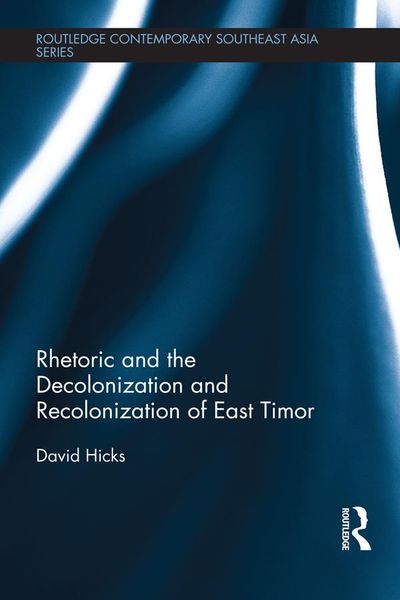
Rhetoric and the Decolonization and Recolonization of East Timor
-
- Hardcover
- Taschenbuch
- eBook ausgewählt
-
Form:Einzelkauf Download
-
Sprache:Englisch
-
eBook Format:PDF
- PDF 71,99 € ausgewählt
- ePUB 71,99 €
71,99 €
inkl. gesetzl. MwSt.Beschreibung
Produktdetails
Format
Kopierschutz
Ja
Family Sharing
Nein
Text-to-Speech
Nein
Erscheinungsdatum
15.09.2014
Verlag
Taylor & Francis eBooksSeitenzahl
250 (Printausgabe)
Dateigröße
2352 KB
Sprache
Englisch
EAN
9781317695356
By the end of the 1960s the process of decolonization had practically run its course in Southeast Asia. One exception, however, was tiny Portuguese Timor, where notions of self-determination and independence had yet to be generated. In 1974, the Carnation Revolution in Portugal brought about the end of fifty years of dictatorship, and halfway around the world, presented a new opportunity to a small, ambitious proportion of the Timorese population, eager to shape the future of their country.
This book presents a compelling and original perspective on the critical period of 1974-1975 in the history of East Timor. It describes how the language of politics helped to shape the events that brought about the decolonization of Portuguese Timor, its brief independence as The Democratic Republic of East Timor, and its recolonization by an Asian neighbour. Further, it challenges the idea that this period of history was infused by the spirit of nationalism in which the majority Timorese partook, and which contended with other competing western -isms, including colonialism, communism, neo-colonialism, and fascism. In contrast, the book argues that the Timorese majority had little understanding of any of these alien political abstractions and that the period can be most effectively explained and understood in terms of the contrast between the political culture of Dili, the capital, and the political culture of the rest of the country. In turn, David Hicks highlights how the period of 1974-1975 can offer lessons to government and international policy-makers alike who are trying to bring about a transformation in governance from the traditional to the legal and convert individuals from peasants to citizens.
The result of extensive fieldwork and interviews, this book will be of interest to students and scholars of Southeast Asian studies, international relations, post-conflict studies and post-colonial studies.
Noch keine Bewertungen vorhanden
Verfassen Sie die erste Bewertung zu diesem Artikel
Helfen Sie anderen Kundinnen und Kunden durch Ihre Meinung.
Kurze Frage zu unserer Seite
Vielen Dank für Ihr Feedback
Wir nutzen Ihr Feedback, um unsere Produktseiten zu verbessern. Bitte haben Sie Verständnis, dass wir Ihnen keine Rückmeldung geben können. Falls Sie Kontakt mit uns aufnehmen möchten, können Sie sich aber gerne an unseren Kund*innenservice wenden.
zum Kundenservice