Gutscheinbedingungen

Gültig bis 13.07.2026 | Gültig für Spielzeug (außer Tonieboxen & ausgewählte Tonies), Filme, Musik, Software, Games, Schreibwaren, Hörbücher und Hörbuch-Downloads (außer Abo & Shelfies), gebrauchte Bücher, nicht preisgebundene Bücher und Kalender | Einlösbar unter osiander.de und in der Osiander App | Click & Collect nur mit Online-Zahlung (Paypal/Kreditkarte) vorab | Einzelne Artikel können ausgeschlossen sein | Nicht kombinierbar mit anderen Gutscheinen oder Preisaktionen | Nur einmal pro Einkauf einlösbar | Gutschein wird auf max. 500€ Bestellwert angerechnet | Keine Barauszahlung | Digitale Hörbücher nur für Android | Nicht gültig für preisgebundene Artikel (aufgrund der Buchpreisbindung sind Gutscheine nicht auf Bücher, eBooks, Presse einlösbar), tolino eReader & Zubehör, Elektronik, Geschenke & Trends, Abonnements & Flatrates, Geschenkkarten, Versandkosten und Services

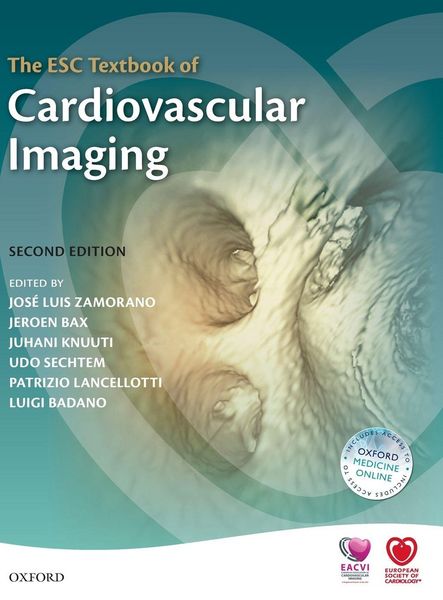
Produktbild: Textb Cardiovascul Imaging 2e Esc C

Textb Cardiovascul Imaging 2e Esc C

301,99 €

inkl. gesetzl. MwSt., Versandkostenfrei


Beschreibung

Produktdetails

Einband

Gebundene Ausgabe

Erscheinungsdatum

07.08.2014

Herausgeber

Zamorano Jose Luis + weitere

Verlag

Oxford Academic

Seitenzahl

660

Maße (L/B/H)

28,6/22,1/4 cm

Gewicht

1848 g

Sprache

Englisch

ISBN

978-0-19-870334-1

Beschreibung

Produktdetails

Einband

Gebundene Ausgabe

Erscheinungsdatum

07.08.2014

Herausgeber

Verlag

Oxford Academic

Seitenzahl

660

Maße (L/B/H)

28,6/22,1/4 cm

Gewicht

1848 g

Sprache

Englisch

ISBN

978-0-19-870334-1

Herstelleradresse

Libri GmbH
Europaallee 1
36244 Bad Hersfeld
DE

Email: gpsr@libri.de

Noch keine Bewertungen vorhanden

Verfassen Sie die erste Bewertung zu diesem Artikel

Helfen Sie anderen Kundinnen und Kunden durch Ihre Meinung.

Kundinnen und Kunden meinen

Bewertungen (0)

  • Produktbild: Textb Cardiovascul Imaging 2e Esc C
    • Technical aspects of imaging

    • 1: Conventional Echocardiography - basic principles

    • 2: Nuclear Cardiology (PET and SPECT) - basic principles

    • 3: Cardiac CT - basic principles

    • 4: CMR - basic principles

    • New technical developments in imaging techniques

    • 5: New developments in echocardiography/Advanced echocardiography

    • 6: Hybrid imaging: PET-CT and SPECT-CT, PET-MRI

    • 7: New technical developments in CT

    • 8: New technical developments in CMR

    • 9: Imaging during cardiac interventions

    • Valvular heart disease

    • 10: Aortic valve stenosis

    • 11: Aortic valve regurgitation

    • 12: Mitral valve stenosis

    • 13: Mitral valve regurgitation

    • 14: Tricuspid and pulmonary valve disease

    • 15: Valvular prostheses

    • 16: Percutaneous valve therapy

    • 17: Endocarditis

    • Coronary artery disease

    • 18: Echocardiography and detection of coronary artery disease

    • 19: Nuclear cardiology and detection of coronary artery disease

    • 20: MCST and detection of coronary artery disease

    • 21: CMR and detection of coronary artery disease

    • 22: Imaging the vulnerable atherosclerotic plaque

    • Heart Failure

    • 23: Evaluation of systolic LV function and LV mechanics

    • 24: Evaluation of diastolic LV function

    • 25: Evaluation of RV function

    • 26: Echocardiography to assess viability

    • 27: Nuclear and MSCT to assess viability

    • 28: CMR to assess viability

    • 29: Imaging cardiac innervation

    • 30: Cardiac resynchronization therapy: selection of candidates

    • 31: Cardiac resynchronization therapy: optimization and follow-up

    • 32: Echocardiography evaluation in LVAD

    • Cardiomyopathies

    • 33: Hypertrophic cardiomyopathy

    • 34: Infiltrative cardiomyopathy

    • 35: Dilated cardiomyopathy

    • 36: Other genetic and acquired cardiomyopathies

    • Peri-myocardial disease

    • 37: Pericardial effusion and tamponade

    • 38: Constrictive pericarditis

    • 39: Myocarditis

    • 40: Cardiac masses and tumors

    • Adult congenital heart disease

    • 41: Role of echocardiography

    • 42: Role of CMR and MSCT

    • Aortic disease: aneurysm and dissection

    • 43: Role of echocardiography

    • 44: Role of CMR

    • 45: Role of MSCT