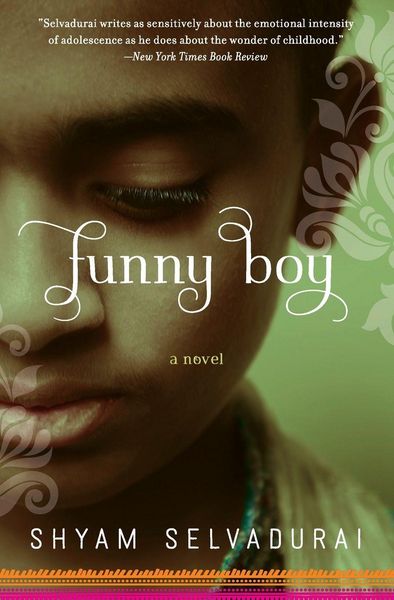
Produktbild: Funny Boy

Funny Boy

1

21,99 €

inkl. gesetzl. MwSt., Versandkostenfrei


Beschreibung

Produktdetails

Einband

Taschenbuch

Erscheinungsdatum

15.01.2020

Verlag

Harper Collins (US)

Seitenzahl

320

Maße (L/B/H)

20,3/13,3/1,9 cm

Gewicht

242 g

Sprache

Englisch

ISBN

978-0-06-239298-5

Beschreibung

Produktdetails

Einband

Taschenbuch

Erscheinungsdatum

15.01.2020

Verlag

Harper Collins (US)

Seitenzahl

320

Maße (L/B/H)

20,3/13,3/1,9 cm

Gewicht

242 g

Sprache

Englisch

ISBN

978-0-06-239298-5

Herstelleradresse

Libri GmbH
Europaallee 1
36244 Bad Hersfeld
DE

Email: gpsr@libri.de

Kundinnen und Kunden meinen

1 Bewertungen

Informationen zu Bewertungen

Zur Abgabe einer Bewertung ist eine Anmeldung im Konto notwendig. Die Authentizität der Bewertungen wird von uns nicht überprüft. Wir behalten uns vor, Bewertungstexte, die unseren Richtlinien widersprechen, entsprechend zu kürzen oder zu löschen.

Die Bewertungen sind nach Format, Anzahl Sterne und Datum sortiert.

5 Sterne

(1)

4 Sterne

(0)

3 Sterne

(0)

2 Sterne

(0)

1 Sterne

(0)

a personal and a political story!

Bewertung am 02.04.2024

Bewertungsnummer: 2168999

Bewertet: Buch (Taschenbuch)

Growing up in a middle-class, Lankan-Tamil family from Colombo (Sri Lanka), young Arjie is made to realise that he is different - a "funny boy". That as a boy, he should prefer cricket over his "bride-bride" dress-up-game. So, this book conveys Arjie's struggle to come into terms with his own sexuality. How and whom Arjie admires is portrayed in such an organic way - it's truly refereshing. However, to deem this book "merely" as a coming-of-age novel would not do it its justice. The book is set in pre-civil-war Sri Lanka, we, as readers, are made aware of the growing ethnic-tension between Sinhalese and Tamil people. These ethnic-tensions which will eventually lead Arjie to leave the island, following the Anti-Tamil Pogrom of 1983 (Black July) - the island he once felt safe and called home. Selvadurai invites the reader into Arjie’s world. He conveys the effects of disastrous events on Arjie's family in a the language that’s simple, yet so powerful. The contrast between the beautifully written language and the devastating story it tells is so strong. In his afterword, Selvadurai says that he wants to write about "those who are swept away by it" - "it" as in history. Thus, this is not a "grant narrative", it tells the story of Arjie’s family - whose experience might be reflected by thousand of others (especially by Tamil-Lankans). Growing up in a middle-class, Lankan-Tamil family from Colombo (Sri Lanka), young Arjie is made to realise that he is different - a "funny boy". That as a boy, he should prefer cricket over his "bride-bride" dress-up-game. So, this book conveys Arjie's struggle to come into terms with his own sexuality. How and whom Arjie admires is portrayed in such an organic way - it's truly refereshing. However, to deem this book "merely" as a coming-of-age novel would not do it its justice. The book is set in pre-civil-war Sri Lanka, we, as readers, are made aware of the growing ethnic-tension between Sinhalese and Tamil people. These ethnic-tensions which will eventually lead Arjie to leave the island, following the Anti-Tamil Pogrom of 1983 (Black July) - the island he once felt safe and called home. Selvadurai invites the reader into Arjie’s world. He conveys the effects of disastrous events on Arjie's family in a the language that’s simple, yet so powerful. The contrast between the beautifully written language and the devastating story it tells is so strong. In his afterword, Selvadurai says that he wants to write about "those who are swept away by it" - "it" as in history. Thus, this is not a "grant narrative", it tells the story of Arjie’s family - whose experience might be reflected by thousand of others (especially by Tamil-Lankans).

a personal and a political story!

Bewertung am 02.04.2024
Bewertungsnummer: 2168999
Bewertet: Buch (Taschenbuch)

Growing up in a middle-class, Lankan-Tamil family from Colombo (Sri Lanka), young Arjie is made to realise that he is different - a "funny boy". That as a boy, he should prefer cricket over his "bride-bride" dress-up-game. So, this book conveys Arjie's struggle to come into terms with his own sexuality. How and whom Arjie admires is portrayed in such an organic way - it's truly refereshing. However, to deem this book "merely" as a coming-of-age novel would not do it its justice. The book is set in pre-civil-war Sri Lanka, we, as readers, are made aware of the growing ethnic-tension between Sinhalese and Tamil people. These ethnic-tensions which will eventually lead Arjie to leave the island, following the Anti-Tamil Pogrom of 1983 (Black July) - the island he once felt safe and called home. Selvadurai invites the reader into Arjie’s world. He conveys the effects of disastrous events on Arjie's family in a the language that’s simple, yet so powerful. The contrast between the beautifully written language and the devastating story it tells is so strong. In his afterword, Selvadurai says that he wants to write about "those who are swept away by it" - "it" as in history. Thus, this is not a "grant narrative", it tells the story of Arjie’s family - whose experience might be reflected by thousand of others (especially by Tamil-Lankans). Growing up in a middle-class, Lankan-Tamil family from Colombo (Sri Lanka), young Arjie is made to realise that he is different - a "funny boy". That as a boy, he should prefer cricket over his "bride-bride" dress-up-game. So, this book conveys Arjie's struggle to come into terms with his own sexuality. How and whom Arjie admires is portrayed in such an organic way - it's truly refereshing. However, to deem this book "merely" as a coming-of-age novel would not do it its justice. The book is set in pre-civil-war Sri Lanka, we, as readers, are made aware of the growing ethnic-tension between Sinhalese and Tamil people. These ethnic-tensions which will eventually lead Arjie to leave the island, following the Anti-Tamil Pogrom of 1983 (Black July) - the island he once felt safe and called home. Selvadurai invites the reader into Arjie’s world. He conveys the effects of disastrous events on Arjie's family in a the language that’s simple, yet so powerful. The contrast between the beautifully written language and the devastating story it tells is so strong. In his afterword, Selvadurai says that he wants to write about "those who are swept away by it" - "it" as in history. Thus, this is not a "grant narrative", it tells the story of Arjie’s family - whose experience might be reflected by thousand of others (especially by Tamil-Lankans).

Kundinnen und Kunden meinen

Funny Boy

von Shyam Selvadurai

0 Bewertungen filtern

Die Leseprobe wird geladen.
  • Produktbild: Funny Boy