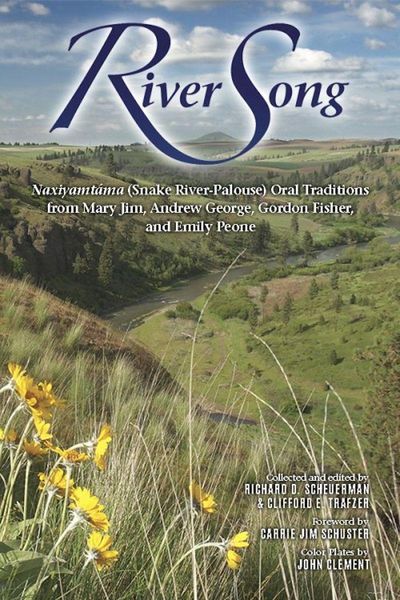
River Song Naxiyamtáma (Snake River-Palouse) Oral Traditions from Mary Jim, Andrew George, Gordon Fisher, and Emily Peone
-
- Englisch ausgewählt
24,99 €
inkl. gesetzl. MwSt.,
Beschreibung
Produktdetails
Einband
Taschenbuch
Erscheinungsdatum
15.03.2015
Herausgeber
Richard D. Scheuerman + weitereVerlag
Washington State University PressSeitenzahl
228
Maße (L/B/H)
22,6/15/1,8 cm
Gewicht
431 g
Sprache
Englisch
ISBN
978-0-87422-327-9
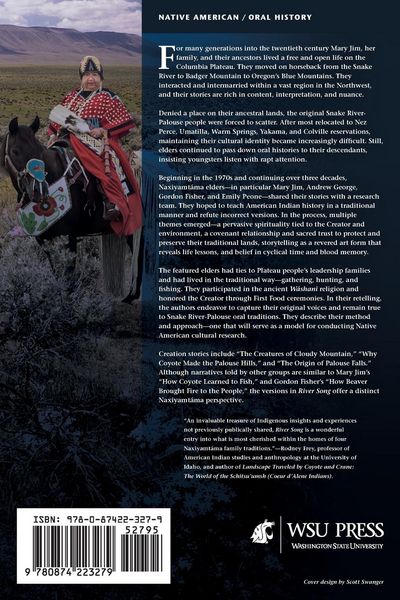
For generations, the original Snake River-Palouse people lived a free, open life on the Columbia Plateau, moving on horseback from the Snake River to Badger Mountain to Oregon's Blue Mountains. They interacted and intermarried within a vast region, and their stories are rich in content, interpretation, and nuance. Denied a place on their ancestral lands, most relocated to Nez Perce, Umatilla, Warm Springs, Yakama, and Colville reservations, where maintaining their cultural identity became increasingly difficult. Still, elders continued to pass down oral histories, insisting youngsters listen with rapt attention.
Beginning in the 1970s, Naxiyamtáma elders--in particular Mary Jim, Andrew George, Gordon Fisher, and Emily Peone--shared their stories with a research team. They hoped to teach American Indian history in a traditional manner and refute incorrect versions. Multiple themes emerged--a pervasive spirituality tied to the Creator and environment; a covenant relationship and sacred trust to protect and preserve their traditional lands; storytelling as a revered art form that reveals life lessons; and finally, belief in cyclical time and blood memory.
Tied to Plateau people's leadership families, the featured elders had lived in the traditional way--gathering, hunting, and fishing, participating in the ancient Wáshani religion, and honoring the Creator through First Food ceremonies. In their retelling, the authors endeavored to capture their original voices and stay true to Snake River-Palouse oral traditions. Creation stories include "Why Coyote Made the Palouse Hills," and "The Origin of Palouse Falls." Although narratives by other groups are similar to Mary Jim's "How Coyote Learned to Fish," and Gordon Fisher's "How Beaver Brought Fire to the People," their versions offer a distinct Naxiyamtáma perspective. The authors also describe their method and approach--one that will serve as a model for conducting Native American cultural research.
Noch keine Bewertungen vorhanden
Verfassen Sie die erste Bewertung zu diesem Artikel
Helfen Sie anderen Kundinnen und Kunden durch Ihre Meinung.
Kurze Frage zu unserer Seite
Vielen Dank für Ihr Feedback
Wir nutzen Ihr Feedback, um unsere Produktseiten zu verbessern. Bitte haben Sie Verständnis, dass wir Ihnen keine Rückmeldung geben können. Falls Sie Kontakt mit uns aufnehmen möchten, können Sie sich aber gerne an unseren Kund*innenservice wenden.
zum Kundenservice