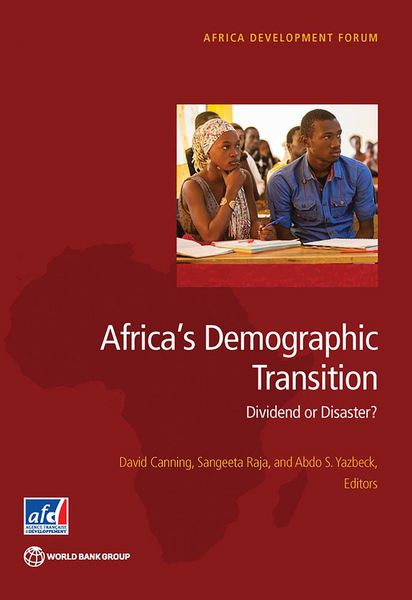
Africa's Demographic Transition Dividend or Disaster?
-
- Englisch ausgewählt
41,99 €
inkl. gesetzl. MwSt.,
Beschreibung
Produktdetails
Einband
Taschenbuch
Erscheinungsdatum
22.10.2015
Herausgeber
David Canning + weitereVerlag
World Bank PublicationsSeitenzahl
216
Maße (L/B/H)
22,6/14,9/1,7 cm
Gewicht
296 g
Sprache
Englisch
ISBN
978-1-4648-0489-2
Africa is poised on the edge of a potential takeoff to sustained economic growth. This takeoff can be abetted by a demographic dividend from the changes in population age structure. Declines in child mortality, followed by declines in fertility, produce a 'bulge' generation and a large number of working age people, giving a boost to the economy. In the short run lower fertility leads to lower youth dependency rates and greater female labor force participation outside the home. Smaller family sizes also mean more resources to invest in the health and education per child boosting worker productivity. In the long run increased life spans from health improvements mean that this large, high-earning cohort will also want to save for retirement, creating higher savings and investments, leading to further productivity gains. Two things are required for the demographic dividend to generate an African economic takeoff. The first is to speed up the fertility decline that is currently slow or stalled in many countries. The second is economic policies that take advantage of the opportunity offered by demography. While demographic change can produce more, and high quality, workers, this potential workforce needs to be productively employed if Africa is to reap the dividend. However, once underway, the relationship between demographic change and human development works in both directions, creating a virtuous cycle that can accelerate fertility decline, social development, and economic growth. Empirical evidence points to three key factors for speeding the fertility transition: child health, female education, and women’s empowerment, particularly through access to family planning. Harnessing the dividend requires job creation for the large youth cohorts entering working age, and encouraging foreign investment until domestic savings and investment increase. The appropriate mix of policies in each country depends on their stage of the demographic transition.
Noch keine Bewertungen vorhanden
Verfassen Sie die erste Bewertung zu diesem Artikel
Helfen Sie anderen Kundinnen und Kunden durch Ihre Meinung.
Kurze Frage zu unserer Seite
Vielen Dank für Ihr Feedback
Wir nutzen Ihr Feedback, um unsere Produktseiten zu verbessern. Bitte haben Sie Verständnis, dass wir Ihnen keine Rückmeldung geben können. Falls Sie Kontakt mit uns aufnehmen möchten, können Sie sich aber gerne an unseren Kund*innenservice wenden.
zum Kundenservice