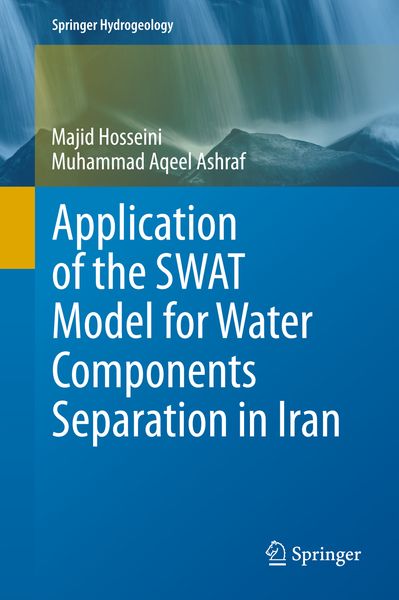
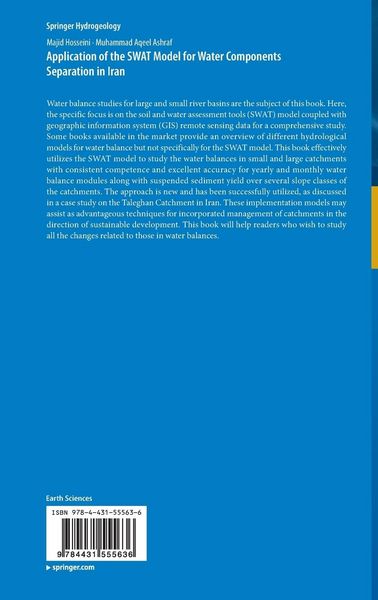
• Produktbild: Application of the SWAT Model for Water Components Separation in Iran
  • Produktbild: Application of the SWAT Model for Water Components Separation in Iran
- 13%

Application of the SWAT Model for Water Components Separation in Iran

Aus der Reihe Springer Hydrogeology
13% sparen

92,99 € UVP 106,99 €

inkl. gesetzl. MwSt., Versandkostenfrei


Beschreibung

Produktdetails

Einband

Gebundene Ausgabe

Erscheinungsdatum

22.05.2015

Abbildungen

X, 85 illus., 55 illus. in color., schwarz-weiss Illustrationen, farbige Illustrationen

Verlag

Springer Tokyo

Seitenzahl

105

Maße (L/B/H)

24,1/16/1,3 cm

Gewicht

348 g

Auflage

2015

Sprache

Englisch

ISBN

978-4-431-55563-6

Beschreibung

Produktdetails

Einband

Gebundene Ausgabe

Erscheinungsdatum

22.05.2015

Abbildungen

X, 85 illus., 55 illus. in color., schwarz-weiss Illustrationen, farbige Illustrationen

Verlag

Springer Tokyo

Seitenzahl

105

Maße (L/B/H)

24,1/16/1,3 cm

Gewicht

348 g

Auflage

2015

Sprache

Englisch

ISBN

978-4-431-55563-6

Herstelleradresse

Springer-Verlag KG
Sachsenplatz 4-6
1201 Wien
AT

Email: GPSR Kontakt

Noch keine Bewertungen vorhanden

Verfassen Sie die erste Bewertung zu diesem Artikel

Helfen Sie anderen Kundinnen und Kunden durch Ihre Meinung.

Kundinnen und Kunden meinen

Bewertungen (0)

Die Leseprobe wird geladen.
  • Produktbild: Application of the SWAT Model for Water Components Separation in Iran
  • Produktbild: Application of the SWAT Model for Water Components Separation in Iran
  • Effect of Land Use Changes on Water Balance and Sediment Yield.- Response of Water Balance to Land Use Change.- Response of Sediment Yield to Land Use Changes.- Effect of Land Use Changes on Water Balance and Sediment Yield in Iran.- Response of Water Balance to Land Use Changes in Iran.- Taleghan Catchment.- Catchment Area.- Geology/- Morphology.- Climate.- Soil Type and Classification.- Water Quality.- Effect of Land Use Changes on Water Balance in Taleghan Catchment, Iran: A Case Study  Introduction.- The Study Area.- Results and Discussion.- Conclusion.- Conclusion and Recommendations.