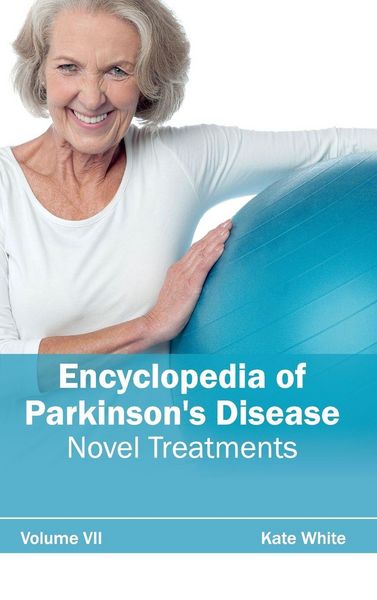
Encyclopedia of Parkinson's Disease Volume VII (Novel Treatments)
-
- Englisch ausgewählt
-
Verlag:ML Books International - IPS
- ML Books International - IPS 109,99 € ausgewählt
- ML Books International - IPS 134,99 €
- ML Books International - IPS 136,99 €
- ML Books International - IPS 136,99 €
- ML Books International - IPS 149,99 €
- ML Books International - IPS 153,99 €
- ML Books International - IPS 178,99 €
- ML Books International - IPS 196,99 €
109,99 €
inkl. gesetzl. MwSt.,
Beschreibung
Produktdetails
Einband
Gebundene Ausgabe
Erscheinungsdatum
17.02.2015
Herausgeber
Kate WhiteVerlag
ML Books International - IPSSeitenzahl
202
Maße (L/B/H)
23,5/15,7/1,6 cm
Gewicht
451 g
Sprache
Englisch
ISBN
978-1-63241-195-2
The novel treatments in the field of Parkinson's disease (PD) are discussed in this book. Recent Parkinson's disease medications treat symptoms; though none decrease the rate of dopaminergic neuron degeneration. Parkinson's disease is caused mainly due to the death of dopaminergic neurons in the substantia nigra. The primary problem in development of neuroprotective therapies is a restricted comprehension of the crucial molecular mechanisms that incite neurodegeneration. The discovery of PD genes has led to the hypothesis that dysfunction of the ubiquitin-proteasome pathway and misfolding of proteins are both critical to pathogenesis of the disease and earlier labeled as responsible in the neurodegeneration of this disease, oxidative stress, and mitochondrial dysfunction may also act in part by causing the collection of misfolded proteins, along with the production of other harmful events in dopaminergic neurons. Models based on neurotoxin have been crucial in explaining the molecular cascade of cell death in dopaminergic neurons. PD models based on the manipulation of PD genes should prove crucial in explaining significant characteristics of the disease, like selective vulnerability of substantia nigra dopaminergic neurons to the degenerative process. This book includes important topics in the novel treatments of PD such as distribution & regulation of G-protein, inflammation in PD, embryonic stem cells in PD and the role of neuropeptide substance.
Noch keine Bewertungen vorhanden
Verfassen Sie die erste Bewertung zu diesem Artikel
Helfen Sie anderen Kundinnen und Kunden durch Ihre Meinung.
Kurze Frage zu unserer Seite
Vielen Dank für Ihr Feedback
Wir nutzen Ihr Feedback, um unsere Produktseiten zu verbessern. Bitte haben Sie Verständnis, dass wir Ihnen keine Rückmeldung geben können. Falls Sie Kontakt mit uns aufnehmen möchten, können Sie sich aber gerne an unseren Kund*innenservice wenden.
zum Kundenservice