Beschreibung
Produktdetails
Einband
Taschenbuch
Erscheinungsdatum
28.01.2016
Verlag
Sage PublicationsSeitenzahl
224
Maße (L/B/H)
25,4/17,8/1,2 cm
Gewicht
431 g
Auflage
6th edition
Sprache
Englisch
ISBN
978-1-4833-7848-0
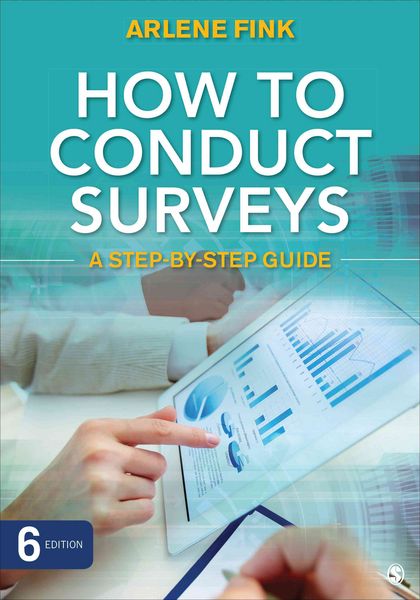
Packed with new topics that reflect today's challenges, this Sixth Edition guides readers through the process of developing their own rigorous surveys and evaluating the credibility and transparency of surveys created by others. Offering practical, step-by-step advice and written in the same clear and accessible style as author Arlene Fink's other works, the book focuses on choosing the appropriate type of survey, writing survey questions and responses, formatting the survey, deciding on the characteristics and numbers of respondents to include, choosing how often to survey respondents, and analyzing and reporting the results.
New to this edition:
Discussion of validity and reporting of qualitative survey data addresses the values of and "threats" to the validity of qualitative studies, along with guidance on transparently reporting purposes and methods.
Discussion of margin of error and confidence levels prepares readers to be aware of imperfections in all surveys.
Coverage on surveys involving children addresses how to design a survey that reaches children, getting reliable and valid information, the differences between doing a survey for young children and doing one for teens, the difference between assent and consent in children, and how to accommodate ethics boards when surveying children.
Guidance on international surveys takes into account the increased use of smartphones and access to the Internet and helps readers respect cultural differences in designing and asking questions involving international audiences.
Coverage of the standard survey report checklists now required by many journals, businesses, and educational institutions prepares readers to produce transparent survey reports.
Many new practice exercises in every chapter promote hands-on learning to develop skills in analyzing, evaluating, and producing information.
New to this edition:
Discussion of validity and reporting of qualitative survey data addresses the values of and "threats" to the validity of qualitative studies, along with guidance on transparently reporting purposes and methods.
Discussion of margin of error and confidence levels prepares readers to be aware of imperfections in all surveys.
Coverage on surveys involving children addresses how to design a survey that reaches children, getting reliable and valid information, the differences between doing a survey for young children and doing one for teens, the difference between assent and consent in children, and how to accommodate ethics boards when surveying children.
Guidance on international surveys takes into account the increased use of smartphones and access to the Internet and helps readers respect cultural differences in designing and asking questions involving international audiences.
Coverage of the standard survey report checklists now required by many journals, businesses, and educational institutions prepares readers to produce transparent survey reports.
Many new practice exercises in every chapter promote hands-on learning to develop skills in analyzing, evaluating, and producing information.
Noch keine Bewertungen vorhanden
Verfassen Sie die erste Bewertung zu diesem Artikel
Helfen Sie anderen Kundinnen und Kunden durch Ihre Meinung.
Kurze Frage zu unserer Seite
Vielen Dank für Ihr Feedback
Wir nutzen Ihr Feedback, um unsere Produktseiten zu verbessern. Bitte haben Sie Verständnis, dass wir Ihnen keine Rückmeldung geben können. Falls Sie Kontakt mit uns aufnehmen möchten, können Sie sich aber gerne an unseren Kund*innenservice wenden.
zum Kundenservice