Beschreibung
Produktdetails
Einband
Taschenbuch
Erscheinungsdatum
28.07.2017
Verlag
John Wiley & Sons IncSeitenzahl
358
Maße (L/B/H)
23,3/18,7/2 cm
Gewicht
615 g
Auflage
1. Auflage
Sprache
Englisch
ISBN
978-1-119-32828-5
Intensively hands-on training for real-world network forensics
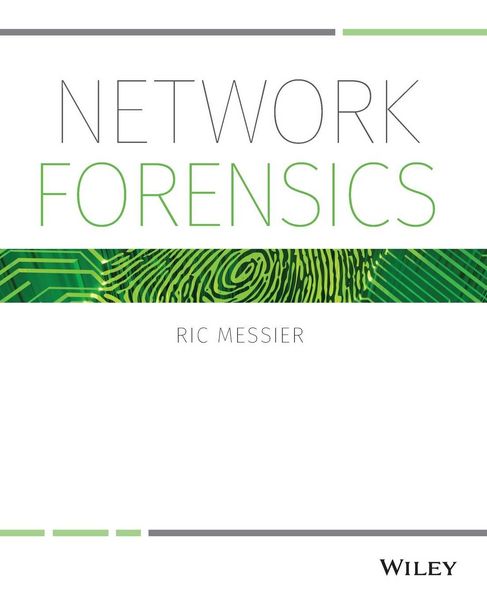
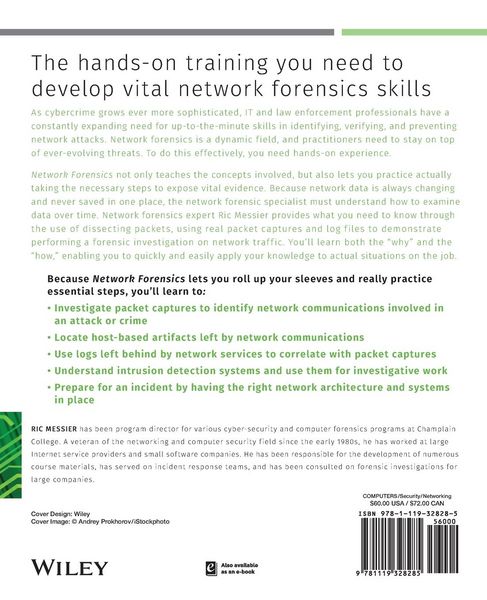
Network Forensics provides a uniquely practical guide for IT and law enforcement professionals seeking a deeper understanding of cybersecurity. This book is hands-on all the way--by dissecting packets, you gain fundamental knowledge that only comes from experience. Real packet captures and log files demonstrate network traffic investigation, and the learn-by-doing approach relates the essential skills that traditional forensics investigators may not have. From network packet analysis to host artifacts to log analysis and beyond, this book emphasizes the critical techniques that bring evidence to light.
Network forensics is a growing field, and is becoming increasingly central to law enforcement as cybercrime becomes more and more sophisticated. This book provides an unprecedented level of hands-on training to give investigators the skills they need.
* Investigate packet captures to examine network communications
* Locate host-based artifacts and analyze network logs
* Understand intrusion detection systems--and let them do the legwork
* Have the right architecture and systems in place ahead of an incident
Network data is always changing, and is never saved in one place; an investigator must understand how to examine data over time, which involves specialized skills that go above and beyond memory, mobile, or data forensics. Whether you're preparing for a security certification or just seeking deeper training for a law enforcement or IT role, you can only learn so much from concept; to thoroughly understand something, you need to do it. Network Forensics provides intensive hands-on practice with direct translation to real-world application.
Network Forensics provides a uniquely practical guide for IT and law enforcement professionals seeking a deeper understanding of cybersecurity. This book is hands-on all the way--by dissecting packets, you gain fundamental knowledge that only comes from experience. Real packet captures and log files demonstrate network traffic investigation, and the learn-by-doing approach relates the essential skills that traditional forensics investigators may not have. From network packet analysis to host artifacts to log analysis and beyond, this book emphasizes the critical techniques that bring evidence to light.
Network forensics is a growing field, and is becoming increasingly central to law enforcement as cybercrime becomes more and more sophisticated. This book provides an unprecedented level of hands-on training to give investigators the skills they need.
* Investigate packet captures to examine network communications
* Locate host-based artifacts and analyze network logs
* Understand intrusion detection systems--and let them do the legwork
* Have the right architecture and systems in place ahead of an incident
Network data is always changing, and is never saved in one place; an investigator must understand how to examine data over time, which involves specialized skills that go above and beyond memory, mobile, or data forensics. Whether you're preparing for a security certification or just seeking deeper training for a law enforcement or IT role, you can only learn so much from concept; to thoroughly understand something, you need to do it. Network Forensics provides intensive hands-on practice with direct translation to real-world application.
Noch keine Bewertungen vorhanden
Verfassen Sie die erste Bewertung zu diesem Artikel
Helfen Sie anderen Kundinnen und Kunden durch Ihre Meinung.
Kurze Frage zu unserer Seite
Vielen Dank für Ihr Feedback
Wir nutzen Ihr Feedback, um unsere Produktseiten zu verbessern. Bitte haben Sie Verständnis, dass wir Ihnen keine Rückmeldung geben können. Falls Sie Kontakt mit uns aufnehmen möchten, können Sie sich aber gerne an unseren Kund*innenservice wenden.
zum Kundenservice