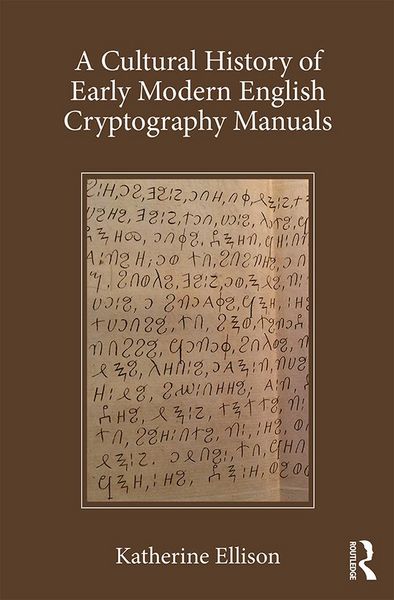
A Cultural History of Early Modern English Cryptography Manuals
-
- Hardcover
- Taschenbuch
- eBook ausgewählt
-
Form:Einzelkauf Download
-
Sprache:Englisch
-
eBook Format:PDF
- ePUB 3 65,99 €
- PDF 65,99 € ausgewählt
65,99 €
inkl. gesetzl. MwSt.Beschreibung
Produktdetails
Format
Kopierschutz
Ja
Family Sharing
Nein
Text-to-Speech
Nein
Erscheinungsdatum
10.06.2016
Verlag
Taylor & Francis eBooksSeitenzahl
232 (Printausgabe)
Dateigröße
3350 KB
Sprache
Englisch
EAN
9781315458205
During and after the English civil wars, between 1640 and 1690, an unprecedented number of manuals teaching cryptography were published, almost all for the general public. While there are many surveys of cryptography, none pay any attention to the volume of manuals that appeared during the seventeenth century, or provide any cultural context for the appearance, design, or significance of the genre during the period. On the contrary, when the period's cryptography writings are mentioned, they are dismissed as esoteric, impractical, and useless. Yet, as this book demonstrates, seventeenth-century cryptography manuals show us one clear beginning of the capitalization of information. In their pages, intelligence-as private message and as mental ability-becomes a central commodity in the emergence of England's capitalist media state. Publications boasting the disclosure of secrets had long been popular, particularly for English readers with interests in the occult, but it was during these particular decades of the seventeenth century that cryptography emerged as a permanent bureaucratic function for the English government, a fashionable activity for the stylish English reader, and a respected discipline worthy of its own genre.
These manuals established cryptography as a primer for intelligence, a craft able to identify and test particular mental abilities deemed "smart" and useful for England's financial future. Through close readings of five specific primary texts that have been ignored not only in cryptography scholarship but also in early modern literary, scientific, and historical studies, this book allows us to see one origin of disciplinary division in the popular imagination and in the university, when particular broad fields-the sciences, the mechanical arts, and the liberal arts-came to be viewed as more or less profitable.
Noch keine Bewertungen vorhanden
Verfassen Sie die erste Bewertung zu diesem Artikel
Helfen Sie anderen Kundinnen und Kunden durch Ihre Meinung.
Kurze Frage zu unserer Seite
Vielen Dank für Ihr Feedback
Wir nutzen Ihr Feedback, um unsere Produktseiten zu verbessern. Bitte haben Sie Verständnis, dass wir Ihnen keine Rückmeldung geben können. Falls Sie Kontakt mit uns aufnehmen möchten, können Sie sich aber gerne an unseren Kund*innenservice wenden.
zum Kundenservice