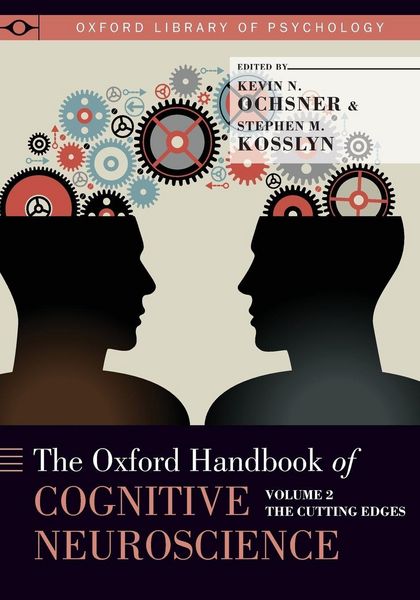
Produktbild: The Oxford Handbook of Cognitive Neuroscience

The Oxford Handbook of Cognitive Neuroscience Volume 2: The Cutting Edges

188,99 €

inkl. gesetzl. MwSt., Versandkostenfrei


Beschreibung

Produktdetails

Einband

Taschenbuch

Erscheinungsdatum

15.11.2016

Herausgeber

Kevin N. Ochsner + weitere

Verlag

Oxford Academic

Seitenzahl

514

Maße (L/B/H)

25,4/17,8/3,3 cm

Gewicht

1421 g

Sprache

Englisch

ISBN

978-0-19-062987-8

Beschreibung

Produktdetails

Einband

Taschenbuch

Erscheinungsdatum

15.11.2016

Herausgeber

Verlag

Oxford Academic

Seitenzahl

514

Maße (L/B/H)

25,4/17,8/3,3 cm

Gewicht

1421 g

Sprache

Englisch

ISBN

978-0-19-062987-8

Herstelleradresse

Libri GmbH
Europaallee 1
36244 Bad Hersfeld
DE

Email: gpsr@libri.de

Noch keine Bewertungen vorhanden

Verfassen Sie die erste Bewertung zu diesem Artikel

Helfen Sie anderen Kundinnen und Kunden durch Ihre Meinung.

Kundinnen und Kunden meinen

Bewertungen (0)

  • Produktbild: The Oxford Handbook of Cognitive Neuroscience
    • VOLUME 1
    • 1. Introduction to The Oxford Handbook of Cognitive Neuroscience: Cognitive Neuroscience: Where are we now?
    • Kevin N. Ochsner and Stephen M. Kosslyn
    • Part One: Perception
    • 2. Representation of Objects
    • Kalanit Grill-Spector
    • 3. Representation of Spatial Relations
    • Bruno Laeng
    • 4. Top-down Effects in Visual Perception
    • Moshe Bar and Andreja Bubic
    • 5. Neural Underpinning of Object Mental Imagery, Spatial Imagery, and Motor Imagery
    • Gregoire Borst
    • 6. Looking at the Nose Through Human Behavior, and at Human Behavior Through the Nose
    • Roni Kahana and Noam Sobel
    • 7. The Cognitive Neuroscience of Music
    • Petr Janata
    • 8. Audition
    • Josh H. McDermott
    • 9. Neural Correlates of the Development of Speech Perception and Comprehension
    • Angela D. Friederici and Claudia Mannel
    • 10. Perceptual Disorders
    • Josef Zihl
    • Part Two: Attention
    • 11. Varieties of Auditory Attention
    • Claude Alain, Stephen R. Arnott, and Benjamin J. Dyson
    • 12. Spatial Attention
    • Jeffrey Nicol
    • 13. Attention and Action
    • 14. The Visual Control of Action
    • Melvyn A. Goodale
    • 15. Development of Attention
    • M. Rosario Rueda
    • 16. Attentional Disorders
    • Laure Pisella, A. Blangero, C. Tilikete, D. Biotti, G. Rode, A. Vighetto, J.B. Mattingley, and Y. Rossetti
    • Part Three: Memory
    • 17. The Cognitive Neuroscience of Semantic Memory
    • Eiling Yee, Evangelia G. Chrysikou, and Sharon L. Thompson-Schill
    • 18. Cognitive Neuroscience of Episodic Memory
    • Lila Davachi and Jared Danker
    • 19. Working Memory
    • Bradley R. Buchsbaum and Mark D'Esposito
    • 20. Motor Skill Learning
    • Rachael D. Seidler, Bryan L. Benson, Nathaniel B. Boyden, and Youngbin Kwak
    • 21. Memory Consolidation
    • John T. Wixted and Denise J. Cai
    • 22. Age-related Decline in Working Memory and Episodic Memory: Contributions of the Prefrontal Cortex and Medial Temporal Lobes
    • Sander Daselaar and Roberto Cabeza
    • 23. Memory Disorders
    • Barbara A Wilson and Jessica Fish
    • Part Four: Language
    • 24. The Cognitive Neuroscience of Written Language: The Neural Substrates of Reading and Writing
    • Kyrana Tsapkini and Argye E. Hillis
    • 25. Neural Systems Underlying Speech Perception
    • Sheila E. Blumstein and Emily B. Myers
    • 26. Multi-modal Speech Perception
    • Agnes Alsius, Ewen MacDonald, and Kevin Munhall
    • 27. The Organization of Conceptual Knowledge of Objects in the Human Brain
    • Bradford Z. Mahon and Alfonso Caramazza
    • 28. A Parallel Architecture Model of Language Processing
    • Ray Jackendoff
    • Part Five: Conclusion
    • 29. Epilogue to The Oxford Handbook of Cognitive Neuroscience: Cognitive Neuroscience: Where are we going?
    • Kevin N. Ochsner and Stephen M. Kosslyn
    • VOLUME 2
    • 1. Introduction to The Oxford Handbook of Cognitive Neuroscience: Cognitive Neuroscience: Where are we now?
    • Kevin N. Ochsner and Stephen M. Kosslyn
    • Part One: Emotion
    • 2. Salience, State, and Expression: The Influence of Specific Aspects of Emotion on Attention and Perception
    • Rebecca M. Todd and Adam K. Anderson
    • 3. Emotion: Generation or Construction?
    • Jennifer M.B. Fugate, Kristen A. Lindquist, and Lisa Feldman Barrett
    • 4. The Neuroscience of Emotion Regulation: Basic Mechanisms and Their Role in Development, Aging, and Psychopathology
    • Jennifer A. Silvers, Jason T. Buhle, and Kevin N. Ochsner
    • 5. Impact of Emotion on Cognition
    • Luiz Pessoa
    • 6. Genetics and Emotion
    • Andreia Santos, Lukas Pezawas, and Andreas Meyer-Lindenberg
    • 7. Visceromotor Sensation and Control
    • Fred W. Mast
    • 8. Development of Emotion and Social Reasoning in Adolescence
    • Eveline A. Crone and Berna Guroglu
    • Part Two: Self and Social Cognition
    • 9. Self-knowledge
    • Joseph M. Moran, William M. Kelley, and Todd F. Heatherton
    • 10. Perception of Nonverbal Cues
    • Aina Puce
    • 11. Face Recognition
    • Rankin W. McGugin and Isabel Gauthier
    • 12. The Cognitive and Neural Basis of Impression Formation
    • Alexander Todorov and Peter Mende-Siedlecki
    • 13. Theory of Mind: How Brains Think about Thoughts
    • Rebecca Saxe
    • 14. The Pleasures and Pains of Social Interactions: A Social Cognitive Neuroscience Perspective
    • Naomi I. Eisenberger and Keely A. Muscatell
    • 15. The Neural Underpinnings of the Experience of Empathy: Lessons for Psychopathy
    • Jean Decety
    • 16. Mirror Neurons and the Perception-Action Link
    • Vittorio Gallese
    • 17. The Early Development of the Brain Bases for Social Cognition
    • Tobias Grossmann and Mark H. Johnson
    • Part Three: Higher Cognitive Functions
    • 18. Conflict Monitoring and Cognitive Control
    • Nick Yeung
    • 19. Hierarchical Cognitive Control and the Functional Organization of the Frontal Cortex
    • David Badre
    • 20. Thinking
    • Kalina Christoff
    • 21. Decision Neuroscience
    • Maya U. Shankar and Samuel M. McClure
    • 22. Categorization
    • Bradley C. Love
    • 23. Expectancies and Beliefs: Insights from Cognitive Neuroscience
    • Lauren Y. Atlas and Tor D. Wager
    • 24. Cognitive Neuroscience of Numerical Cognition
    • Daniel Ansari and Stephan E. Vogel
    • 25. Psychopharmacology of Cognition
    • TW Robbins
    • Part Four: Clinical Applications
    • 26. Attention Deficit Hyperactivity Disorder (ADHD)
    • Chandan J. Vaidya
    • 27. PTSD
    • J. Douglas Bremner
    • 28. Generalized Anxiety Disorder and Social Phobia considered from a cognitive neuroscience perspective
    • Karina S. Blair and R.J.R. Blair
    • 29. The Neurobiology of Obsessive-Compulsive Disorder
    • Samuel R. Chamberlain and Naomi A. Fineberg
    • Part Five: Conclusion
    • 30. Epilogue to The Oxford Handbook of Cognitive Neuroscience: Cognitive Neuroscience: Where are we going?
    • Kevin N. Ochsner and Stephen M. Kosslyn