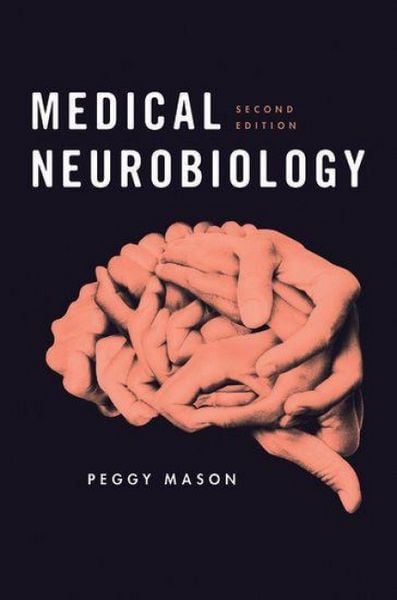
Medical Neurobiology
-
Sprache:Englisch
-
Verlag:Oxford Academic
168,99 €
inkl. gesetzl. MwSt.,
Beschreibung
Produktdetails
Einband
Gebundene Ausgabe
Erscheinungsdatum
15.03.2017
Verlag
Oxford AcademicSeitenzahl
504
Maße (L/B/H)
28,7/22,4/4,1 cm
Gewicht
1848 g
Auflage
2nd edition
Sprache
Englisch
ISBN
978-0-19-023749-3
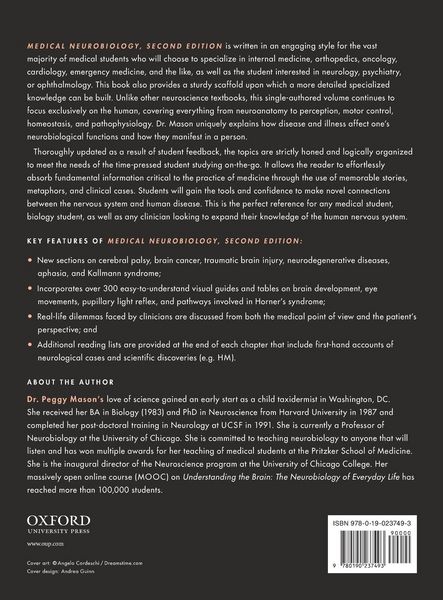
Medical Neurobiology, Second Edition continues the work of Dr. Peggy Mason as one of the few single author textbooks available. Written in an engaging style for the vast majority of medical students who will choose to specialize in internal medicine, orthopedics, oncology, cardiology, emergency medicine, and the like, as well as the student interested in neurology, psychiatry, or ophthalmology, this textbook provides a sturdy scaffold upon which a more detailed specialized knowledge can be built. Unlike other neuroscience textbooks, this new edition continues to focus exclusively on the human, covering everything from neuroanatomy to perception, motor control, homeostasis, and pathophysiology. Dr. Mason uniquely explains how disease and illness affect one's neurobiological functions and how they manifest in a person. Thoroughly updated as a result of student feedback, the topics are strictly honed and logically organized to meet the needs of the time-pressed student studying on-the-go. This textbook allows the reader to effortlessly absorb fundamental information critical to the practice of medicine through the use of memorable stories, metaphors, and clinical cases. Students will gain the tools and confidence to make novel connections between the nervous system and human disease. This is the perfect reference for any medical student, biology student, as well as any clinician looking to expand their knowledge of the human nervous system. New To the Second Edition of Medical Neurobiology: · New sections on cerebral palsy, brain cancer, traumatic brain injury, neurodegenerative diseases, aphasia, and Kallmann syndrome; · Incorporates easy to understand visual guides to brain development, eye movements, pupillary light reflex, pathways involved in Horner's syndrome; · Presents real-life dilemmas faced by clinicians are discussed from both the medical point of view and the patient's perspective; and · Additional reading lists are provided at the end of each chapter that include first-hand accounts of neurological cases and scientific discoveries (e.g. HM). Key Features Include: · Written in an accessible and narrative tone; · Uses metaphors and clinical examples to help the reader absorb the fundamentals of neurobiology; and · Highly illustrated with over 300 figures and tables for full comprehension of topics covered.
Noch keine Bewertungen vorhanden
Verfassen Sie die erste Bewertung zu diesem Artikel
Helfen Sie anderen Kundinnen und Kunden durch Ihre Meinung.
Kurze Frage zu unserer Seite
Vielen Dank für Ihr Feedback
Wir nutzen Ihr Feedback, um unsere Produktseiten zu verbessern. Bitte haben Sie Verständnis, dass wir Ihnen keine Rückmeldung geben können. Falls Sie Kontakt mit uns aufnehmen möchten, können Sie sich aber gerne an unseren Kund*innenservice wenden.
zum Kundenservice