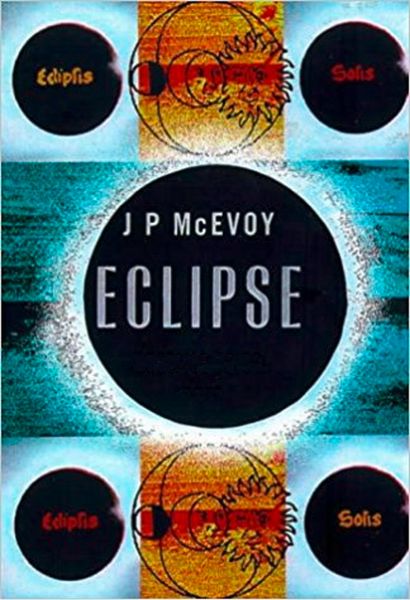
Eclipse The science and history of nature's most spectacular phenomenon
-
- Einzelkauf Download ausgewählt
-
Sprache:Englisch
8,49 €
inkl. gesetzl. MwSt.Beschreibung
Produktdetails
Format
ePUB
Kopierschutz
Ja
Family Sharing
Ja
Text-to-Speech
Ja
Erscheinungsdatum
20.04.2017
Verlag
HarperCollinsSeitenzahl
224 (Printausgabe)
Dateigröße
6687 KB
Sprache
Englisch
EAN
9780007480302
J P McEvoy looks at remarkable phenomenon of a solar eclipse through a thrilling narrative that charts the historical, cultural and scientific relevance of solar eclipses through the ages and explores the significance of this rare event.
In the year when Britain will be touched by a solar eclipse for the first time since 1927, J P McEvoy looks at this remarkable phenomenon through a thrilling narrative that charts the historical, cultural and scientific relevance of solar eclipses through the ages and explores the significance of this rare event.
Eclipse shows how the English Astronomer Norman Lockyer named the element Helium from the spectra of the eclipsed Sun, and how in Cambridge Arthur Eddinton predicted the proof of Einstein's General Relativity from the bending of sunlight during the famous African eclipse of 1919.
During late morning on 11 August, 1999 the shadow of the last total eclipse of the Millennium will cut across the Cornwall Peninsula and skirt the coast of Devon before moving on to the continent, ending its journey at sunset in the Bay of Bengal, India. Britain's next eclipse will be in September, 2090.
Throughout history, mankind has exhibited a changing response to the eclipse of the sun. The ancient Mexicans believed the Sun and the Moon were quarrelling whilst the Tahitians thought the two celestial objects were making love.
Today, astronomers can calculate the exact path the moon's shadow will track during the solar eclipse. As millions encamp for the brief spectacle with mylar glasses, pin-hole cameras, binoculars and telescopes, space agency satellites and mountain-top observatories study the corona, flares and the magnetosphere of the Sun as the 125 mile-wide black patch zooms along the ground at 2000 mph.
Noch keine Bewertungen vorhanden
Verfassen Sie die erste Bewertung zu diesem Artikel
Helfen Sie anderen Kundinnen und Kunden durch Ihre Meinung.
Kurze Frage zu unserer Seite
Vielen Dank für Ihr Feedback
Wir nutzen Ihr Feedback, um unsere Produktseiten zu verbessern. Bitte haben Sie Verständnis, dass wir Ihnen keine Rückmeldung geben können. Falls Sie Kontakt mit uns aufnehmen möchten, können Sie sich aber gerne an unseren Kund*innenservice wenden.
zum Kundenservice