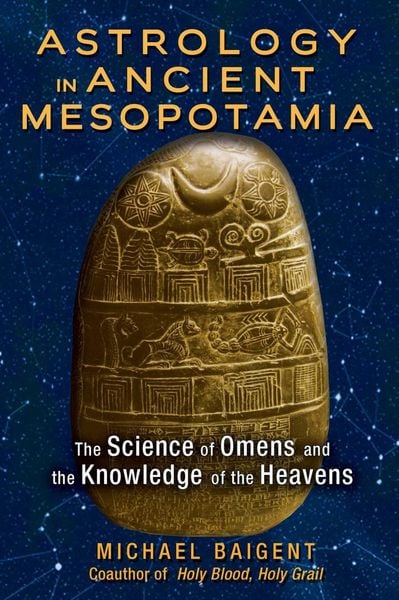
Astrology in Ancient Mesopotamia The Science of Omens and the Knowledge of the Heavens
Aus der Reihe
Bear & Company
-
- Taschenbuch
- eBook ausgewählt
-
Form:Einzelkauf Download
-
Sprache:Englisch
11,86 €
inkl. gesetzl. MwSt.Beschreibung
Produktdetails
Format
ePUB
Kopierschutz
Ja
Family Sharing
Ja
Text-to-Speech
Ja
Erscheinungsdatum
17.07.2015
Verlag
Simon + Schuster LLCSeitenzahl
256 (Printausgabe)
Dateigröße
694 KB
Auflage
2nd Edition, New Edition of From the Omens of Babylon
Sprache
Englisch
EAN
9781591432227
A detailed study of the earliest forms of astrology in Mesopotamia and their far-reaching hermetic influences from the Renaissance to the present day
• Reveals the roots of modern astrology in the Babylonian science of omens, which was concerned not with individuals but with the state and king
• Explores Mesopotamian mythology as it relates to the planets and to astrology
• Traces the hermetic transmission of this knowledge over the centuries from Mesopotamia to Egypt to Renaissance Italy
Among the many significant discoveries excavated from Assyrian king Ashurbanipal's royal library in Nineveh were tablets documenting the development of Mesopotamian astrology, now recognized as the earliest astrological science.
Drawing upon translations of the Nineveh library tablets as well as many other ancient sources, Michael Baigent reveals the roots of modern astrology in the Babylonian science of omens. He explains how astrology in the Babylonian and Assyrian empires was concerned not with individuals but with the king and the state. He shows that by the first dynasty of Babylon, around 1900 to 1600 BC, astrology had become a systematic discipline, the preserve of highly trained specialists intent upon interpreting omens from the movements of planets and stars. He explores Mesopotamian mythology as it relates to the planets and to astrology as well as to Mesopotamian religion, magic, and politics--for the mythology of Babylon and Assyria served the state and thus changed as the state changed. He shows how this ancient form of astrology uniquely represents both Sun and Moon as masculine entities and Saturn (Ninurta) as the principle of order imposed on chaos. He examines the connections between ancient astrology and the symbolism of Western religions, such as how the Greek or Templar cross may symbolize the Babylonian god Nabu, now known as Mercury.
Tracing the hermetic transmission of this knowledge over the centuries from Mesopotamia to Egypt to Florence, Baigent reveals how the religious and magical aspects of early Babylonian cosmological speculation played a significant role in the Renaissance, influencing prominent figures such as Cosimo de Medici, Marsilio Ficino, and Botticelli.
• Reveals the roots of modern astrology in the Babylonian science of omens, which was concerned not with individuals but with the state and king
• Explores Mesopotamian mythology as it relates to the planets and to astrology
• Traces the hermetic transmission of this knowledge over the centuries from Mesopotamia to Egypt to Renaissance Italy
Among the many significant discoveries excavated from Assyrian king Ashurbanipal's royal library in Nineveh were tablets documenting the development of Mesopotamian astrology, now recognized as the earliest astrological science.
Drawing upon translations of the Nineveh library tablets as well as many other ancient sources, Michael Baigent reveals the roots of modern astrology in the Babylonian science of omens. He explains how astrology in the Babylonian and Assyrian empires was concerned not with individuals but with the king and the state. He shows that by the first dynasty of Babylon, around 1900 to 1600 BC, astrology had become a systematic discipline, the preserve of highly trained specialists intent upon interpreting omens from the movements of planets and stars. He explores Mesopotamian mythology as it relates to the planets and to astrology as well as to Mesopotamian religion, magic, and politics--for the mythology of Babylon and Assyria served the state and thus changed as the state changed. He shows how this ancient form of astrology uniquely represents both Sun and Moon as masculine entities and Saturn (Ninurta) as the principle of order imposed on chaos. He examines the connections between ancient astrology and the symbolism of Western religions, such as how the Greek or Templar cross may symbolize the Babylonian god Nabu, now known as Mercury.
Tracing the hermetic transmission of this knowledge over the centuries from Mesopotamia to Egypt to Florence, Baigent reveals how the religious and magical aspects of early Babylonian cosmological speculation played a significant role in the Renaissance, influencing prominent figures such as Cosimo de Medici, Marsilio Ficino, and Botticelli.
Noch keine Bewertungen vorhanden
Verfassen Sie die erste Bewertung zu diesem Artikel
Helfen Sie anderen Kundinnen und Kunden durch Ihre Meinung.
Kurze Frage zu unserer Seite
Vielen Dank für Ihr Feedback
Wir nutzen Ihr Feedback, um unsere Produktseiten zu verbessern. Bitte haben Sie Verständnis, dass wir Ihnen keine Rückmeldung geben können. Falls Sie Kontakt mit uns aufnehmen möchten, können Sie sich aber gerne an unseren Kund*innenservice wenden.
zum Kundenservice