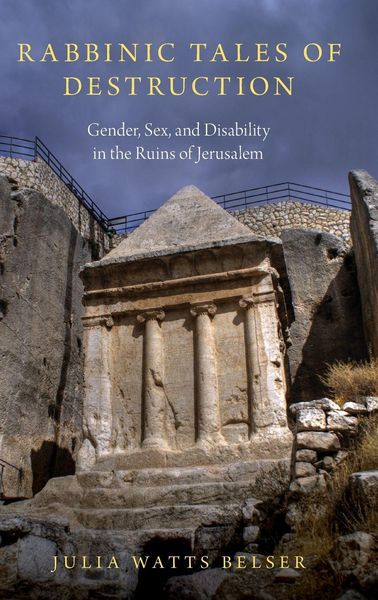
Rabbinic Tales of Destruction Gender, Sex, and Disability in the Ruins of Jerusalem
-
- Hardcover ausgewählt
- Taschenbuch
- eBook
-
Sprache:Englisch
136,99 €
inkl. gesetzl. MwSt.,
Beschreibung
Produktdetails
Einband
Gebundene Ausgabe
Erscheinungsdatum
13.12.2017
Verlag
Oxford University PressSeitenzahl
280
Maße (L/B/H)
23,9/15,7/2,5 cm
Gewicht
517 g
Sprache
Englisch
ISBN
978-0-19-060047-1
In Rabbinic Tales of Destruction, Julia Watts Belser examines early Jewish accounts of the Roman conquest of Judea from the perspective of the wounded body and the scarred land. Faced with stories saturated with sexual violence, enslavement, forced prostitution, disability, and bodily risk, Belser argues, our readings of rabbinic narrative must wrestle with the brutal body costs of Roman imperial domination. She brings disability studies, feminist theory, and new materialist ecological thought to accounts of rabbinic catastrophe, revealing how rabbinic discourses of gender, sexuality, and the body are shaped in the shadow of empire.
Focusing on the Babylonian Talmud's longest sustained account of the destruction of the Temple, Belser reveals Bavli Gittin's distinctive sex and gender politics. While Palestinian tales frequently castigate the 'wayward woman' for sexual transgressions that imperil the nation, Bavli Gittin's stories resist portraying women's sexuality as a cause of catastrophe. The Bavli's resistance to Rome makes a critical difference. While other rabbinic texts commonly inveigh against women's beauty as the cause of sexual sin, Bavli Gittin's tales express a strikingly egalitarian discourse that laments the vulnerability of the beautiful Jewish body before the conqueror.
Bavli Gittin's body politics, Belser maintains, align with a significant theological reorientation. While most early Jewish narratives link the destruction of the Temple to communal sin, Bavli Gittin's account does not explain catastrophe as divine chastisement. Instead of imagining God as the architect of Jewish suffering, it evokes God's empathy with the subjugated Jewish body. As it navigates the ruins of Jerusalem, Bavli Gittin forges a sharp critique of empire. Its critical discourse aims to pierce the power politics of Roman conquest, to protest the brutality of imperial dominance, and to make plain the scar that Roman violence leaves upon Jewish flesh.
Noch keine Bewertungen vorhanden
Verfassen Sie die erste Bewertung zu diesem Artikel
Helfen Sie anderen Kundinnen und Kunden durch Ihre Meinung.
Kurze Frage zu unserer Seite
Vielen Dank für Ihr Feedback
Wir nutzen Ihr Feedback, um unsere Produktseiten zu verbessern. Bitte haben Sie Verständnis, dass wir Ihnen keine Rückmeldung geben können. Falls Sie Kontakt mit uns aufnehmen möchten, können Sie sich aber gerne an unseren Kund*innenservice wenden.
zum Kundenservice