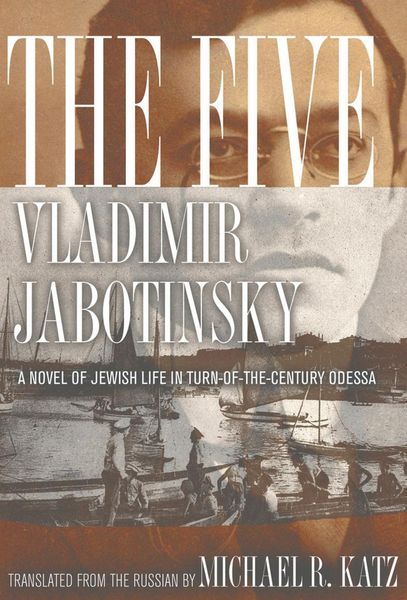
The Five A Novel of Jewish Life in Turn-of-the-Century Odessa
-
- Einzelkauf Download ausgewählt
-
Sprache:Englisch
20,49 €
inkl. gesetzl. MwSt.Beschreibung
Produktdetails
Format
ePUB
Kopierschutz
Nein
Family Sharing
Nein
Text-to-Speech
Ja
Erscheinungsdatum
19.09.2014
Verlag
Cornell University PressSeitenzahl
224 (Printausgabe)
Dateigröße
1164 KB
Übersetzt von
Michael R. Katz
Sprache
Englisch
EAN
9780801471629
"The beginning of this tale of bygone days in Odessa dates to the dawn of the twentieth century. At that time we used to refer to the first years of this period as the 'springtime,' meaning a social and political awakening. For my generation, these years also coincided with our own personal springtime, in the sense that we were all in our youthful twenties. And both of these springtimes, as well as the image of our carefree Black Sea capital with acacias growing along its steep banks, are interwoven in my memory with the story of one family in which there were five children: Marusya, Marko, Lika, Serezha, and Torik."-from The Five
The Five is an captivating novel of the decadent fin-de-siècle written by Vladimir Jabotinsky (1880-1940), a controversial leader in the Zionist movement whose literary talents, until now, have largely gone unrecognized by Western readers. The author deftly paints a picture of Russia's decay and decline-a world permeated with sexuality, mystery, and intrigue. Michael R. Katz has crafted the first English-language translation of this important novel, which was written in Russian in 1935 and published a year later in Paris under the title Pyatero.
The book is Jabotinsky's elegaic paean to the Odessa of his youth, a place that no longer exists. It tells the story of an upper-middle-class Jewish family, the Milgroms, at the turn of the century. It follows five siblings as they change, mature, and come to accept their places in a rapidly evolving world. With flashes of humor, Jabotinsky captures the ferment of the time as reflected in political, social, artistic, and spiritual developments. He depicts with nostalgia the excitement of life in old Odessa and comments poignantly on the failure of the dream of Jewish assimilation within the Russian empire.
Kundinnen und Kunden meinen
Verfassen Sie die erste Bewertung zu diesem Artikel
Helfen Sie anderen Kund*innen durch Ihre Meinung
Kurze Frage zu unserer Seite
Vielen Dank für Ihr Feedback
Wir nutzen Ihr Feedback, um unsere Produktseiten zu verbessern. Bitte haben Sie Verständnis, dass wir Ihnen keine Rückmeldung geben können. Falls Sie Kontakt mit uns aufnehmen möchten, können Sie sich aber gerne an unseren Kund*innenservice wenden.
zum Kundenservice