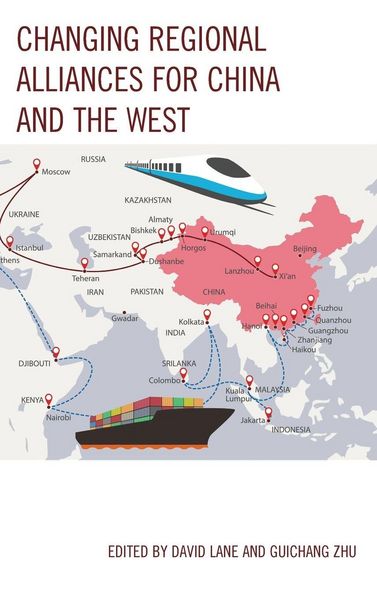
Changing Regional Alliances for China and the West
159,99 €
inkl. gesetzl. MwSt.,
Beschreibung
Produktdetails
Einband
Gebundene Ausgabe
Erscheinungsdatum
15.11.2017
Abbildungen
7 BW Illustrations, 4 Tables
Herausgeber
David Lane + weitereVerlag
Ingram Publishers ServicesSeitenzahl
348
Maße (L/B/H)
23,5/15,7/2,5 cm
Gewicht
621 g
Sprache
Englisch
ISBN
978-1-4985-6233-1
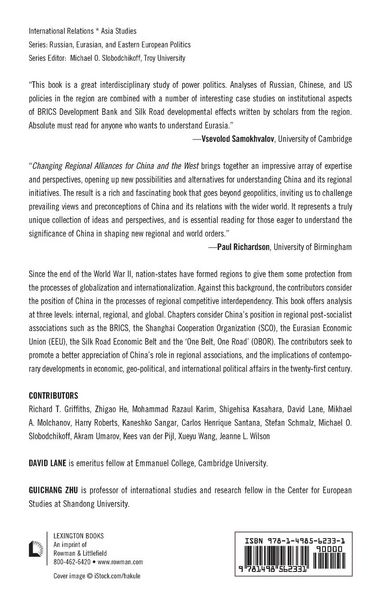
Since the end of the World War II, nation states have formed regions to give them some protection from the processes of globalization and internationalization. Against this background, the contributors consider the position of China in the processes of regional competitive interdependency. This book offers analysis at three levels: internal, regional, and global. Chapters consider China’s position in regional post-socialist associations such as the BRICS, the Shanghai Cooperation Organization (SCO), the Eurasian Economic Union (EEU), the Silk Road Economic Belt and the ‘One Belt, One Road’ (OBOR). Contributors discuss how membership in these regional bodies is likely to enhance China’s economic power, strategic position, and political importance. A major theme addressed is whether these new powers will become complementary to the American-led economic core countries or evolve as countervailing powers. Contributors suggest that linkages favored by China’s regional associations are more ‘network’ based and informal in character. They are more in keeping with regionalization rather than regional blocs such as the European Union, which have ‘locked in’ members to market-driven institutions. Thus, these new developments move away from a neo-liberal market perspective and satisfy the needs of members to retain their economic and political sovereignty. This book considers whether these new regional blocs led by China will perform a ‘transformative’ process for the international order or become an alternative—supplementary to, but not replacing, the existing institutions of the North. An important topic is the relationship of Russia and China to the Central Asian countries of the former USSR and the interaction between the Russia-led Eurasian Economic Union and the Chinese initiative of the Silk Road Economic Belt. There is potential for the evolution of an alliance between China and Russia against the neo-liberal order led by the USA. Concurrently, they bring out possible the tensions between Russia’s and China’s conflicting interests over influence in Central Asia. Reactions to China’s rise include the Trump administration’s movement from a multilateral to a bi-lateral trade policy and the threat of discriminatory tariffs for China. The contributors seek to promote a better appreciation of China’s role in regional associations, and the implications of contemporary developments in economic, geo-political, and international political affairs in the 21st century.
Noch keine Bewertungen vorhanden
Verfassen Sie die erste Bewertung zu diesem Artikel
Helfen Sie anderen Kundinnen und Kunden durch Ihre Meinung.
Kurze Frage zu unserer Seite
Vielen Dank für Ihr Feedback
Wir nutzen Ihr Feedback, um unsere Produktseiten zu verbessern. Bitte haben Sie Verständnis, dass wir Ihnen keine Rückmeldung geben können. Falls Sie Kontakt mit uns aufnehmen möchten, können Sie sich aber gerne an unseren Kund*innenservice wenden.
zum Kundenservice