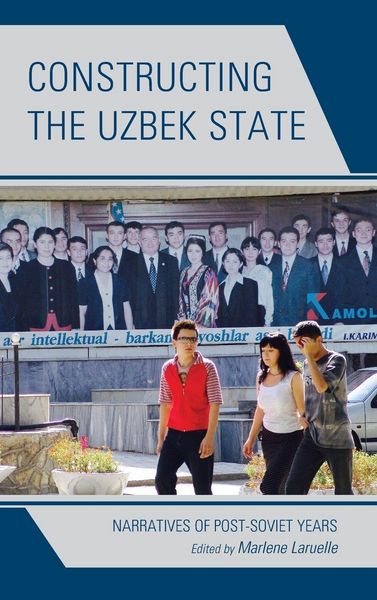
Constructing the Uzbek State Narratives of Post-Soviet Years
179,99 €
inkl. gesetzl. MwSt.,
Beschreibung
Produktdetails
Einband
Gebundene Ausgabe
Erscheinungsdatum
20.12.2017
Abbildungen
1 Graph, 7 Tables
Herausgeber
Marlene LaruelleVerlag
Ingram Publishers ServicesSeitenzahl
386
Maße (L/B/H)
23,5/15,7/2,7 cm
Gewicht
776 g
Sprache
Englisch
ISBN
978-1-4985-3836-7
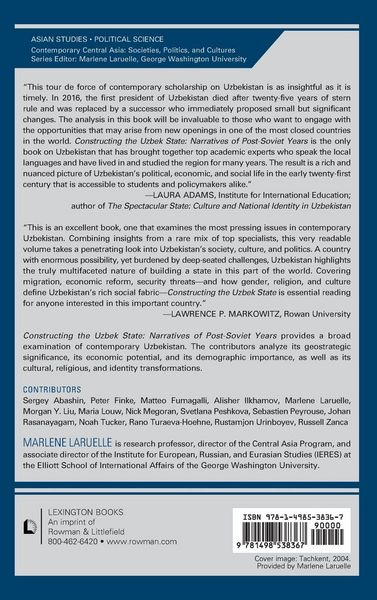
This collection provides a broad examination of contemporary Uzbekistan. The contributors analyze its geostrategic significance, its economic potential, and its demographic importance. This study also argues that the country’s political, social, and cultural evolutions symbolize the transformations of the region as a whole.
Noch keine Bewertungen vorhanden
Verfassen Sie die erste Bewertung zu diesem Artikel
Helfen Sie anderen Kundinnen und Kunden durch Ihre Meinung.
Kurze Frage zu unserer Seite
Vielen Dank für Ihr Feedback
Wir nutzen Ihr Feedback, um unsere Produktseiten zu verbessern. Bitte haben Sie Verständnis, dass wir Ihnen keine Rückmeldung geben können. Falls Sie Kontakt mit uns aufnehmen möchten, können Sie sich aber gerne an unseren Kund*innenservice wenden.
zum Kundenservice