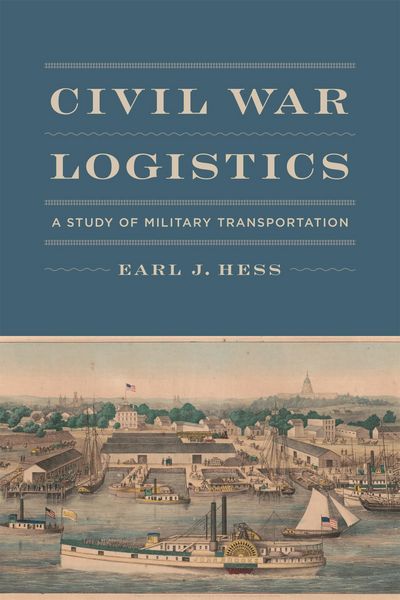
Civil War Logistics A Study of Military Transportation
-
- Taschenbuch
- eBook ausgewählt
-
Form:Einzelkauf Download
-
Sprache:Englisch
19,49 €
inkl. gesetzl. MwSt.Beschreibung
Produktdetails
Format
ePUB
Kopierschutz
Nein
Family Sharing
Nein
Text-to-Speech
Ja
Erscheinungsdatum
18.09.2017
Verlag
LAPA PublishersSeitenzahl
280 (Printausgabe)
Dateigröße
6060 KB
Sprache
Englisch
EAN
9780807167526
Winner of the Eugene Feit Award in Civil War Studies by the New York Military Affairs Symposium
During the Civil War, neither the Union nor the Confederate army could have operated without effective transportation systems. Moving men, supplies, and equipment required coordination on a massive scale, and Earl J. Hess's Civil War Logistics offers the first comprehensive analysis of this vital process. Utilizing an enormous array of reports, dispatches, and personal accounts by quartermasters involved in transporting war materials, Hess reveals how each conveyance system operated as well as the degree to which both armies accomplished their logistical goals.
In a society just realizing the benefits of modern travel technology, both sides of the conflict faced challenges in maintaining national and regional lines of transportation. Union and Confederate quartermasters used riverboats, steamers, coastal shipping, railroads, wagon trains, pack trains, cattle herds, and their soldiers in the long and complicated chain that supported the military operations of their forces. Soldiers in blue and gray alike tried to destroy the transportation facilities of their enemy, firing on river boats and dismantling rails to disrupt opposing supply lines while defending their own means of transport.
According to Hess, Union logistical efforts proved far more successful than Confederate attempts to move and supply its fighting forces, due mainly to the North's superior administrative management and willingness to seize transportation resources when needed. As the war went on, the Union's protean system grew in complexity, size, and efficiency, while that of the Confederates steadily declined in size and effectiveness until it hardly met the needs of its army. Indeed, Hess concludes that in its use of all types of military transportation, the Federal government far surpassed its opponent and thus laid the foundation for Union victory in the Civil War.
Noch keine Bewertungen vorhanden
Verfassen Sie die erste Bewertung zu diesem Artikel
Helfen Sie anderen Kundinnen und Kunden durch Ihre Meinung.
Kurze Frage zu unserer Seite
Vielen Dank für Ihr Feedback
Wir nutzen Ihr Feedback, um unsere Produktseiten zu verbessern. Bitte haben Sie Verständnis, dass wir Ihnen keine Rückmeldung geben können. Falls Sie Kontakt mit uns aufnehmen möchten, können Sie sich aber gerne an unseren Kund*innenservice wenden.
zum Kundenservice