Gutscheinbedingungen

Gültig bis 13.07.2026 | Gültig für Spielzeug (außer Tonieboxen & ausgewählte Tonies), Filme, Musik, Software, Games, Schreibwaren, Hörbücher und Hörbuch-Downloads (außer Abo & Shelfies), gebrauchte Bücher, nicht preisgebundene Bücher und Kalender | Einlösbar unter osiander.de und in der Osiander App | Click & Collect nur mit Online-Zahlung (Paypal/Kreditkarte) vorab | Einzelne Artikel können ausgeschlossen sein | Nicht kombinierbar mit anderen Gutscheinen oder Preisaktionen | Nur einmal pro Einkauf einlösbar | Gutschein wird auf max. 500€ Bestellwert angerechnet | Keine Barauszahlung | Digitale Hörbücher nur für Android | Nicht gültig für preisgebundene Artikel (aufgrund der Buchpreisbindung sind Gutscheine nicht auf Bücher, eBooks, Presse einlösbar), tolino eReader & Zubehör, Elektronik, Geschenke & Trends, Abonnements & Flatrates, Geschenkkarten, Versandkosten und Services

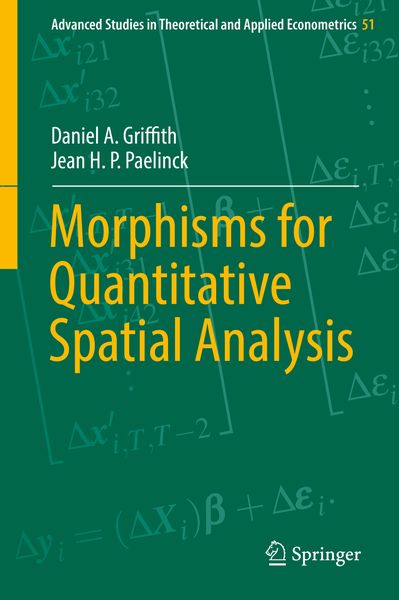
  • Produktbild: Morphisms for Quantitative Spatial Analysis
  • Produktbild: Morphisms for Quantitative Spatial Analysis
Band 51

Morphisms for Quantitative Spatial Analysis

111,99 €

inkl. gesetzl. MwSt., Versandkostenfrei


Beschreibung

Produktdetails

Einband

Gebundene Ausgabe

Erscheinungsdatum

15.03.2018

Verlag

Springer

Seitenzahl

258

Maße (L/B/H)

24,1/16/2,2 cm

Gewicht

600 g

Auflage

1st ed. 2018

Sprache

Englisch

ISBN

978-3-319-72552-9

Beschreibung

Produktdetails

Einband

Gebundene Ausgabe

Erscheinungsdatum

15.03.2018

Verlag

Springer

Seitenzahl

258

Maße (L/B/H)

24,1/16/2,2 cm

Gewicht

600 g

Auflage

1st ed. 2018

Sprache

Englisch

ISBN

978-3-319-72552-9

Herstelleradresse

Springer-Verlag KG
Sachsenplatz 4-6
1201 Wien
AT

Email: GPSR Kontakt

Noch keine Bewertungen vorhanden

Verfassen Sie die erste Bewertung zu diesem Artikel

Helfen Sie anderen Kundinnen und Kunden durch Ihre Meinung.

Kundinnen und Kunden meinen

Bewertungen (0)

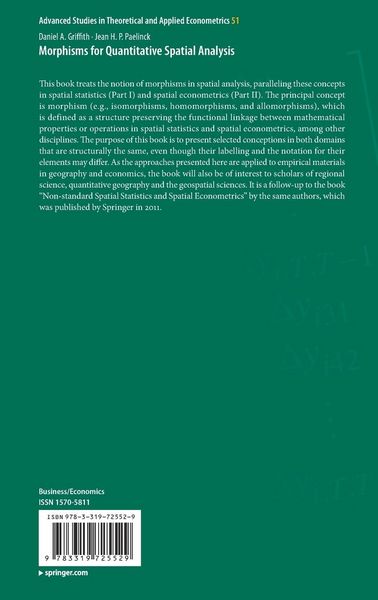
  • Produktbild: Morphisms for Quantitative Spatial Analysis
  • Produktbild: Morphisms for Quantitative Spatial Analysis
  • Preamble ………………………………………………………………………………………………..8 Chapter 1 Introduction to Part 1: Spatial Statistics............................................................................. 10 1.1 Introduction ........................................................................................................................... 10 1.2 Polish employment data: 2006-2013. .................................................................................... 10 1.3 Polish data quality ................................................................................................................. 11 1.4 Concluding comments........................................................................................................... 14 Chapter 2 Spatial Autocorrelation and the p-Median Problem .......................................................... 15 2.1 Introduction ........................................................................................................................... 15 2.2 Eigenvector spatial filtering in a nutshell.............................................................................. 15 2.3 Imputing missing spatial data................................................................................................ 16 2.4 The location-allocation problem............................................................................................ 17 2.5 Location-allocation solutions in the presence of missing and imputed data ......................... 19 2.6 Relationships between spatial autocorrelation and solutions to location-allocation problems................................................................................................................................ 22 2.7 Concluding comments........................................................................................................... 26 Chapter 3 Space-Time Autocorrelation.............................................................................................. 28 3.1 Introduction ........................................................................................................................... 28 3.2 Specifying a space-time Moran Coefficient .......................................................................... 28 3.3 Properties of the space-time Moran Coefficient.................................................................... 31 3.4 Eigenvector space-time filtering............................................................................................ 33 3.5 Omitted variables in a description of space-time response variables .................................... 35 3.6 Concluding comments........................................................................................................... 37 Chapter 4 The Relative Importance of Spatial and Temporal Autocorrelation.................................. 38 4.1 Introduction ........................................................................................................................... 38 4.2 Random effects: SSRE and SURE components.................................................................... 40 4.3 Estimating a SURE term: a sensitivity analysis .................................................................... 42 4.4 Time beats space ................................................................................................................... 44 4.5 Space beats time .................................................................................................................... 45 4.6 Concluding comments........................................................................................................... 46 Chapter 5 The Spatial Weights Matrix and ESF ................................................................................ 47 5.1 Introduction ........................................................................................................................... 47 5.2 Spatial weights matrix comparisons...................................................................................... 47 5.2.1 Some binary SWM comparisons ................................................................................... 49 5.2.2 Some row-standardized SWM comparisons.................................................................. 50 5.2.3 Variance stabilizing standardization.............................................................................. 51 5.3 Comparisons of spatial weights matrix eigenvectors ............................................................ 53 5.4 Competing model specifications: spatial autoregressions and ESFs..................................... 54 5.5 Concluding comments........................................................................................................... 56 Chapter 6 Clustering: Spatial Autocorrelation and Location Quotients............................................. 57 6.1 Introduction ........................................................................................................................... 57 6.2 Location quotients (LQs)....................................................................................................... 57 6.3 The multivariate space-time structure of Polish LQs: 2006-2013......................................... 58 6.4 Spatial autocorrelation and LQs ............................................................................................ 59 6.5 Spatially adjusted LQs for Polish employment ..................................................................... 60 6.6 Space-time description of the Polish LQs ............................................................................. 62 6.7 Concluding comments ........................................................................................................... 65 Chapter 7 Spatial Autocorrelation Parameter Estimation for Massively Large Georeferenced Datasets.............................................................................................................................. 66 7.1 Introduction ........................................................................................................................... 66 7.2 Maximum likelihood estimation............................................................................................ 66 7.2.1 A large remotely sensed image example ....................................................................... 68 7.2.2 Other approaches........................................................................................................... 69 7.3 The sampling variance of ρˆ .................................................................................................. 70 7.3.1 The asymptotic variance for massively large georeferenced datasets: the 1st-order eigenvalue term............................................................................................................. 73 7.3.2 The asymptotic variance for massively large georeferenced datasets: the 2nd-order eigenvalue term............................................................................................................. 74 7.3.3 The asymptotic variance for massively large georeferenced datasets: the residual term............................................................................................................................... 75 7.3.4 A preliminary asymptotic variance approximation accuracy assessment ..................... 76 7.4 Irregular surface partitioning spatial autocorrelation simulation experiments ...................... 76 7.5 Concluding comments........................................................................................................... 77 Chapter 8 Space-Time Data and Semi-Saturated Fixed Effects......................................................... 79 8.1 Introduction ........................................................................................................................... 79 8.2 What is fixed effects? ............................................................................................................ 79 8.3 Testing for fixed effects......................................................................................................... 80 8.4 Fixed effects: SSFE and SUFE components ......................................................................... 81 8.5 Estimating a SUFE term: selected sensitivity analyses......................................................... 83 8.6 An exploration of interaction terms....................................................................................... 86 8.7 Concluding comments........................................................................................................... 86 Chapter 9 Spatial Autocorrelation and Spatial Interaction Gravity Models....................................... 87 9.1 Introduction ........................................................................................................................... 87 9.2 The doubly-constrained gravity model: a Poisson specification that accounts for spatial autocorrelation ...................................................................................................................... 87 9.3 Modeling spatial autocorrelation........................................................................................... 88 9.4 Spatial autocorrelation and provincial-level journey-to-work flows..................................... 89 9.5 Infill and increasing domain analyses ................................................................................... 93 9.5.1 A comparative infill analysis of journey-to-work flows................................................ 93 9.5.2 A comparative increasing domain analysis of journey-to-work flows.......................... 96 9.6 Concluding comments ............................................................................................................ 97 Chapter 10 General Conclusions About Spatial Statistics.................................................................... 99 10.1 Introduction ........................................................................................................................... 99 10.2 Spatial autocorrelation and the p-median problem................................................................ 99 10.3 Space-time autocorrelation.................................................................................................. 100 10.4 The relative importance of spatial and temporal autocorrelation........................................ 100 10.5 The spatial weights matrix and eigenvector spatial filtering............................................... 101 10.6 Clustering: spatial autocorrelation and location quotients .................................................. 102 10.7 Spatial autocorrelation parameter estimation for massively large georeferenced datasets . 103 10.8 Space-time data and semi-saturated fixed effects................................................................ 104 10.9 Spatial autocorrelation and spatial interaction gravity models............................................ 105 10.10 Concluding comments......................................................................................................... 105 Chapter 11 Introduction to Part 2: Spatial Econometrics ................................................................... 107 Chapter 12 Tinbergen-Bos Systems: Combining Combinatorial Analysis with Metric Topology.... 108 12.1 Introduction ......................................................................................................................... 108 12.2 TBS-analysis and first extensions ....................................................................................... 109 12.2.1 Input-output relations (Kuiper and Paelinck, 1984) .................................................... 109 12.2.2 Complexity (Paelinck, 2000b)..................................................................................... 111 12.2.3 Hierarchy (Paelinck, 1995 and 1997, Part1)................................................................ 111 12.2.4 Objective function ....................................................................................................... 112 12.3 Metric extension.................................................................................................................. 112 12.3.1 Manhattan circles and distance frequencies (Kuiper, Paelinck and Rosing 1990)...... 112 12.3.2 Equations, weights....................................................................................................... 113 12.3.3 Location-allocation aspects ......................................................................................... 115 12.4 Endogenous number of plants with economies of scale and scope..................................... 117 12.4.1 Economies of scale...................................................................................................... 117 12.4.2 Economies of scope..................................................................................................... 117 12.5 Non-unit prices .................................................................................................................... 118 12.5.1 Price definition ............................................................................................................ 118 12.5.2 Exogenous prices......................................................................................................... 118 12.5.3 Endogenous prices....................................................................................................... 119 12.6 Chapter conclusions ............................................................................................................ 120 12.6.1 On theoretical spatial economics................................................................................. 120 12.6.2 On spatial econometrics .............................................................................................. 122 Chapter 13 Time, Space, or Econotimespace? ................................................................................... 125 13.1 Conceptual analysis............................................................................................................. 125 13.1.1 Time............................................................................................................................. 125 13.1.2 Space ........................................................................................................................... 126 13.1.3 Space-time? ................................................................................................................. 127 13.1.4 Toward spatial econometrics....................................................................................... 129 13.2 Space-time spatial econometrics ......................................................................................... 129 13.2.1 Space-time relation...................................................................................................... 129 13.2.2 Space and time misspecification in spatial econometrics............................................ 130 13.3 Chapter conclusions ............................................................................................................ 139 Chapter 14 Hybrid dynamical systems and control............................................................................ 140 14.1 Theoretical model................................................................................................................ 140 14.2 Spatial econometric specification........................................................................................ 141 14.3 Control................................................................................................................................. 144 14.4 Negotiation .......................................................................................................................... 145 14.5 Chapter conclusions ............................................................................................................ 147 Chapter 15 The W matrix revisited .................................................................................................... 147 15.1 Consistent spatial modeling................................................................................................. 148 15.2 Lotka-Volterra systems as generalized logistics. ................................................................ 150 15.3 Characterizing the A matrix in an extended SAR model .................................................... 152 15.4 Chapter conclusions. ........................................................................................................... 154 Chapter 16 Clustering, some non-standard approaches...................................................................... 155 16.1 Axiomatic basis ................................................................................................................... 155 16.1.1 Clusters........................................................................................................................ 155 16.1.2 Complexes ................................................................................................................... 156 16.1.3 Corps ........................................................................................................................... 156 16.1.4 Hierarchies................................................................................................................... 157 16.1.5 Interwovenness............................................................................................................ 158 16.2 Spatial econometrics............................................................................................................ 159 16.2.1 Methodology ............................................................................................................... 159 16.2.2 Applications and comparison ...................................................................................... 163 16.3 Comparison of results.......................................................................................................... 165 16.4 Chapter conclusions ............................................................................................................ 166 Chapter 17 Linear expenditure systems and related estimation problems ......................................... 167 17.1 Linear expenditure systems (Paelinck, 1964; Solari, 1971) ................................................ 167 17.1.1 Level specification....................................................................................................... 167 17.1.2 GRM1: growth rate model 1........................................................................................ 168 17.1.3 GRM2: growth rate model 2........................................................................................ 169 17.1.4 Conclusion................................................................................................................... 169 17.2 Different estimators compared ............................................................................................ 169 17.2.1 SDLS: Simultaneous Dynamic Least squares ............................................................. 170 17.2.2 RF (Reduced Form) and 2SLS (Two Stage Least Squares) estimation....................... 171 17.2.3 Latent Variables........................................................................................................... 172 17.2.4 LES, linear expenditure systems ................................................................................. 173 17.2.5 Conclusion................................................................................................................... 173 17.3 Distribution-free maximum likelihood estimation .............................................................. 174 17.3.1 Single equation case .................................................................................................... 174 17.3.2 Interdependent systems ............................................................................................... 175 17.4 Chapter conclusions. ........................................................................................................... 176 Chapter 18 Structural indicators galore….......................................................................................... 177 18.1 Spatial discount functions.................................................................................................... 177 18.1.1 The Tanner function .................................................................................................... 177 18.1.2 The Ancot-Paelinck function....................................................................................... 178 18.1.3 The continuous Poisson function................................................................................. 179 18.1.4 The Lognormal function.............................................................................................. 179 18.1.5 The Loglogistic function ............................................................................................. 180 18.1.6 Conclusions ................................................................................................................. 180 18.2 Dispersion coefficients ........................................................................................................ 181 18.2.1 Variance analysis......................................................................................................... 182 18.2.2 Theil’s U coefficient generalized ................................................................................ 183 18.2.3 Some trigonometry ...................................................................................................... 183 18.2.4 Correlation analysis..................................................................................................... 184 18.2.5 Synthesis...................................................................................................................... 185 18.3 Chapter conclusions ............................................................................................................ 185 Chapter 19 Traveling with the salesman... ......................................................................................... 186 19.1 The Traveling Salesman Problem ....................................................................................... 186 19.2 The Matrix Permutation Problem........................................................................................ 190 19.3 The Koopmans-Beckmann problem.................................................................................... 191 19.4 Dynamic cluster analysis..................................................................................................... 191 19.5 Chapter conclusions ............................................................................................................ 194 Chapter 20 Complexer and complexer, said Alice…......................................................................... 195 20.1 Corps anew.......................................................................................................................... 195 20.2 A topography of complexes................................................................................................. 198 20.2.1 Circumscribing clusters ............................................................................................... 198 20.2.2 Positioning plants ........................................................................................................ 202 20.3 Metropolitan complexes ...................................................................................................... 204 20.3.1 Statistical material ....................................................................................................... 204 20.3.2 Complex analysis......................................................................................................... 207 20.4 Chapter conclusions ............................................................................................................ 208 Chapter 21 General conclusions about spatial econometrics ............................................................. 209 21.1 Complexity .......................................................................................................................... 209 21.2 Parameter relativity ............................................................................................................. 210 Epilogue ......................................................................................................................................... 212 References ......................................................................................................................................... 213 Subject index....................................................................................................................................... 224 Authors’ index..................................................................................................................................... 230