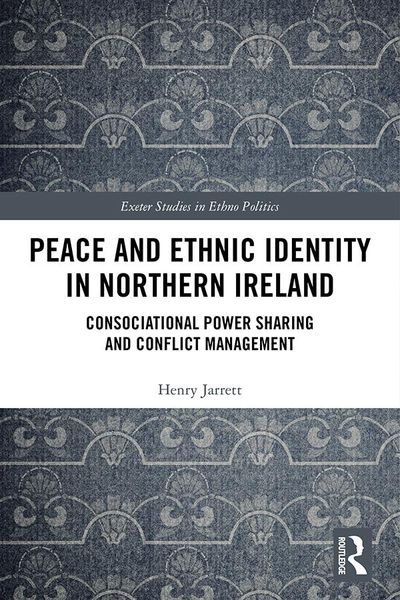
Peace and Ethnic Identity in Northern Ireland Consociational Power Sharing and Conflict Management
-
- Taschenbuch
- eBook ausgewählt
-
Form:Einzelkauf Download
-
Sprache:Englisch
-
eBook Format:PDF
- PDF 64,99 € ausgewählt
- ePUB 3 64,99 €
64,99 €
inkl. gesetzl. MwSt.Beschreibung
Produktdetails
Format
Kopierschutz
Ja
Family Sharing
Nein
Text-to-Speech
Nein
Erscheinungsdatum
16.10.2017
Verlag
Taylor & Francis eBooksSeitenzahl
184 (Printausgabe)
Dateigröße
2354 KB
Sprache
Englisch
EAN
9781351706636
Consociational power sharing is often perceived to be the method of conflict management that is most likely to succeed in deeply divided societies. The case of Northern Ireland in particular is heralded by many as a consociational success story. Since the signing of the Good Friday (Belfast) Agreement in 1998, significant conflict transformation has taken place in the form of a considerable reduction in levels of violence and the establishment of power sharing between unionists and nationalists.
This book looks at what consociational power sharing achieves after its implementation - specifically, whether it can work to overcome existing identities in divided societies, or whether it simply freezes divisions. It argues that if consociational power sharing is facilitating a move towards a genuinely shared society, this would be demonstrated in the focus of the election campaigns of Northern Ireland's political parties, which would be almost exclusively based around socio-economic issues affecting the whole population, rather than narrow single identity concerns. However, the book claims that, on the whole, this has not been realised. Although election campaigns are today less strident than they were in the pre-1998 era, it remains the case that they usually foreground single identity symbolism, as it is this that resonates with voters. Whilst consociational power sharing has been very successful in reducing levels of violent conflict and facilitating elite level cooperation between unionists and nationalists, it has been much less successful in reducing divisions within wider society to facilitate a genuinely shared Northern Irish identity.
By establishing an important middle ground between consociational proponents and critics, this research will be of significant interest to students and scholars of ethnic politics, political sociology, conflict management, and divided societies more generally.
Noch keine Bewertungen vorhanden
Verfassen Sie die erste Bewertung zu diesem Artikel
Helfen Sie anderen Kundinnen und Kunden durch Ihre Meinung.
Kurze Frage zu unserer Seite
Vielen Dank für Ihr Feedback
Wir nutzen Ihr Feedback, um unsere Produktseiten zu verbessern. Bitte haben Sie Verständnis, dass wir Ihnen keine Rückmeldung geben können. Falls Sie Kontakt mit uns aufnehmen möchten, können Sie sich aber gerne an unseren Kund*innenservice wenden.
zum Kundenservice