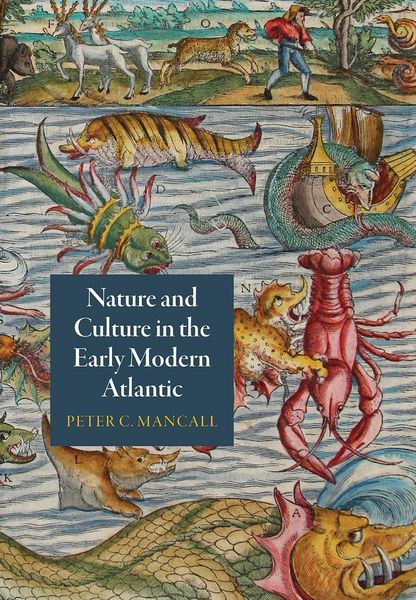
Nature and Culture in the Early Modern Atlantic
-
- Hardcover
- Taschenbuch
- eBook ausgewählt
-
Form:Einzelkauf Download
-
Sprache:Englisch
29,49 €
34,49 €
*
Beschreibung
Produktdetails
Format
ePUB
Kopierschutz
Nein
Family Sharing
Nein
Text-to-Speech
Ja
Erscheinungsdatum
06.12.2017
Verlag
Princeton University PressSeitenzahl
212 (Printausgabe)
Sprache
Englisch
EAN
9780812294590
In the sixteenth-century Atlantic world, nature and culture swirled in people's minds to produce fantastic images. In the South of France, a cloister's painted wooden panels greeted parishioners with vivid depictions of unicorns, dragons, and centaurs, while Mayans in the Yucatan created openings to buildings that resembled a fierce animal's jaws, known to archaeologists as serpent-column portals. In Nature and Culture in the Early Modern Atlantic, historian Peter C. Mancall reveals how Europeans and Native Americans thought about a natural world undergoing rapid change in the century following the historic voyages of Christopher Columbus. Through innovative use of oral history and folklore maintained for centuries by Native Americans, as well as original use of spectacular manuscript atlases, paintings that depict on-the-spot European representations of nature, and texts that circulated imperfectly across the ocean, he reveals how the encounter between the old world and the new changed the fate of millions of individuals. This inspired work of Atlantic, European, and American history begins with medieval concepts of nature and ends in an age when the printed book became the primary avenue for the dissemination of scientific information. Throughout the sixteenth century, the borders between the natural world and the supernatural were more porous than modern readers might realize. Native Americans and Europeans alike thought about monsters, spirits, and insects in considerable depth. In Mancall's vivid narrative, the modern world emerged as a result of the myriad encounters between peoples who inhabited the Atlantic basin in this period. The centuries that followed can be comprehended only by exploring how culture in its many forms-stories, paintings, books-shaped human understanding of the natural world.
Noch keine Bewertungen vorhanden
Verfassen Sie die erste Bewertung zu diesem Artikel
Helfen Sie anderen Kundinnen und Kunden durch Ihre Meinung.
Kurze Frage zu unserer Seite
Vielen Dank für Ihr Feedback
Wir nutzen Ihr Feedback, um unsere Produktseiten zu verbessern. Bitte haben Sie Verständnis, dass wir Ihnen keine Rückmeldung geben können. Falls Sie Kontakt mit uns aufnehmen möchten, können Sie sich aber gerne an unseren Kund*innenservice wenden.
zum Kundenservice