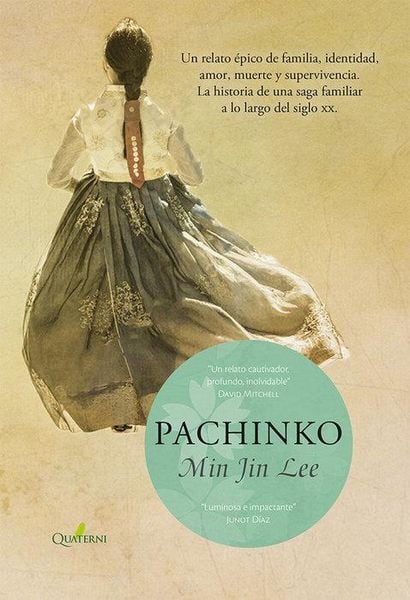
Produktbild: Pachinko

Pachinko

6

34,99 €

inkl. gesetzl. MwSt., Versandkostenfrei


Produktdetails

Einband

Taschenbuch

Erscheinungsdatum

01.02.2018

Verlag

Quaterni

Seitenzahl

544

Maße (L/B/H)

22,9/16/3,5 cm

Gewicht

802 g

Übersetzt von

Eva González Rosales

Sprache

Spanisch

ISBN

978-84-947169-6-6

Produktdetails

Einband

Taschenbuch

Erscheinungsdatum

01.02.2018

Verlag

Quaterni

Seitenzahl

544

Maße (L/B/H)

22,9/16/3,5 cm

Gewicht

802 g

Übersetzt von

Eva González Rosales

Sprache

Spanisch

ISBN

978-84-947169-6-6

Herstelleradresse

AGAPEA FACTORY
c/ Bodegueros, 43nave5
29006 Malaga / SPANIEN
ES

Email: contactogpsr@agapea.com

Kundinnen und Kunden meinen

6 Bewertungen

Informationen zu Bewertungen

Zur Abgabe einer Bewertung ist eine Anmeldung im Konto notwendig. Die Authentizität der Bewertungen wird von uns nicht überprüft. Wir behalten uns vor, Bewertungstexte, die unseren Richtlinien widersprechen, entsprechend zu kürzen oder zu löschen.

Die Bewertungen sind nach Format, Anzahl Sterne und Datum sortiert.

5 Sterne

4 Sterne

(0)

3 Sterne

2 Sterne

(0)

1 Sterne

(0)

gripping

Miaow aus Aachen am 05.10.2025

Bewertungsnummer: 2616609

Bewertet: Buch (Taschenbuch)

a deeply moving, immersive, and well-written book about people who have been erased from history books it opened my eyes to the struggles and discrimination many Koreans faced in Japan i was hooked from the beginning, i only wish it had been split into two books - the second part felt a bit rushed, and I missed more emotional development and insight into the inner lives of all the characters

gripping

Miaow aus Aachen am 05.10.2025
Bewertungsnummer: 2616609
Bewertet: Buch (Taschenbuch)

a deeply moving, immersive, and well-written book about people who have been erased from history books it opened my eyes to the struggles and discrimination many Koreans faced in Japan i was hooked from the beginning, i only wish it had been split into two books - the second part felt a bit rushed, and I missed more emotional development and insight into the inner lives of all the characters

“It was not Hansu that she missed, or even Isak. What she was seeing again in her dreams was her youth, her beginning, and her wishes--so this is how she became a woman.”

Bewertung am 15.03.2025

Bewertungsnummer: 2439325

Bewertet: Buch (Taschenbuch)

Pachinko is an epic family saga following the life of four generations through immense historic and social changes. Sunja was just a young and naive girl from Yeongdo when she was introduced to the cruel mechanics of adult life. Abandoned by the first man she fell in love with and who she became pregnant from, her life was as good as written of at her young teenage age. Through certain circumstances a young pastor named Isak on his way to Japan accepts the young Sunja as his fiancée. He sees it as a good deed to his lord. What awaits them in Japan is everything but a happy end story. Being Christian and Korean at the time was certain to make your life and the life of your family miserable. They lived in the slump district reserved for Koreans. Sunja gave birth to her first son Noa. Soon his younger brother Mozasu was also born. It was interesting to see their coming-of-age story. Noa started of as a brilliant kid who soon realised that it was better to hide his Korean heritage. Through the years, he became more aware what it meant to be considered a second-grade citizen by the people around you. He grew to resent his upbringing. On the other hand, Mozasu was always ready to fight (mostly physically) with the kids who made of fun of him for simply existing. He befriended a poor Japanese boy in his class. Because you could be as Japanese as you want, but if you were poor the cards were dealt against you anyways. Later we find out some more conflicting details of his Japanese friend. Mozasu chose a career path which seemed obvious for a Korean at the time. He took advantage of his disadvantages and made the most of it. He was a pachinko manager and made a lot of money. There is so much more to the story than this. It is showcasing the different ways how people deal with their circumstances. Is it possible to theoretically run away from who you are? Should you fight against the system or become part of it? This Book was just pure perfection!

“It was not Hansu that she missed, or even Isak. What she was seeing again in her dreams was her youth, her beginning, and her wishes--so this is how she became a woman.”

Bewertung am 15.03.2025
Bewertungsnummer: 2439325
Bewertet: Buch (Taschenbuch)

Pachinko is an epic family saga following the life of four generations through immense historic and social changes. Sunja was just a young and naive girl from Yeongdo when she was introduced to the cruel mechanics of adult life. Abandoned by the first man she fell in love with and who she became pregnant from, her life was as good as written of at her young teenage age. Through certain circumstances a young pastor named Isak on his way to Japan accepts the young Sunja as his fiancée. He sees it as a good deed to his lord. What awaits them in Japan is everything but a happy end story. Being Christian and Korean at the time was certain to make your life and the life of your family miserable. They lived in the slump district reserved for Koreans. Sunja gave birth to her first son Noa. Soon his younger brother Mozasu was also born. It was interesting to see their coming-of-age story. Noa started of as a brilliant kid who soon realised that it was better to hide his Korean heritage. Through the years, he became more aware what it meant to be considered a second-grade citizen by the people around you. He grew to resent his upbringing. On the other hand, Mozasu was always ready to fight (mostly physically) with the kids who made of fun of him for simply existing. He befriended a poor Japanese boy in his class. Because you could be as Japanese as you want, but if you were poor the cards were dealt against you anyways. Later we find out some more conflicting details of his Japanese friend. Mozasu chose a career path which seemed obvious for a Korean at the time. He took advantage of his disadvantages and made the most of it. He was a pachinko manager and made a lot of money. There is so much more to the story than this. It is showcasing the different ways how people deal with their circumstances. Is it possible to theoretically run away from who you are? Should you fight against the system or become part of it? This Book was just pure perfection!

Kundinnen und Kunden meinen

Pachinko

von Min Jin Lee

0 Bewertungen filtern

Die Leseprobe wird geladen.
  • Produktbild: Pachinko