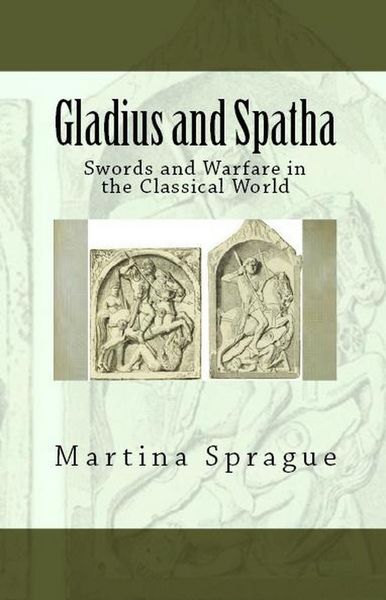
Gladius and Spatha: Swords and Warfare in the Classical World (Knives, Swords, and Bayonets: A World History of Edged Weapon Warfare, #8)
-
- Einzelkauf Download ausgewählt
-
Sprache:Englisch
5,00 €
inkl. gesetzl. MwSt.Beschreibung
Produktdetails
Format
ePUB
Kopierschutz
Ja
Family Sharing
Ja
Text-to-Speech
Ja
Erscheinungsdatum
18.03.2018
Verlag
Martina SpragueSeitenzahl
(Printausgabe)
Dateigröße
866 KB
Sprache
Englisch
EAN
9781386935612
Ancient Greece and Rome, also referred to as the Classical world, laid the foundation for Western civilization. Because of their geographical proximity to one another and to the Mediterranean Sea, the countries shared many similarities with respect to culture and weapons.
The early Greek swords used by infantry had straight two-edged blades, without taper, of equal width from hilt to point. The Spartan sword measured only 14 to 15 inches in length, and was by some considered short and non-frightening. Those who had an intricate understanding of edged weaponry and combat, however, knew that while a long sword carried certain psychological powers, length did not necessarily communicate the deadliness of the weapon.
Rome, perhaps the greatest power of the Mediterranean, differed from other civilizations most notably in the notion of citizenship. The Romans were a pragmatic people who did not fail to adopt from other cultures the weapons or technology they found useful. The classic Roman short sword remained in use for centuries; however, while the Romans emulated many of the Greek weapons and armor, they also copied Hispanic daggers as well as straight Hispanic swords during the conquest of Spain in the third century BCE.
This book begins with an introduction to bronze, iron, and steel used in weapons and armor in Classical Greece, Britain, Gaul, Rome, and Spain. Next it examines the type of training the soldiers encountered to prepare them for battle. This section focuses mainly on the training of the Roman warriors. The book then analyzes the military organization and battlefield tactics of the Greeks, Romans, and Celts. It ends with a discussion of war wounds and the protection that various types of armor afforded the soldier. The concluding remarks focus on the pragmatic way in which one viewed war in the Classical world.
Noch keine Bewertungen vorhanden
Verfassen Sie die erste Bewertung zu diesem Artikel
Helfen Sie anderen Kundinnen und Kunden durch Ihre Meinung.
Kurze Frage zu unserer Seite
Vielen Dank für Ihr Feedback
Wir nutzen Ihr Feedback, um unsere Produktseiten zu verbessern. Bitte haben Sie Verständnis, dass wir Ihnen keine Rückmeldung geben können. Falls Sie Kontakt mit uns aufnehmen möchten, können Sie sich aber gerne an unseren Kund*innenservice wenden.
zum Kundenservice