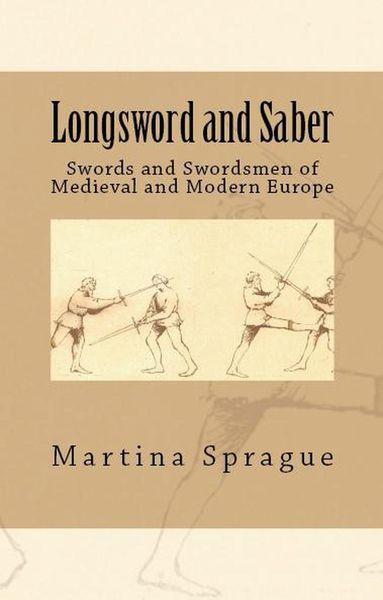
Longsword and Saber: Swords and Swordsmen of Medieval and Modern Europe (Knives, Swords, and Bayonets: A World History of Edged Weapon Warfare, #9)
-
- Einzelkauf Download ausgewählt
-
Sprache:Englisch
5,00 €
inkl. gesetzl. MwSt.Beschreibung
Produktdetails
Format
ePUB
Kopierschutz
Ja
Family Sharing
Ja
Text-to-Speech
Ja
Erscheinungsdatum
18.03.2018
Verlag
Martina SpragueSeitenzahl
(Printausgabe)
Dateigröße
1658 KB
Sprache
Englisch
EAN
9781386219170
European swordsmanship has produced a large number of written treatises and has been studied widely by military historians and lay persons interested in the sword as a combat arm and instrument of social status. Swords had a dual purpose: They were of military necessity used by knights on the field of battle, and of social necessity carried by nobles to communicate rank and settle disputes of honor. The European longsword was primarily a cut and thrust weapon that found use in both cavalry and foot soldiering. A good sword could cut through armor, flesh, and bone, and would last for several subsequent battles without breaking.
Due to its powerful image, the sword became a symbol of masculinity and strength. Noblemen started wearing swords also when in civilian dress. In Renaissance Europe, and through the industrial and technological revolution of the eighteenth and nineteenth centuries when gunpowder weapons became more reliable, the sword saw gradually less battlefield use and fencing for the purpose of dueling or sport gained in popularity.
This book starts by discussing the role of the swordsmith and his understanding of sword dynamics for battlefield use. It analyzes the physical training of the swordsman and the techniques he committed himself to studying in order to defeat an enemy in battle, and the debate surrounding the "best" types of swords and training techniques. Next the book examines the use of the sword in mass armies, primarily the Crusades. It examines the saber and its use in nineteenth century infantry, cavalry, and naval warfare, followed by a discussion of the social mores of the times and the reasons why the sword evolved into a dueling and sport fencing weapon. The concluding remarks summarize the development of the sword from early medieval times to modern day.
Noch keine Bewertungen vorhanden
Verfassen Sie die erste Bewertung zu diesem Artikel
Helfen Sie anderen Kundinnen und Kunden durch Ihre Meinung.
Kurze Frage zu unserer Seite
Vielen Dank für Ihr Feedback
Wir nutzen Ihr Feedback, um unsere Produktseiten zu verbessern. Bitte haben Sie Verständnis, dass wir Ihnen keine Rückmeldung geben können. Falls Sie Kontakt mit uns aufnehmen möchten, können Sie sich aber gerne an unseren Kund*innenservice wenden.
zum Kundenservice