Beschreibung
Produktdetails
Format
ePUB
Kopierschutz
Ja
Family Sharing
Nein
Text-to-Speech
Ja
Erscheinungsdatum
18.05.2018
Herausgeber
Karen Cox + weitereVerlag
LAPA PublishersSeitenzahl
280 (Printausgabe)
Dateigröße
2627 KB
Sprache
Englisch
EAN
9780807169230
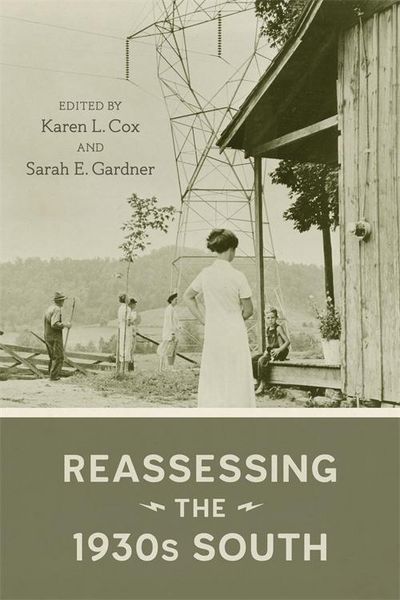
Much of American popular culture depicts the 1930s South either as home to a population that was intellectually, morally, and physically stunted, or as a romantic, sentimentalized haven untouched by the nation's financial troubles. Though these images stand as polar opposites, each casts the South as an exceptional region that stood separate from American norms. Reassessing the 1930s South brings together historians, art critics, and literary scholars to provide a new social and cultural history of the Great Depression South that moves beyond common stereotypes of the region.
Essays by Steven Knepper, Anthony J. Stanonis, and Bryan A. Giemza delve into the literary culture of the 1930s South and the multiple ways authors such as Sterling Brown, Tennessee Williams, and E. P. O'Donnell represented the region to outsiders. Lisa Dorrill and Robert W. Haynes explore connections between artists and the South in essays on New Deal murals and southern dramatists on Broadway. Rejecting traditional views of southern resistance to modernization, Douglas E. Thompson and Ted Atkinson survey the cultural impacts of technological advancement and industrialization. Emily Senefeld, Scott L. Matthews, Rebecca Sharpless, and Melissa Walker compare public representations of the South in the 1930s to the circumstances of everyday life. Finally, Ella Howard, Nicholas Roland, and Robert Hunt Ferguson examine the ways southern governments and activists shaped racial perceptions and realities in Georgia, Texas, and Tennessee.
Reassessing the 1930s South provides an interpretation that focuses on the region's embrace of technological innovation, promotion of government-sponsored programs of modernization, rejection of the plantation legend of the late nineteenth century, and experimentation with unionism and interracialism. Taken collectively, these essays provide a better understanding of the region's identity, both real and perceived, as well as how southerners grappled with modernity during a decade of uncertainty and economic hardship.
Noch keine Bewertungen vorhanden
Verfassen Sie die erste Bewertung zu diesem Artikel
Helfen Sie anderen Kundinnen und Kunden durch Ihre Meinung.
Kurze Frage zu unserer Seite
Vielen Dank für Ihr Feedback
Wir nutzen Ihr Feedback, um unsere Produktseiten zu verbessern. Bitte haben Sie Verständnis, dass wir Ihnen keine Rückmeldung geben können. Falls Sie Kontakt mit uns aufnehmen möchten, können Sie sich aber gerne an unseren Kund*innenservice wenden.
zum Kundenservice