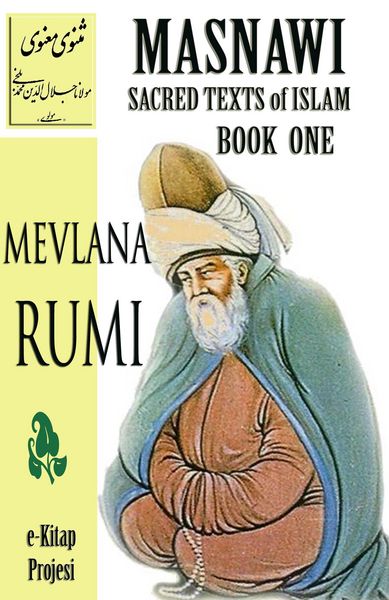
Masnawi Sacred Texts of Islam: Book One
-
- Einzelkauf Download ausgewählt
-
Sprache:Englisch
4,99 €
inkl. gesetzl. MwSt.Beschreibung
Produktdetails
Format
ePUB
Kopierschutz
Ja
Family Sharing
Ja
Text-to-Speech
Ja
Erscheinungsdatum
11.01.2014
Verlag
E-Kitap ProjesiSeitenzahl
86 (Printausgabe)
Dateigröße
4557 KB
Sprache
Englisch
EAN
9781311546050
The "Masnawi" is Rumi's greatest poetic work, composed during the last years of his life. He began it when he was between the ages of 54-57 [about 1258-1261] and continued composing its verses until he died in 1273 (with the last story remaining incomplete). It is a compendium of sufi stories, ethical teachings, and mystical teachings. It is deeply permeated with Qur'anic meanings and references. Rumi himself called the Masnavi "the roots of the roots of the roots of the (Islamic) Religion... and the explainer of the Qur'an (Masnavi, Book I, Preface). The story of how the beginning of the composition of the Masnavi has been told in the hagiography written by Aflaki (written between 1318-53), a disciple of Rumi's grandson: "Sirâjuddîn, the Mathnawi-reciter [masnavi-khwân] at the Tomb (of Rumi) told the story that the reason for the composition of the book of the Masnavî-yé Ma`nawî, which is the Revealer of the secrets of the Qur'an was: One day Hazrat-i... Husâmuddîn [Chelebi-- Rumi's closest disciple], may God sanctify his precious secret, found out that some of the friends, in complete relish and great love, were making serious efforts to study the 'Book of the Divine' [Ilâhî-Nâma] of (the sufi poet) Hakîm (Sanâ'î) and the 'Speech of the Birds' [ManTiqu 'T-Tayr] and the 'Book of Misfortune' [MuSîbat-Nâma] of (the sufi poet) Farîduddîn `Attâr, and (who) were delighted by (studying) their (mystical) secrets and (accounts of) the unusual spiritual amorousness (of the lovers of God) displayed by them. The Masnavi is divided into six books, and Rumi wrote prefaces for each book. The earliest complete manuscript (the "Konya manuscript") was completed in December, 1278 (five years after Rumi's death). • Books 1 and 2: They "are principally concerned with the nafs, the lower carnal self, and its self-deception and evil tendencies." • Books 3 and 4: These books share the principal themes of Reason and Knowledge. These two themes are personified by Rumi in the Biblical and Quranic figure of the Prophet Moses. • Books 5 and 6: These last two books are joined by the universal ideal that man must deny his physical earthly existence to understand God's existence. In addition to the reoccurring themes presented in each book, Rumi includes multiple points of view or voices that continually invite his readers to fall into "imaginative enchantment." There are seven principal voices that Rumi uses in his writing: 1. The Authorial Voice - Each passage reflects the authority of the majestic Sufi teacher narrating the story. This voice generally appears when it addresses You, God, and you, of all humankind. 2. The Story-telling Voice - The primary story is occasionally interrupted by side stories that help clarify a point being made in the original statement. Rumi sometimes takes hundreds of lines to make a point because he is constantly interrupting himself. 3. The Analogical Voice - This voice interrupts the flow of the narration because it entertains an analogy which is used to explain a statement made in the previous verse. Rumi's Masnavi is filled with analogies. 4. The Voice of Speech and Dialogue of Characters - Rumi conveys many of his stories through dialogue and speeches presented by his characters. 5. The Moral Reflection - Rumi supports his voice of morality by including quotations from the Quran and various hadith stories of events in the life of the Prophet Mohammed. 6. The Spiritual Discourse - The Spiritual Discourse resembles the Analogical Voice where Rumi always includes a moral reflection on the wisdom revealed. 7. Hiatus - Rumi occasionally questions the wisdom conveyed though the verses. "Sometimes Rumi says that he cannot say more because of the reader's incapacity to understand."
Kundinnen und Kunden meinen
Verfassen Sie die erste Bewertung zu diesem Artikel
Helfen Sie anderen Kund*innen durch Ihre Meinung
Kurze Frage zu unserer Seite
Vielen Dank für Ihr Feedback
Wir nutzen Ihr Feedback, um unsere Produktseiten zu verbessern. Bitte haben Sie Verständnis, dass wir Ihnen keine Rückmeldung geben können. Falls Sie Kontakt mit uns aufnehmen möchten, können Sie sich aber gerne an unseren Kund*innenservice wenden.
zum Kundenservice