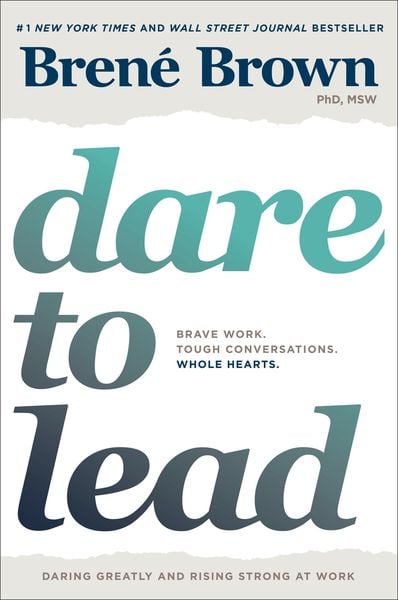
Produktbild: Dare to Lead

Dare to Lead Brave Work. Tough Conversations. Whole Hearts.

5

27,99 €

inkl. gesetzl. MwSt., Versandkostenfrei


Beschreibung

Produktdetails

Verkaufsrang

43068

Einband

Gebundene Ausgabe

Erscheinungsdatum

09.10.2018

Verlag

Random House LLC US

Seitenzahl

320

Maße (L/B/H)

15/21,5/3,3 cm

Gewicht

435 g

Sprache

Englisch

ISBN

978-0-399-59252-2

Beschreibung

Produktdetails

Verkaufsrang

43068

Einband

Gebundene Ausgabe

Erscheinungsdatum

09.10.2018

Verlag

Random House LLC US

Seitenzahl

320

Maße (L/B/H)

15/21,5/3,3 cm

Gewicht

435 g

Sprache

Englisch

ISBN

978-0-399-59252-2

Herstelleradresse

Libri GmbH
Europaallee 1
36244 Bad Hersfeld
DE

Email: gpsr@libri.de

Kundinnen und Kunden meinen

5 Bewertungen

Informationen zu Bewertungen

Zur Abgabe einer Bewertung ist eine Anmeldung im Konto notwendig. Die Authentizität der Bewertungen wird von uns nicht überprüft. Wir behalten uns vor, Bewertungstexte, die unseren Richtlinien widersprechen, entsprechend zu kürzen oder zu löschen.

Die Bewertungen sind nach Format, Anzahl Sterne und Datum sortiert.

5 Sterne

4 Sterne

3 Sterne

2 Sterne

(0)

1 Sterne

(0)

Great leadership insights (A.D)

Bewertung am 11.11.2024

Bewertungsnummer: 2338958

Bewertet: Buch (Taschenbuch)

For our University course, we had to choose a book from a list to read, and I was already planning on reading dare to lead, so I naturally chose this one. As someone interested in self-development and after reading many books about it, I can say that I enjoyed reading it. Brené Brown gives us a real-world and research-based approach to a different leadership style than most of us know of a typical leader. Whether you are a high-ranking leader, a leader of a small group, or even just for yourself in your everyday life, this book will make you grow in many aspects. Brené Brown emphasizes the importance of being open towards one another and embracing vulnerability. Often, people believe a leader should be infallible. However, she argues that to strengthen a relationship it requires being vulnerable, sharing uncertainties, admitting mistakes, or even just asking for help. I liked this part, as I am a big fan of creating an environment where people can express their concerns without fear, a place where people trust each other, and people feel free to connect on a human level. Rather than trying to appear invulnerable (which none of us truly are), just being open strengthens the team as a whole. Brown introduces us to her "BRAVING" Model, a guide for building and maintaining trust. It is a particularly helpful section as it provides us with a step-by-step explanation of how trust is built. Leaders can walk away with a clear plan for fostering trust and a greater understanding of why it matters. It’s rare that books on leadership provide both conceptual frameworks and practical tools, and Brown does an amazing job of bridging this gap. Another strong point in this book is its way of describing the treatment of emotions within the workplace. Brown shows us that negative emotions, though often avoided, can be beneficial, as they can provide us with valuable information. So, harnessing our emotions rather than suppressing them can be very useful, especially as a leader who will be better equipped to inspire and motivate his team. She emphasizes that instead of trying to give an image of stoic perfection, leaders should aim to be real and relatable. This is particularly relevant as many people believe a leader should hide his emotions to appear strong. However, it’s worth being a little skeptical when relying solely on vulnerability. Is it enough on its own to manage all the complexities of a manager's life and its responsibilities? Some people might have less respect for a leader who seems vulnerable and may try to exploit it for their own benefit. Additionally, there could be different expectations towards a leader, depending on cultural differences. Some may see vulnerability as a weakness and have less respect, and some may not. While she argues about the universality of human emotions, it is still uncertain if people with different backgrounds have the same expectations towards their leader. If you are already a high-ranking manager seeking insights into strategic decision-making or navigating market-specific challenges, you might not find what you need. But overall, I would highly recommend dare to lead. It offers a new and well-needed perspective on leadership and how to cultivate vulnerability and authenticity. It emphasizes the importance of building trust and developing emotional intelligence in the workplace. Especially now that many companies are focusing on inclusive and supportive environments. My only reservations are whether this approach can be a universal solution for everyone and whether it’s always applicable in the more complex, fast-paced life of a manager.

Great leadership insights (A.D)

Bewertung am 11.11.2024
Bewertungsnummer: 2338958
Bewertet: Buch (Taschenbuch)

For our University course, we had to choose a book from a list to read, and I was already planning on reading dare to lead, so I naturally chose this one. As someone interested in self-development and after reading many books about it, I can say that I enjoyed reading it. Brené Brown gives us a real-world and research-based approach to a different leadership style than most of us know of a typical leader. Whether you are a high-ranking leader, a leader of a small group, or even just for yourself in your everyday life, this book will make you grow in many aspects. Brené Brown emphasizes the importance of being open towards one another and embracing vulnerability. Often, people believe a leader should be infallible. However, she argues that to strengthen a relationship it requires being vulnerable, sharing uncertainties, admitting mistakes, or even just asking for help. I liked this part, as I am a big fan of creating an environment where people can express their concerns without fear, a place where people trust each other, and people feel free to connect on a human level. Rather than trying to appear invulnerable (which none of us truly are), just being open strengthens the team as a whole. Brown introduces us to her "BRAVING" Model, a guide for building and maintaining trust. It is a particularly helpful section as it provides us with a step-by-step explanation of how trust is built. Leaders can walk away with a clear plan for fostering trust and a greater understanding of why it matters. It’s rare that books on leadership provide both conceptual frameworks and practical tools, and Brown does an amazing job of bridging this gap. Another strong point in this book is its way of describing the treatment of emotions within the workplace. Brown shows us that negative emotions, though often avoided, can be beneficial, as they can provide us with valuable information. So, harnessing our emotions rather than suppressing them can be very useful, especially as a leader who will be better equipped to inspire and motivate his team. She emphasizes that instead of trying to give an image of stoic perfection, leaders should aim to be real and relatable. This is particularly relevant as many people believe a leader should hide his emotions to appear strong. However, it’s worth being a little skeptical when relying solely on vulnerability. Is it enough on its own to manage all the complexities of a manager's life and its responsibilities? Some people might have less respect for a leader who seems vulnerable and may try to exploit it for their own benefit. Additionally, there could be different expectations towards a leader, depending on cultural differences. Some may see vulnerability as a weakness and have less respect, and some may not. While she argues about the universality of human emotions, it is still uncertain if people with different backgrounds have the same expectations towards their leader. If you are already a high-ranking manager seeking insights into strategic decision-making or navigating market-specific challenges, you might not find what you need. But overall, I would highly recommend dare to lead. It offers a new and well-needed perspective on leadership and how to cultivate vulnerability and authenticity. It emphasizes the importance of building trust and developing emotional intelligence in the workplace. Especially now that many companies are focusing on inclusive and supportive environments. My only reservations are whether this approach can be a universal solution for everyone and whether it’s always applicable in the more complex, fast-paced life of a manager.

Dare to Lead - Brené Brown (book review by J.N.N.)

Bewertung am 07.11.2024

Bewertungsnummer: 2335428

Bewertet: Buch (Taschenbuch)

My professor gave us a list of books to choose from, after doing some research, I decided to go with Dare to Lead by Brené Brown. I found her online presence interesting, she’s really active on Instagram and hosts a podcast where she talks about her ideas with well-known guests. Her work on leadership, courage and vulnerability seemed like it would help me for my personal growth. I thought it will expand my horizon, as I am really interested in these topics, especially leadership. My main takeaway is that leadership is about empathy, courage, being honest and building trust. Brown defines a leader as anyone who takes responsibility for finding the potential in people and processes and has the courage to develop that potential. This makes her advice useful for everyone in every stage, it’s not just for people who are already in high management or leading roles. She encourages leaders in general to be authentic, admit mistakes and build honest connections with people. Her approach isn’t about controlling others or micromanaging, it’s about creating a positive, trusting environment. One idea that I really liked, was Brown’s theory or opinion on vulnerability, especially after my own work experience (Internship) interacting closely with executives and management. I’ve seen how leaders often feel pressured to seem very tough, knowledgeable and in control at all times. Though, this tough environment can make them appear distant or even disconnected from their teams. Reading Dare to Lead made me realize that if leaders were more open about their struggles and willing to seek help, it could create a more supportive and collaborative environment. Brown discusses how being vulnerable doesn’t mean losing authority, instead it shows strength and encourages trust. She emphasizes that leaders can maintain their “aura” of authority while still being honest, which I think would improve many workplaces. Another concept I found meaningful and helpful was Brown’s perspective on mistakes as an essential part of growth. She challenges the idea that leaders need to be perfect, arguing instead that making mistakes and learning from them is what ultimately leads to improvement. This was reassuring, especially for those of us who feel pressure to always be flawless in professional or personal settings. Brown’s view reminds us that admitting and learning from errors can actually strengthen our leadership skills and build stronger connections with our teams. As a student, I could relate to the "being flawless thinking" it was refreshing to hear her say that mistakes are a natural part of growth and are the best way to learn and get better. While reading I always thought about the professional tennis player Stan Wawrinka, his motto is “ever tried, ever failed, no matter, try again, fail better” and it matches pretty well to Brown’s ideology. Additionally, while scrolling on TikTok, I came across the “fast doers” mindset in business, which immediately reminded me of what Brown wrote in her book. The idea is that quick action, taking/making steps even at the risk of mistakes, leads to faster learning. One ideology captures this “While others are still thinking about what they should do, I’ve already tried three things and I already know what’s not working or maybe what is working”. This connection was impactful for me, visualizing that mistakes are part of growing. In the end, Dare to Lead is a valuable read for anyone interested in leadership, personal growth or just building better relationships. Brown’s advice on leading with courage, empathy and honesty feels relevant not only for leadership roles but for life in general. While some ideas might seem unrealistic, her insights on building trust and connecting with others make this book worth the read. I’d recommend this book to anyone. I believe it has the potential to help anyone, no matter where they are in life, if they truly understand and make an effort to apply the principles. That said, applying these ideas is far from easy, but the potential growth is worth it. Plus, following her on social media and listening to parts of her podcast adds even more context to the themes she covers in the book.

Dare to Lead - Brené Brown (book review by J.N.N.)

Bewertung am 07.11.2024
Bewertungsnummer: 2335428
Bewertet: Buch (Taschenbuch)

My professor gave us a list of books to choose from, after doing some research, I decided to go with Dare to Lead by Brené Brown. I found her online presence interesting, she’s really active on Instagram and hosts a podcast where she talks about her ideas with well-known guests. Her work on leadership, courage and vulnerability seemed like it would help me for my personal growth. I thought it will expand my horizon, as I am really interested in these topics, especially leadership. My main takeaway is that leadership is about empathy, courage, being honest and building trust. Brown defines a leader as anyone who takes responsibility for finding the potential in people and processes and has the courage to develop that potential. This makes her advice useful for everyone in every stage, it’s not just for people who are already in high management or leading roles. She encourages leaders in general to be authentic, admit mistakes and build honest connections with people. Her approach isn’t about controlling others or micromanaging, it’s about creating a positive, trusting environment. One idea that I really liked, was Brown’s theory or opinion on vulnerability, especially after my own work experience (Internship) interacting closely with executives and management. I’ve seen how leaders often feel pressured to seem very tough, knowledgeable and in control at all times. Though, this tough environment can make them appear distant or even disconnected from their teams. Reading Dare to Lead made me realize that if leaders were more open about their struggles and willing to seek help, it could create a more supportive and collaborative environment. Brown discusses how being vulnerable doesn’t mean losing authority, instead it shows strength and encourages trust. She emphasizes that leaders can maintain their “aura” of authority while still being honest, which I think would improve many workplaces. Another concept I found meaningful and helpful was Brown’s perspective on mistakes as an essential part of growth. She challenges the idea that leaders need to be perfect, arguing instead that making mistakes and learning from them is what ultimately leads to improvement. This was reassuring, especially for those of us who feel pressure to always be flawless in professional or personal settings. Brown’s view reminds us that admitting and learning from errors can actually strengthen our leadership skills and build stronger connections with our teams. As a student, I could relate to the "being flawless thinking" it was refreshing to hear her say that mistakes are a natural part of growth and are the best way to learn and get better. While reading I always thought about the professional tennis player Stan Wawrinka, his motto is “ever tried, ever failed, no matter, try again, fail better” and it matches pretty well to Brown’s ideology. Additionally, while scrolling on TikTok, I came across the “fast doers” mindset in business, which immediately reminded me of what Brown wrote in her book. The idea is that quick action, taking/making steps even at the risk of mistakes, leads to faster learning. One ideology captures this “While others are still thinking about what they should do, I’ve already tried three things and I already know what’s not working or maybe what is working”. This connection was impactful for me, visualizing that mistakes are part of growing. In the end, Dare to Lead is a valuable read for anyone interested in leadership, personal growth or just building better relationships. Brown’s advice on leading with courage, empathy and honesty feels relevant not only for leadership roles but for life in general. While some ideas might seem unrealistic, her insights on building trust and connecting with others make this book worth the read. I’d recommend this book to anyone. I believe it has the potential to help anyone, no matter where they are in life, if they truly understand and make an effort to apply the principles. That said, applying these ideas is far from easy, but the potential growth is worth it. Plus, following her on social media and listening to parts of her podcast adds even more context to the themes she covers in the book.

Kundinnen und Kunden meinen

Dare to Lead

von Brené Brown

0 Bewertungen filtern

Weitere Artikel finden Sie in

Die Leseprobe wird geladen.
  • Produktbild: Dare to Lead