• Produktbild: The Power of Play in Higher Education
  • Produktbild: The Power of Play in Higher Education
- 10%

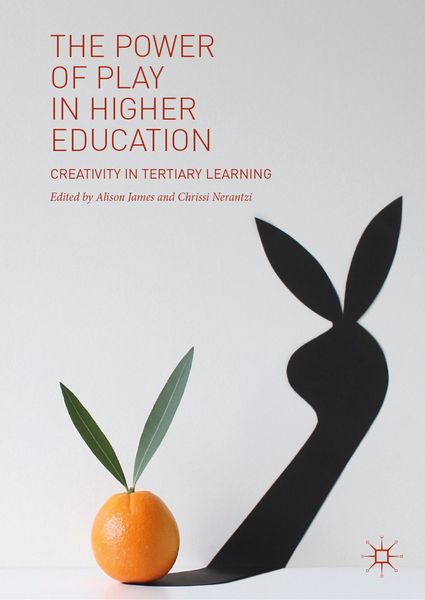
The Power of Play in Higher Education Creativity in Tertiary Learning

10% sparen

171,99 € UVP 192,59 €

inkl. gesetzl. MwSt., Versandkostenfrei


Beschreibung

Produktdetails

Einband

Gebundene Ausgabe

Erscheinungsdatum

19.02.2019

Abbildungen

LIV, 29 illus., 16 illus. in color., farbige Illustrationen, schwarz-weiss Illustrationen

Herausgeber

Alison James + weitere

Verlag

Springer

Seitenzahl

359

Maße (L/B/H)

21,6/15,3/2,7 cm

Gewicht

672 g

Auflage

1st ed. 2019

Sprache

Englisch

ISBN

978-3-319-95779-1

Beschreibung

Portrait

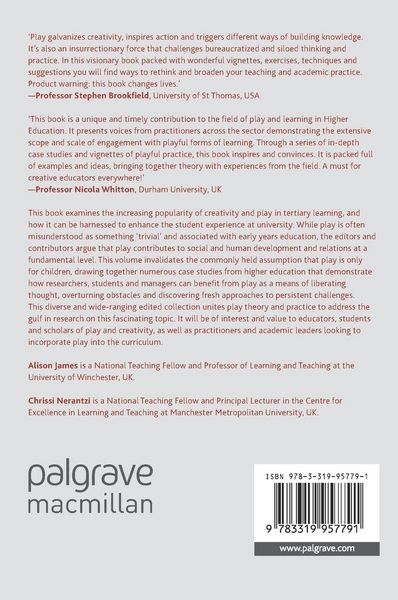
Alison James is a National Teaching Fellow and Professor of Learning and Teaching at the University of Winchester, UK.

Chrissi Nerantzi is a National Teaching Fellow and Principal Lecturer in the Centre for Excellence in Learning and Teaching at Manchester Metropolitan University, UK.

Produktdetails

Einband

Gebundene Ausgabe

Erscheinungsdatum

19.02.2019

Abbildungen

LIV, 29 illus., 16 illus. in color., farbige Illustrationen, schwarz-weiss Illustrationen

Herausgeber

Verlag

Springer

Seitenzahl

359

Maße (L/B/H)

21,6/15,3/2,7 cm

Gewicht

672 g

Auflage

1st ed. 2019

Sprache

Englisch

ISBN

978-3-319-95779-1

Herstelleradresse

Springer-Verlag GmbH
Tiergartenstr. 17
69121 Heidelberg
DE

Email: ProductSafety@springernature.com

Kundinnen und Kunden meinen

0 Bewertungen

Informationen zu Bewertungen

Zur Abgabe einer Bewertung ist eine Anmeldung im Konto notwendig. Die Authentizität der Bewertungen wird von uns nicht überprüft. Wir behalten uns vor, Bewertungstexte, die unseren Richtlinien widersprechen, entsprechend zu kürzen oder zu löschen.

Die Bewertungen sind nach Format, Anzahl Sterne und Datum sortiert.

Verfassen Sie die erste Bewertung zu diesem Artikel

Helfen Sie anderen Kund*innen durch Ihre Meinung

Kundinnen und Kunden meinen

0 Bewertungen filtern

  • Produktbild: The Power of Play in Higher Education
  • Produktbild: The Power of Play in Higher Education
  • Chapter 1. Making a case for the playful university; Alison James.- PART I. Trainers and Developers.- Chapter 2. Exploration: Becoming playful: the power of a ludic module; Sandra Sinfield, Tom Burns, Sandra Abegglen.- Chapter 3. Exploration: ESCAPE! Puzzling out learning theories through play; Jennie Mills and Emma King.- Chapter 4. Exploration: "I learned to play again" The integration of active play as a learning experience for Sports Coaching Undergraduates; Richard Cheetham.- Chapter 5. Sketch: The Training Game; Scott Roberts.- Chapter 6. Exploration: Play in Practice - innovation through play in the postgraduate curriculum; Sophy Smith.- Chapter 7. Exploration: Experiences of running a 'Play and Creativity' module in a School of Art and Design; Gareth Loudon.- PART II. Wanderers and Wonderers.- Chapter 8. The Dark Would, higher education, play, and playfulness.- Chapter 9. Exploration: Playing with Place: responding to invitations; Helen Clarke and Sharon Witt.- Chapter 10. Exploration: Cabinets of Curiosities: Playing with artefacts in professional teacher education; Sarah Williamson.- Chapter 11. Sketch: playful pedagogies: collaborations between undergraduates and school pupils in the outdoor learning centre and the pop up 'playscape'; Chantelle Haughton and Sian Sarwar.- Chapter 12. Sketch: Teaching and Learning inside the Culture Shoe Box; Hoda Wassif and Maged Zakher.- PART III. Experimenters and Engagers.- Chapter 13. Exploration: Dopamine and the Hard Work of Learning Science; Lindsay Wheeler and Michael Palmer.- Chapter 14. Exploration: Play in Engineering Education; Bruce D. Kothmann.- Chapter 15. Sketch: Experiencing the necessity of Project Management through the egg-dropping challenge; Tobias Seidl.- Chapter 16. Exploration: Public engagement activities for chemistry students; Dudley Shallcross and Tim Harrison.- Chapter 17. Sketch: Playful Maths; Chris Budd.- Chapter 18. Sketch: Connecting people and places using worms and waste; Sharon Boyd and Andrea Roe.- Chapter 19. Sketch: Maths, Meccano and Motivation; Judith McCullouch.- Chapter 20. Exploration: Playful Urban Learning Space - An Interdisciplinary Collaboration; Clive Holtham and Tine Bech.- Chapter 21. Sketch: Novelty shakes things up in the history classroom; Carey Fleiner.- PART IV. Wordsmiths and Communicators.- Chapter 22. Exploration: Don't Write on Walls! Playing with cityscapes in a foreign language course; Melanie Peron.- Chapter 23. Sketch: Poetry as Play: Using Riskless Poetry Writing to Support Instruction; Ann-Marie Klein.- Chapter 24. Sketch: On word play in support of academic development; Daphne Loads.- Chapter 25. Sketch: The Communications Factory; Suzanne Rankin-Dia and Rob Lakin.- Chapter 26. Sketch: Playful Writing with Writing PAD; Julia Reeve and Kaye Towlson.- PART V. Builders and Simulators.- Chapter 27. Exploration: Wigs, brown source and theatrical dames: clinical simulation as play; Caroline Pelletier and Roger Kneebone.- Chapter 29. Exploration: Building the abstract: metaphorical Play-Doh modelling in Health Sciences; Rachel Stead.- Chapter 30. Sketch: Our learning journey with LEGO; Alison James and Chrissi Nerantzi.- Chapter 31. Using LEGO to explore 'professional love' as an element of Youth Work practice: opportunities and obstacles; Martin Purcell.- Chapter 32. Sketch: Creating LEGO Representations of Theory; Nicola Simmons.- PART VI. Gamers and Puzzlers.- Chapter 33. Exploration: A dancer and a writer walk into a classroom; Seth Hudson and Boris Willis.- Chapter 34. Exploration: From the Players Point of View; Maxwell Hartt and Hadi Hosseini.- Chapter 35. Exploration: Wardopoly: Game-based Experiential Learning in Nurse Leadership Education; Bernadette Henderson, Andrew Clements, Melanie Webb and Alexander Kofinas.- Chapter 36. Exploration: Using Play to Design Play: Gamification and Student involvement in the production of Games-Based Learning resources for Research Methods Teaching; Natalie Gerodetti and Darren Nixon.- Chapter 37. Sketch: Table top gaming in Wildlife Conservation: 'Park Life'; Louise Robinson and Ian Turner.- Chapter 28. Sketch: 'Frogger it, I'd rather be playing computer games than referencing my assignment': a Harvard Referencing Game; Tracy Dix.- Chapter 39. Sketch: Using play to facilitate faculty-student partnership: how can you co-design a module?; Sarah Dyer and Tanya Lubicz-Nawrocka.- Chapter 40. Sketch: Imagination needs moodling; Debra Abrams.- Chapter 41. Exploration: It's a serious business learning how to reference - playfully; Juliette Smeed.- Chapter 42. The playground model revisited. A proposition for playfulness to boost creativity in academic development; Chrissi Nerantzi.