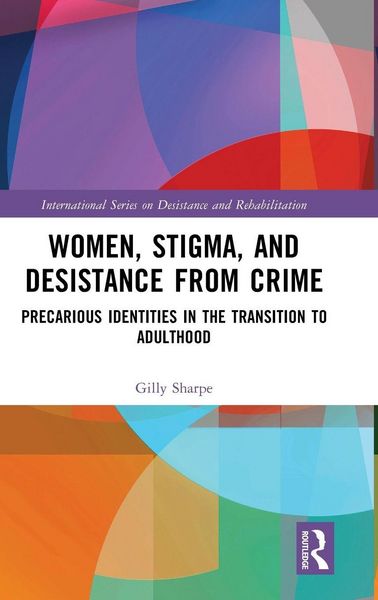

Women, Stigma, and Desistance from Crime Precarious Identities in the Transition to Adulthood
-
- Hardcover ausgewählt
- Taschenbuch
- eBook
-
Sprache:Englisch
172,99 €
UVP
196,10 €
inkl. gesetzl. MwSt.,
Beschreibung
Produktdetails
Einband
Gebundene Ausgabe
Erscheinungsdatum
31.10.2023
Abbildungen
2 Tabellen
Verlag
Taylor & FrancisSeitenzahl
218
Maße (L/B/H)
24/16,1/1,6 cm
Gewicht
496 g
Sprache
Englisch
ISBN
978-1-138-64243-0
How do young women negotiate their identity in the shadow of a criminal past? What expectations can these women have and what constraints do they face in embracing change and reform?
In this new book, Gilly Sharpe returns to the group of women interviewed in her bestselling book Offending Girls, to ask these questions and more. Building on wide-ranging interviews with young adult women who have experienced a highly punitive climate in both youth justice and welfare policy, this book analyses their vivid personal accounts of stigmatisation and devaluation as former lawbreakers, welfare claimants and mothers, and examines their gendered transitions from youth criminalisation into adulthood. Women, Stigma, and Desistance from Crime exposes how stigma, which is rooted in structural inequality and thrives in societies with deep economic and social divisions, devalues working-class and marginalised women and diminishes their lives. It offers a unique analysis of how criminal stigma is shaped by class-based condescension, welfare inaction and school-based disciplinary punishment, and reveals how stigma is reproduced over time across education, welfare, and penal institutions.
Meticulously researched and the first study to examine how the lives of young women previously enmeshed in the youth justice system unfold as they transition to adulthood, this book will be of interest to scholars and students of criminology and criminal justice, sociology, social work, social policy, gender and youth studies, and to practitioners and policy-makers in these fields.
Noch keine Bewertungen vorhanden
Verfassen Sie die erste Bewertung zu diesem Artikel
Helfen Sie anderen Kundinnen und Kunden durch Ihre Meinung.
Kurze Frage zu unserer Seite
Vielen Dank für Ihr Feedback
Wir nutzen Ihr Feedback, um unsere Produktseiten zu verbessern. Bitte haben Sie Verständnis, dass wir Ihnen keine Rückmeldung geben können. Falls Sie Kontakt mit uns aufnehmen möchten, können Sie sich aber gerne an unseren Kund*innenservice wenden.
zum Kundenservice