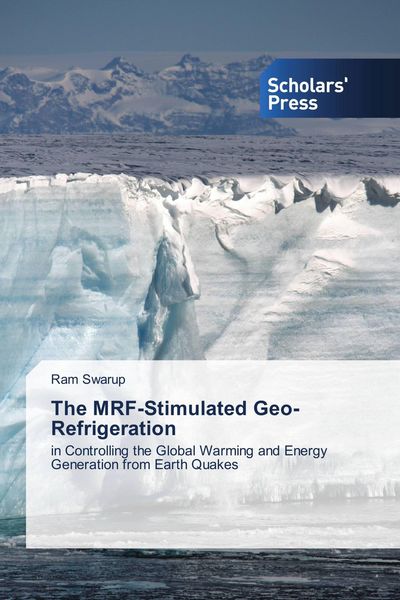
The MRF-Stimulated Geo-Refrigeration in Controlling the Global Warming and Energy Generation from Earth Quakes
-
- Englisch ausgewählt
51,99 €
UVP
59,90 €
inkl. gesetzl. MwSt.,
Beschreibung
Produktdetails
Einband
Taschenbuch
Erscheinungsdatum
26.09.2018
Verlag
Scholar's PressSeitenzahl
120
Maße (L/B/H)
22/15/0,8 cm
Gewicht
197 g
Auflage
1. Auflage
Sprache
Englisch
ISBN
978-620-2-31734-4
A redox conversion in geo-matters including many rock-forming minerals seems to begin with the traces of water and the other fluids endowed with specific vibrational structures composed of the electromagnetic fields and the seismic waves. The traces of gases, water and the other fluids associated with these geo-matters of anhydrous nature emerged during their crystallization in any fluid laden environment (Wilkins, R.W.T. et al. 1973). The compression of such fluids through the porous environment of earth employing Geo-IT under MRF-Perturbations could be a potential resource of geo-refrigeration to be enumerated using an appropriate computational fluid dynamics (CFD). The magneto-radio-frequency (MRF)-stimulated electronic stress induced fluid transmissions undergo the Joule-Thompson Effect that had been observed by the fluid flow through the prevailing porosity within the geo-rocks to undergo the process of geo-refrigeration. This Geo-Refrigeration technique using repeated Geo-Communications with radiofrequency transmissions through the earth environment may yield the fall in layers of earth crust potential enough to initiate Glaciarization so as to prevent Global Warming.
Noch keine Bewertungen vorhanden
Verfassen Sie die erste Bewertung zu diesem Artikel
Helfen Sie anderen Kundinnen und Kunden durch Ihre Meinung.
Kurze Frage zu unserer Seite
Vielen Dank für Ihr Feedback
Wir nutzen Ihr Feedback, um unsere Produktseiten zu verbessern. Bitte haben Sie Verständnis, dass wir Ihnen keine Rückmeldung geben können. Falls Sie Kontakt mit uns aufnehmen möchten, können Sie sich aber gerne an unseren Kund*innenservice wenden.
zum Kundenservice